Bundelkhand Basmati Rice Farmers in Distress Over Absence of GI Tag

Bundelkhand Basmati Rice Farmers in Distress Over Absence of GI Tag
By Megha Bajaj
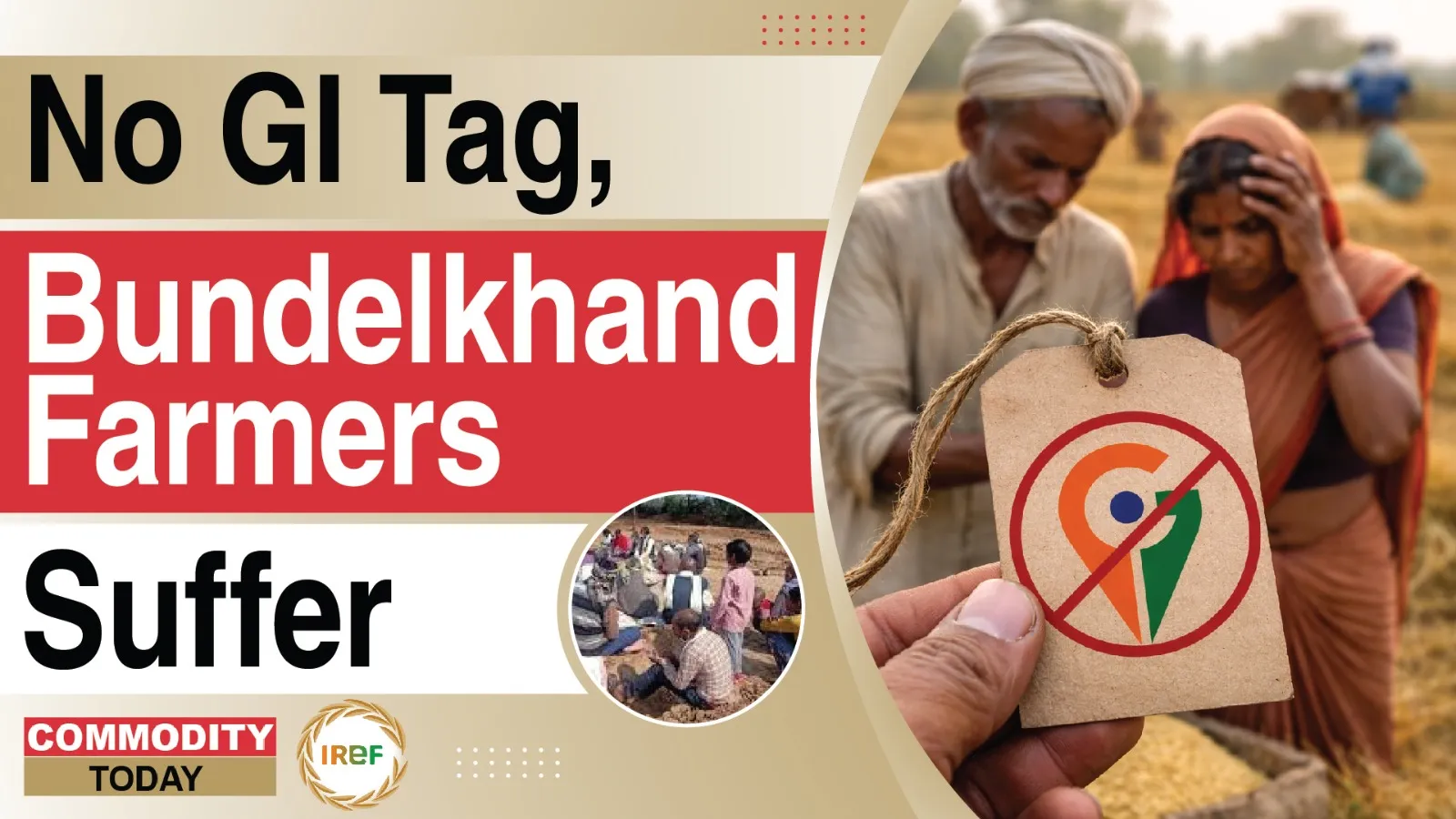
Basmati rice contributes to increasing farmers' income since it is in demand not only in India but also worldwide. However, Basmati rice farmers in the Bundelkhand region of Uttar Pradesh are hitting the headlines. The Basmati rice crop grown by farmers in the Bundelkhand region of UP is exceptional in quality and aroma, but the low market price is causing them considerable distress. Bundelkhand Basmati rice farmers are deeply troubled by the low prices that they are receiving for their Basmati rice. They are in distress over the absence of the GI Tag.
No GI Tag for Basmati Rice From Bundelkhand
The question is raised here stating that why are Basmati rice farmers in the districts of UP's Bundelkhand region receiving such low prices for their crop? Undoubtedly, the answer lies in the lack of a GI tag (Geographical Indication tag) for Basmati rice from Bundelkhand. Basmati rice farmers in the Bundelkhand region of UP are currently forced to sell their crop at Rs. 2600 per quintal, whereas it is claimed that the same paddy is being sold at Rs. 5000 to 6000 per quintal after being labelled as Basmati rice from Punjab and Haryana. According to reports, Pusa 1211 paddy, which has gained fame on a global level, has not become a profitable venture for farmers in UP's Bundelkhand region, but rather a source of profit for rice exporters.
In the Chitrakootdham division of UP's Bundelkhand region, Basmati rice is cultivated on a large scale by farmers, but the pathetic state of no GI tag is leading to lower-than-expected prices, causing despondency among the farmers. One of the farmers stated that approximately one lakh hectares are under paddy cultivation in the Chitrakootdham division, with a yield of 30 to 35 quintals per hectare. Furthermore, the farmer explained that despite the excellent yield, they are receiving low prices for their Basmati rice since the real problem begins after the harvest. The farmer cited that large exporting companies from Mumbai purchase all the paddy from the Bundelkhand region and then export it abroad, falsely labeling it as Basmati rice from Punjab or Haryana. Moreover, a report states that approximately 10,000 trucks of rice are exported annually from the Bundelkhand region of Uttar Pradesh. It is alleged that large rice traders in Delhi and Mumbai are making huge profits by selling this rice abroad under the guise of organic rice, claiming superior aroma and grain length. At the same time, the Rice farmers who produce this rice are receiving only meager sums, leaving the farmers distressed, as they are relentlessly demanding that the government to grant a GI tag (Geographical Indication tag) to the Bundelkhand region for its Basmati rice.
A demand For MP’s Basmati Rice
Notably, a similar demand for a GI tag for Basmati rice has recently emerged from Madhya Pradesh. Former Chief Minister of Madhya Pradesh and current Congress Rajya Sabha MP, Digvijay Singh, raised the issue in the Rajya Sabha, demanding a GI tag for Basmati rice from Madhya Pradesh, stating that the state produces 400,000 tons of Basmati rice annually. He claimed that Madhya Pradesh produces high-quality grain, but the state has no GI tag.
During his address, Digvijay Singh stated that rice traders from other states come to Madhya Pradesh, purchase Basmati rice, and then use their own state's GI tag to profit from it. The senior Congress leader demanded that Madhya Pradesh be granted a GI tag for Basmati rice. While speaking on this issue in the Rajya Sabha, Digvijay Singh also targeted Union Agriculture Minister Shivraj Singh Chouhan. Singh condemned him, saying it is unfortunate that the Union Agriculture Minister is from Madhya Pradesh, and yet the state has not been granted a GI tag.
Rice Farmers from Budelkhand in the spotlight
Now, Basmati rice farmers in the Bundelkhand region of Uttar Pradesh are also in the spotlight. Reports stated that the no GI tag for Basmati rice in the Bundelkhand region of Uttar Pradesh is preventing farmers from receiving fair prices, whereas exporters from other states are making huge profits by exporting this Basmati rice abroad.
https://www.youtube.com/watch?v=DSMZeZP90q8Share this article
Article Info
Read Time
4 min read
Published
9 Feb 2026
Author
Megha Bajaj
Category
News