Explainer: How Rice Farmers Can Increase Their Income Through Methane Emission Reduction and Carbon Credits
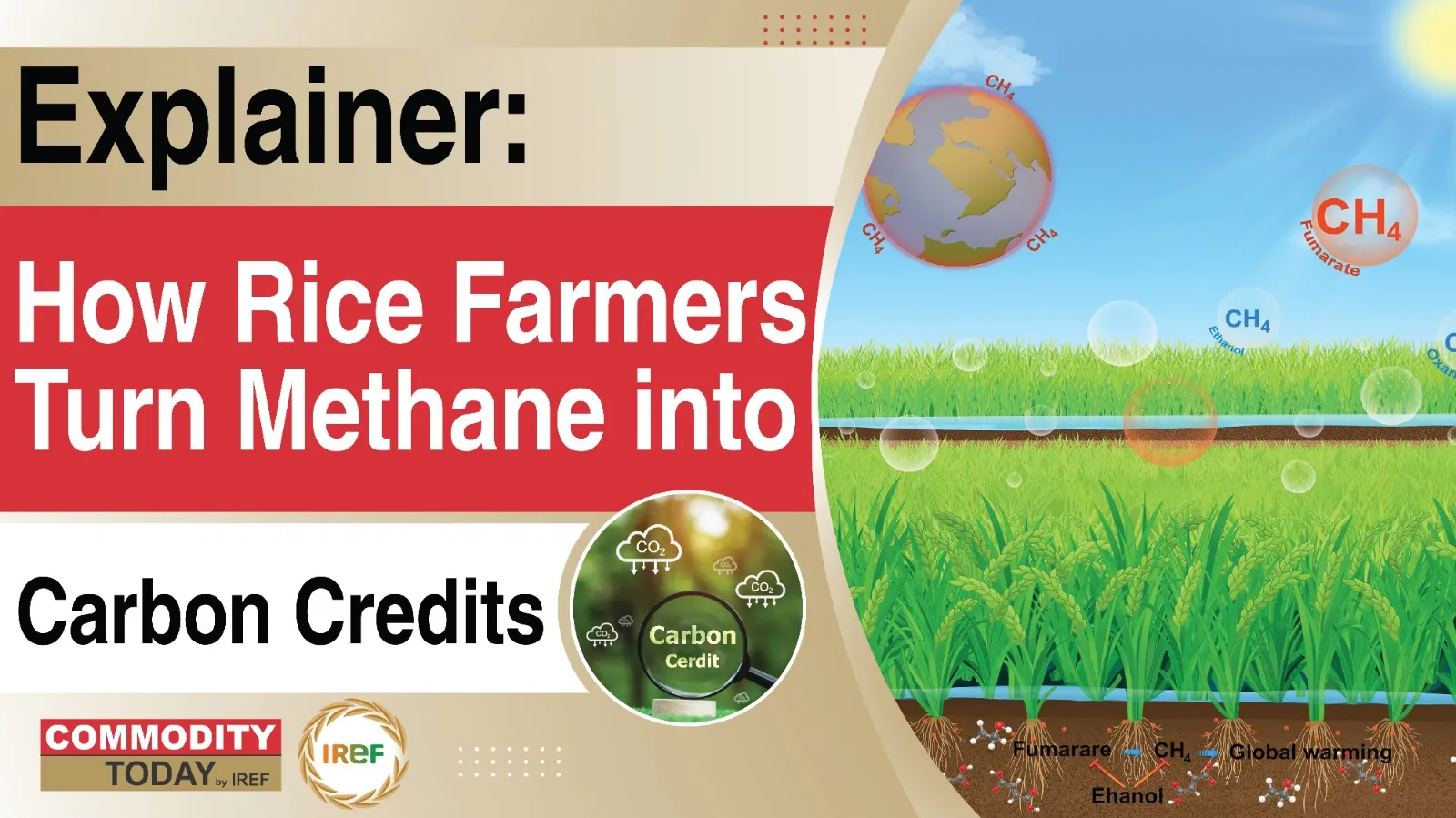
Explainer: How Rice Farmers Can Increase Their Income Through Methane Emission Reduction and Carbon Credits
Rice is one of the most widely consumed food grains on the planet. No doubt, it feeds more than half the world’s population. Through this, a slew of farmers earn livelihoods in several countries, including India. But growing rice has another side, too. Notably, the way rice has traditionally been cultivated in flooded fields actually contributes to climate change through methane emissions, a powerful greenhouse gas.
However, with a change in time, many rice farmers are now adopting new climate-friendly practices that can eliminate these emissions, conserve water, and surprisingly element isgenerate extra income by earning carbon credits. India’s experience with this approach provides an interesting model for how agriculture can be incorporated along with climate action.
Why is Rice Farming significant for Climate Change?
Notably, Rice farming traditionally involves transplanting young rice plants from a nursery into large fields that are kept flooded for much of the growing season. This has long been done to control weeds and support crop growth. According to a report by Indian Express, flooded water creates oxygen-free (anaerobic) soil conditions that are ideal for certain microbes. These microbes feed on organic material in the soil and release methane (CH₄) as a by-product, which is detrimental and contributes to global warming.
Undoubtedly, Methane is a hazardous greenhouse gas. However, it doesn’t stay in the atmosphere like carbon dioxide (CO₂). Notably, it traps significantly more heat while it lasts, about 28 times more per unit of weight over 100 years,indicating thatrice paddies contribute importantly to global warming. On a global level, this rice is evaluated to account for a sizeable portion of agricultural methane emissions.
Since, methane is such a strong climate warmer and decreasing these emissions from rice fields is observed as a powerful strategy for climate mitigation. Still, most farmers are focused on crop yields and income
What Is Alternate Wetting and Drying (AWD)?
Now, we will talk about most effective approach to make rice farming climate-smart which is called Alternate Wetting and Drying (AWD). Rice farmers allow the fields to dry out periodically before flooding them again, instead of keeping rice fields continuously flooded
As per the Indian Express report, under this method, Farmers let the field dry out so that the water table drops below the soil surface. This interrupts the anaerobic soil conditions that produce methane. Over the crop’s growing season, water is applied and removed in cycles rather than kept standing. Now, this change gives several benefits, like Methane emissions fall sharply since the microbes responsible for methane cannot thrive without continuous flooding. Water use goes down significantly, which is crucial in many water-stressed agricultural regions of India. Crop yields remain unchanged signaling that rice farmers do not sacrifice productivity.
What does the study by climate-tech start up reveal?
Interestingly, a study by the climate-tech startup called Mitti Labs examined fields in the Telangana’s Warangal district, where rice was cultivated using both traditional continuous flooding (CF) and AWD. The results showed that AWD fields consumed about 3.14 million litres of water per acre, in comparison of with 4.96 million litres under continuous flooding. Methane emissions from Alternate wetting and drying fields were nearly 3.5 tonnes of CO₂ equivalent per hectare, compared to 6 tonnes under the traditional method. Although, crop yields remained roughly the same.
According to one expert, Alternate Wetting and drying is like turning off the tap while brushing your teeth, it’s a low-effort, high-impact change that conserves water and mitigates climate change without affecting productivity.
The Carbon Credit Opportunity for Farmers
While decreasing methane and conserving water are significant benefits in themselves, the real game-changer is that farmers can monetise these reductions through carbon credits, a climate market mechanism that pays for verified greenhouse gas reductions.
What Are Carbon Credits?
Now, we will take a look at carbon credit which represents one tonne of greenhouse gas (measured as carbon dioxide equivalent) that has been prevented from entering the atmosphere or has been removed. These carbon credits can be sold to companies or organizations that want to offset their own emissions, helping them meet environmental goals like net-zero targets.
How It Works for Rice Farmers
Let us discuss about the process as applied to rice farming:
AWD is adopted in a farmer’s rice field. Scientific instruments like perforated tubes and gas collection chambers, measure actual methane emissions from the field. The data collected is analysed in labs, and emissions reductions are verified. Verified reductions are converted into carbon credits. These carbon credits are sold in carbon markets to buyers such as airlines, data centres, and other large users of energy or water who want to offset their emissions. The key is verification that is methane reduction must be estimated and certified by good quality systems. Therefore, buyers trust the credits. Investments in digital monitoring, geo-tagging, and even satellite imagery strengthen the credibility of these credits.
How Much Can Farmers Earn?
According to Mitti Labs, Carbon credits from methane reduction currently trade at around $15–$25 per tonne of CO₂ equivalent in global markets. Alternate Wetting Drying can reduce methane by roughly 2.5 tonnes per hectare compared to traditional flooding. At these rates, a single rice crop could generate about $37.50 per hectare from carbon credits, approximately ₹3,367 per hectare (or ₹1,363 per acre) at current exchange rates.
Moreover, this additional income is significant for smallholder farmers with tight margins, particularlysince it comes without reducing crop yields or requiring costly new equipment.
How this Adoption Is Growing in India
What began as a small pilot has rapidly expanded. Mitti Labs signed up nearly 850 farmers in 2023-24 for AWD and carbon measurement. In the next season (2024-25), participation climbed to 11,300 farmers in Telangana, Andhra Pradesh, Odisha, and Tamil Nadu. By 2025-26, that number reached nearly 69,000 farmers, including operations in Karnataka.
This shows a strong and furious interest among farmers when they witness tangible benefits, both environmental and financial. Interestingly, monitoring is done through a combination of on-field tools and digital verification technologies to ensure that emission reductions are real and verifiable.
Good Rice Alliance and Broader Support
Apart from Mitti Labs, the Good Rice Alliance a partnership involving Bayer, Shell Energy India, and GenZero, is promoting sustainable rice practices such as AWD and direct seeding of rice (DSR), which surpasses the need for nurseries and reduces water use even further. Over 12,000 farmers across 13 states have been registered in this alliance covering around 35,000 hectares and decreasing methane emissions by roughly 120,000 tonnes of CO₂ annually. Now, these collaborative efforts show that climate-smart agricultural practices can scale and bring environmental and economic benefits together, as stated in the Indian Express
Why this has become significant now: benefits Beyond Carbon Credits
For rice Farmers
It has multiple benefits such as additional incomesince carbon credits offer a new revenue stream and no yield loss, so theAWD doesn’t reduce rice productivity.Moreover, less water use is another significant benefit which cannot be neglected incritical in regions facing water scarcity.
If we talk about smallholder farmers who make up a large majority of India’s farming community, are often lack the resources to adopt costly technologies. AWD’s simplicity and financial upside make it appealing even for marginal farms.
For the Environment and Climate
Remarkably, Rice paddies are a significant source of methane, a powerful greenhouse gas. Decreasing these emissions facilitate countries meet climate goals under global frameworks like Paris Agreement. It also contributes to lowering agriculture’s overall climate footprint.
For Water Conservation
Interestingly, Alternate Wetting & Drying saves millions of litres of water per hectare, which is especially significant in water-stressed areas of India where groundwater levels are declining. More efficient water use improves climate resilience and long-term agricultural sustainability.
For Corporates and Carbon Markets
Companies with climate goals use carbon credits from agriculture as part of their strategy to offset methane emissions they can’t directly eliminate. This channels funds into rural economies and supports sustainable farming practices.
Challenges and Future Opportunities
While the system is promising, expanding it nationwide comes with challenges, as they are given below:
Verification costs such as measuring methane accurately requires science-based tools and laboratory support, which can be expensive.
Variable carbon prices such as carbon markets can fluctuate, affecting how much farmers earn from credits.
Adoption barriers such as not all farmers may be aware or confident enough to try AWD without clear incentives.
Policy support such as Government policies can help build confidence and expand adoption, though most progress so far has been through private and public partnerships. Nonetheless, advances in remote sensing, digital data systems, and carbon market infrastructure are helping lower these barriers. As these systems mature, farmer participation can grow even more.
Conclusion
The experience of rice farmers adopting AWD in India projects that climate action doesn’t have to be at odds with farmer livelihoods. By reducing methane emissions and participating in carbon markets, rice farmers can protect the environment, save water, and earn additional income, without sacrificing crop yields. Notably, this model is simple, measurable, and financially beneficial, could be scaled to other regions and crops, helping countries attain climate goals while empowering rural communities.
Share this article
Article Info
Read Time
8 min read
Published
29 Dec 2025
Author
Megha Bajaj
Category
News