Punjab Faces Fortified Rice Kernels Shortage as Govt Tells Parliament No Issues in FRK Mixing at 1:100 Ratio

Punjab Faces Fortified Rice Kernels Shortage as Govt Tells Parliament No Issues in FRK Mixing at 1:100 Ratio
By Megha Bajaj
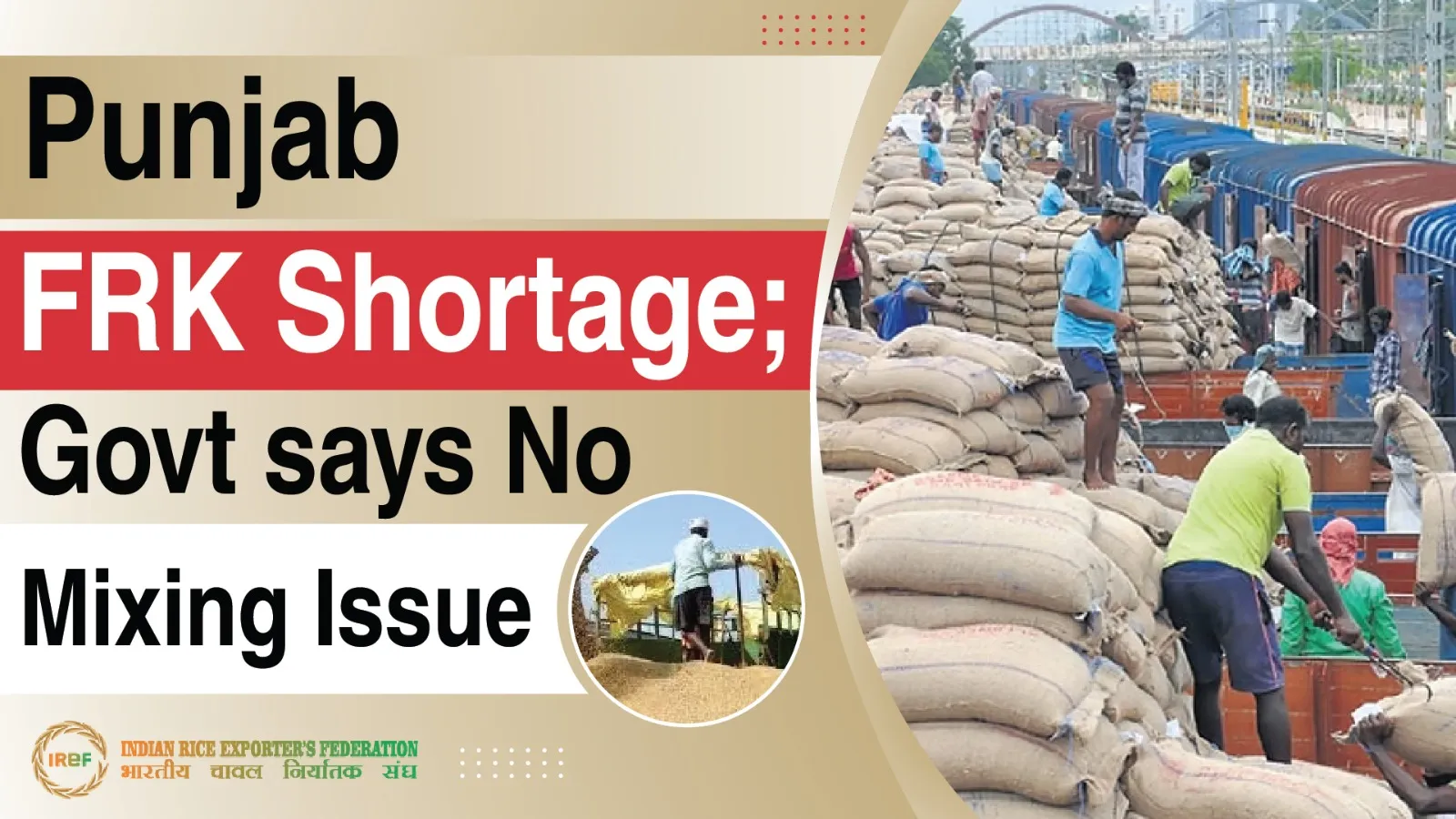
Amidst reports of rice milling slowing down in some states of the country due to a shortage of fortified rice kernels (FRK), the government has now informed the Parliament that no technical problem has been found in mixing fortified rice kernels with regular rice in the ratio of 1:100 during the milling stage. Minister of State for Food, Nimuben Jayatibhai Bambhaniya, stated in a written reply in the Lok Sabha that "no technical difficulties have been encountered in mixing FRKs with regular rice at a ratio of 1:100 during the milling stage."
Fortified Rice Kernels: Govt Details Quality Standards, Testing Protocols
The government's fortified rice program through the Public Distribution System (PDS) aims to address micronutrient deficiencies such as anaemia by mixing fortified rice kernels with regular rice and has been rolled out in phases across the country under schemes such as the National Food Security Act, Integrated Child Development Services, and PM POSHAN. It is also worth noting that fortified rice is mixed using FRK, which is made from rice flour, with regular milled rice in a ratio of 1:100, which contains iron, folic acid, and vitamin B12. Minister of State for Food Bambhaniya informed Parliament that the Food Safety and Standards Authority of India (FSSAI) has notified standards for vitamin-mineral premixes for fortified rice FRKs.
Also Read This:
Centre’s new fortified rice norms spark concern among Punjab shellers
He explained FSSAI has developed standard methods for testing fortifiers in FR, FRK, and premixes to ensure consistent test results across the country, and has also published guidelines for sampling FR, FRK, and premixes for FRK to ensure representative samples are collected. According to reports, every batch of FRK is tested in laboratories accredited by the FSSAI-empanelled National Accreditation Board for Testing and Calibration Laboratories before blending with conventional rice. Moreover, according to another report published in December 2025, FSSAI has approved 56 labs nationwide for testing micronutrients in fortified rice, 31 labs for FRK, and 17 labs for vitamin-mineral premixes for FRK, including eight labs for FRK, four labs for FRK, and one lab in Maharashtra. Three labs are involved in the premix. Following this news from Parliament, discussions are underway. While the government maintains that there have been no technical difficulties in mixing fortified rice kernels with regular rice at a ratio of 1:100 during the milling stage, millers in Punjab are worried about the slowdown in rice milling due to the shortage of fortified rice kernels, which is said to be negatively impacting milling.
Amid the severe shortage of fortified rice kernels, significant news has emerged from Punjab regarding fortified rice kernels. The Food and Civil Supplies Department of Punjab has reportedly invited new tenders to purchase 100,000 tons of fortified rice kernels at a cost of ₹400 crore (4 billion rupees). These kernels are to be mixed with freshly hulled rice, which is currently being processed in 5,500 rice mills across the state. It is being reported that the severe shortage of fortified rice kernels in Punjab necessitated the new tender. The milling of rice in Punjab has slowed down significantly. FRK is a mixture of vitamins and micronutrients that must be mixed with ground rice in a ratio of 1:1000. The Punjab Rice Millers Association has stated that the availability of FRK is very poor this season, impacting the pace of milling. Amidst reports of a severe FRK shortage in Punjab and the call for new tenders, reports have emerged that the Punjab Rice Millers Association will meet with Union Consumer Affairs, Food, and Public Distribution Minister Prahlad Joshi on February 12th. According to reports, the FCI Chairman is also expected to attend this meeting between the Punjab Rice Millers Association and Union Minister Prahlad Joshi. When it comes to rice production in Punjab, this season's production is estimated to be 10.5 million tons. The recent floods in Punjab have impacted this year's production estimates. This year's rice production in Punjab is estimated to be approximately two-thirds lower. As for meeting the fortification requirement, at least 10.5 million tons will be needed. At least 100,000 tons of FRK is required. Meanwhile, amid reports of milling being slowed due to a shortage of fortified rice kernels, the government informed Parliament that no technical difficulties have been encountered in mixing the fortified rice kernels with regular rice at a 1:100 ratio during the milling stage.
Share this article
Article Info
Read Time
4 min read
Published
13 Feb 2026
Author
Megha Bajaj
Category
News