Kashmir Experiences A Severe Decline In Paddy Cultivation Over the Last Few Years
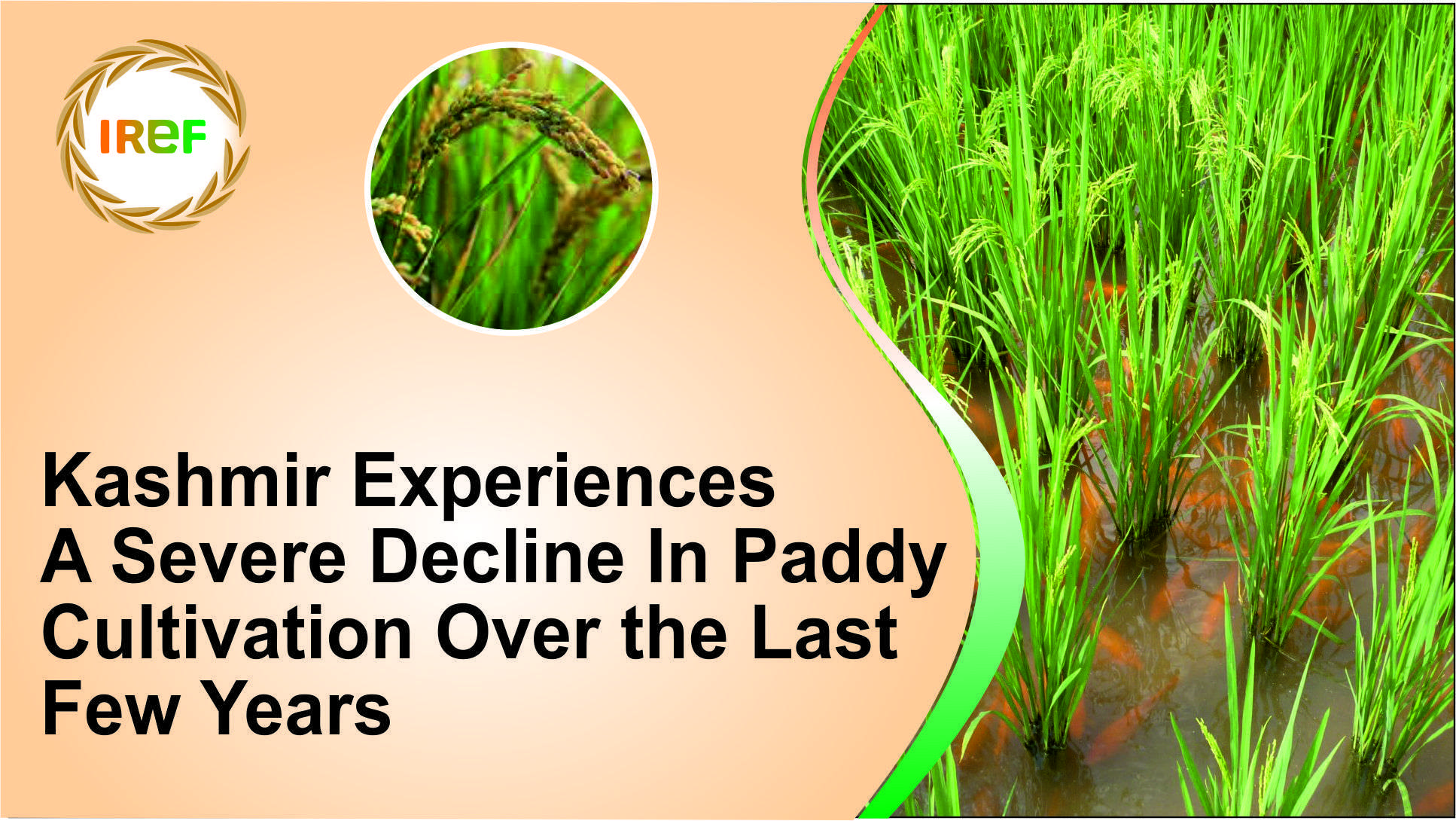
Kashmir, being a rice-consuming region, is experiencing a severe decline in Paddy cultivation, threatening the region’s Food security and creating dependency on external rice supplies. According to the data accessed through RTI, the total area under paddy cultivation in Kashmir has reduced by more than 11,000 hectares over the past five years, falling from 1,41,340 hectares in 2020 to just 1,30,050 hectares in 2025. This disturbing transformation in the Agricultural landscape is caused by Changing Weather Patterns and the ongoing trend of using fertile land for construction and commercial purposes.
In addition, according to the data, some districts have observed severe losses in Paddy cultivation, such as Budgam and Kulgam. Bugam observed a sharp fall from 25,000 hectares in 2020 to just 15,545 hectares in 2025, whereas Kulgam reduced from 16,000 to 11,141 hectares.
On the contrary, some districts, such as Pulwama (16,500 to 16,808 ha), Anantnag (24,500 to 25,056 ha), Kupwara(17,000 to 17,308 ha) and Bandipora (9,990 to 10,298 ha) have witnessed a slight increase, but it is not able to compensate for the overall decline.
One of the farmers stated that the prolonged summer dry spell has intensified the crisis. He said: “Earlier, we would irrigate our farms using streams and canals. Now, those water sources are vanishing. Our land too is reducing alongside the water, besides houses, roads and shopping complexes. Moreover, Farmers across the rice-consuming state expressed lamentation over the conversion of agricultural land into residential colonies and commercial complexes. Notably, according to official records, the rice-consuming region had nearly 1,62,000 hectares under paddy cultivation in 2012.
Not only this, but a senior agricultural scientist noted that a growing shift towards horticulture has occurred in the rice-consuming region, which could also be a contributing factor to the overall decline, since farmers are abandoning rice cultivation due to higher returns.
Undoubtedly, the reduction in Paddy cultivation would lead to a disturbance of the food self-sufficiency, ecological balance including and the livelihoods of thousands of rural families in the rice-consuming region.
Share this article
Article Info
Read Time
2 min read
Published
29 Jul 2025
Author
Megha Bajaj
Category
News