Basmati Rice Exporters Facing Pressure: Urge For Govt Action On Shipping Charges Amid West Asia Crisis
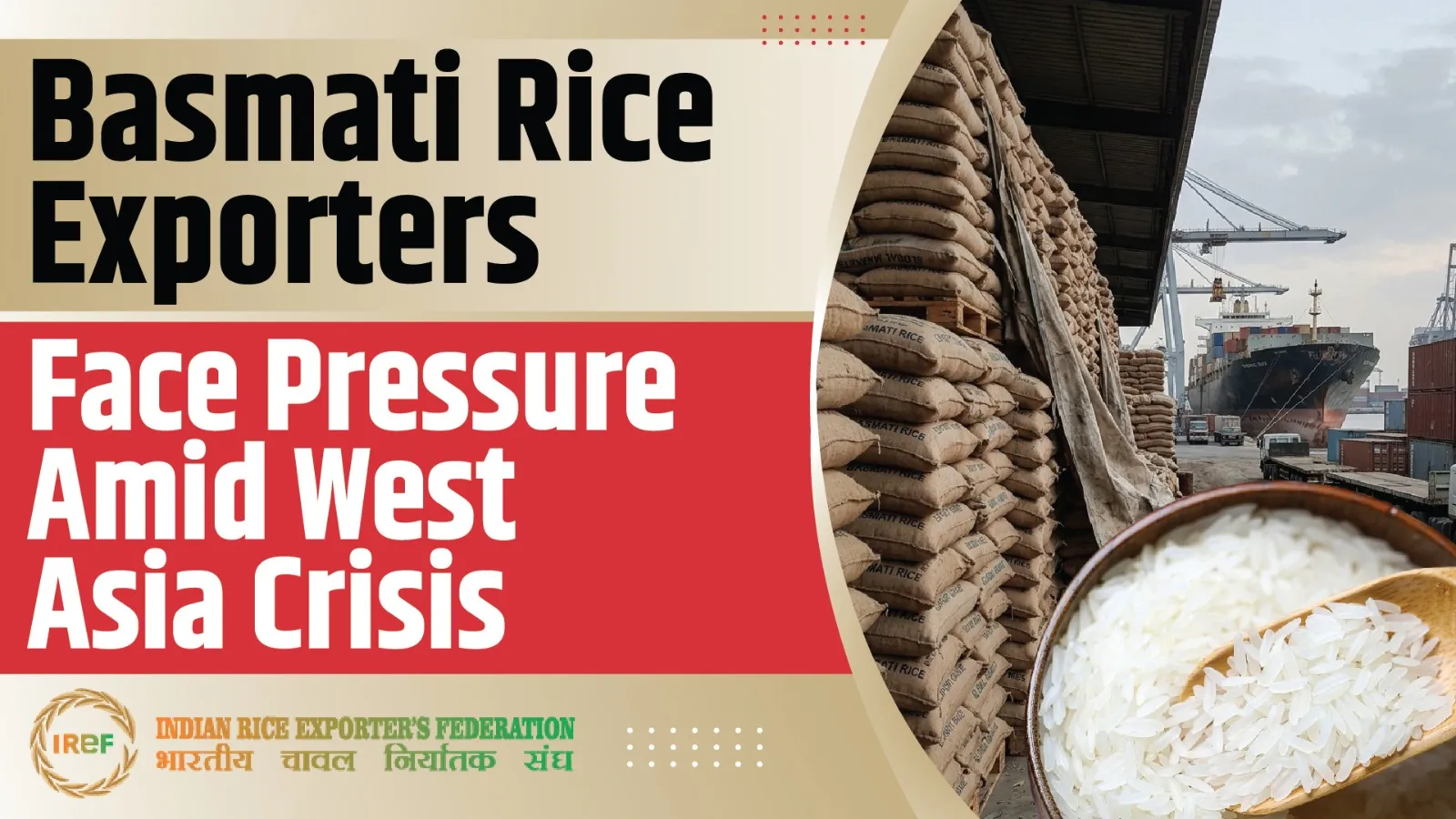
On Monday, April 28, the Basmati Rice Farmers and Exporters Development Forum urged the Centre to take urgent action against the arbitrary and opaque shipping charges that have made exports certain for several Basmati rice exporters in India. Undoubtedly, the Basmati rice exports are facing hardships since the Middle East conflict began, as Iran and other Gulf nations are major destinations for India’s basmati rice exporters, whereas African countries are known for non-basmati rice exports.
What has Forum said about shipping charges for Basmati rice exporters?
The Forum stated that war-risk surcharges have ranged from $800 to $6000 per container, generally imposed without any notice or revised after cargo has already moved. Not only this, but in some cases, cumulative charges have reached 60 to 70 per cent of the cargo value. In addition, Forum Chairperson Priyanka Mittal said: Exporters are being asked to absorb open-ended financial liability for circumstances entirely beyond their control”. Moreover, Basmati rice exporters in India say that they are paying the full financial cost of these decisions despite refusing them. Interestingly, India is one of the largest exporters of Basmati rice, but is still battling with numerous issues amid the Middle East Crisis.
Also Read:
Unshaken By Middle East War: Indian Basmati Rice Exports Stay Resilient
Basmati Rice Exports Turn Fragile and Fluctuating Amid Middle East Crisis
Demands of BRFEDF
BRFEDF demanded that the ministry-linked charges strictly to services rendered, require shipping lines to release containers without tying returns to disputed fees, and give lucid regulatory guidelines for cargo handling during the Middle East Conflict. Apart from this, India accepted that India’s directorate general of Shipping had formally recorded exporters’ complaints and alloted tracking numbers for submission to an inter-ministerial group. However, the conditions on the ground remained extremely challenging. Amid all of these, smaller exporters have been hit hardest, with the forum citing a sharp imbalance in bargaining power between large global carries and individual traders, leaving several with little recourse. Surprisingly, some of them said that the accumulating charges has forced them to consider abandoning cargo altogether. Furthermore, Mittal asserted that if left unaddressed, such practices risk setting a precedent that could weaken confidence in India’s maritime trade framework.
Iran is significant for India in terms of Basmati rice exports
Notably, the Gulf nations, including Iran hold significant importance for India in terms of Basmati exports. According to reports, Basmati rice exports to Iran have sent through alternative routes to bypass the Strait of Hormuz in an effort to ensure uninterrupted supplies to the Middle East region. However, experts warn that identifying new routes could extend transit times and further lengthen the working capital cycle, potentially increasing working capital requirements by an estimated 10–15 percent. According to rating agencies, Basmati rice sales are expected to remain steady in Financial Year 2026-27.
India-one of the world's largest exporter of rice
Apparently, India holds the distinction of being the world's largest exporter of Basmati rice as well. India exports Basmati not only to the Gulf nations but also to European countries including the UK as well as to the United States. However, the Gulf nations remain particularly significant markets for Basmati rice . The recent geopolitical developments in the Middle East have cast a shadow of concern over Indian Basmati rice exporters since shipments are facing delays, payments are getting stalled, and rising freight costs have heightened the risk of financial losses. At the same time, a recent report by the rating agency CRISIL projects that, although tensions in the Gulf region have impacted India's Basmati exports to Iran, a key market in the Middle East the overall volume of India's Basmati rice exports is expected to remain steady during in FY2026 and FY2027 due to increased demand from other nations such as Saudi Arabia, Iraq, the United Arab Emirates, and Yemen which is expected to offset the losses resulting from the decline in exports to Iran.
Share this article
Article Info
Read Time
4 min read
Published
29 Apr 2026
Author
Megha Bajaj
Category
News