Unshaken By Middle East War: Indian Basmati Rice Exports Stay Resilient
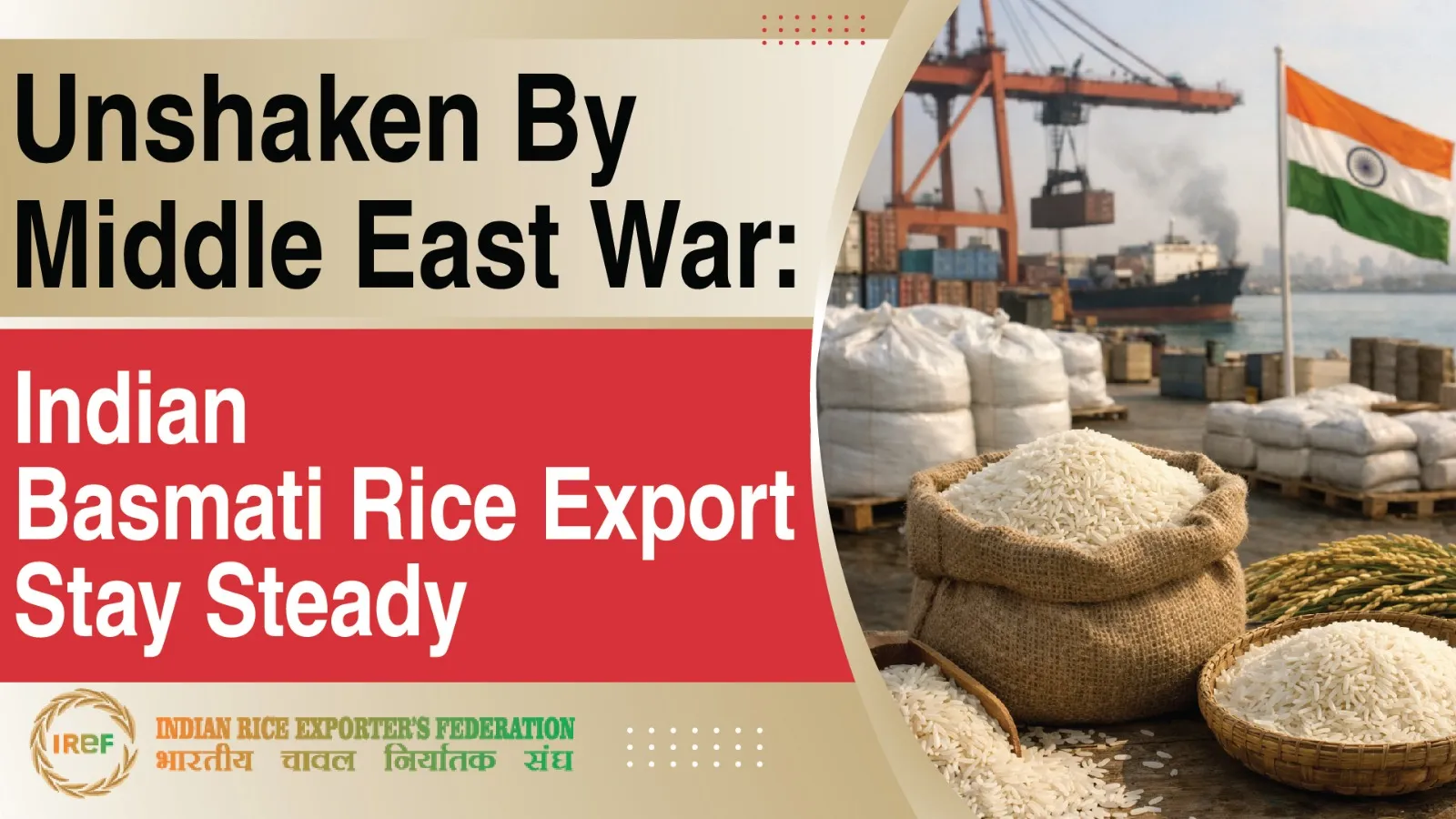
Undoubtedly, the recent Middle East War has sent shockwaves to the entire world, impacting the economies and sectors worldwide. One of the major sectors are the Indian rice exports, particularly Basmati rice exports, within which India ships substantial rice volume to Iran and other Gulf nations. Amid concerns related to the rice exports to the Middle East, a latest report by CRISIL suggests that despite tensions in the Gulf region that may have disrupted Indian Basmati shipments to the Middle East, however, India's Basmati rice export volume is expected to remain stable during the fiscal years 2026 and 2027. As per the report, the export could even witness an increase of 2 per cent compared to the 6.06 million tons exported in the last fiscal year. The report published by CRISIL Ratings indicates that any losses resulting from disruptions to Basmati rice exports to Iran are likely to be offset by increased shipments to countries such as Saudi Arabia, Iraq, the United Arab Emirates, and Yemen.
Iran solely accounted for 14 per cent of India’s total Basmati Rice Exports
When it comes to the previous fiscal year, the report noted that Iran accounted for 14 per cent of India's total Basmati exports. Notably, when this per cent combined with other Middle Eastern and West Asian nations, this figure increases from 70 to 72 per cent. Notably, the ongoing war between Iran and Israel has now disrupted the flow of Basmati exports from India to Iran. In the latest assessment, the rating agency CRISIL Ratings has warned that India's Basmati exports could face adverse effects if logistical challenges persist for approximately one month.
India's Basmati export volume to remain robust due to exports to other nations
According to this agency, the trade volume of Basmati rice could be impacted by 350,000 to 370,000 tons. However, Nitin Kansal, Director at the agency said that India's Basmati export volume is likely to remain robust, as its exports to other nations, which collectively account for 55 to 60 percent share of the total volume, are projected to grow by 5 to 6 per cent. Furthermore, rice exporters will pass on any increases in freight and insurance costs to their customers, thereby helping to safeguard their operating profits. In addition, a report by the agency, which analysed India's Basmati exports amidst the ongoing turmoil in the Gulf region notes that despite a projected rise in debt levels within this segment, balance sheets are expected to remain healthy, ensuring that credit profiles remain steady.
Iran – significant for India in terms of Basmati exports
Additionally, the agency's report highlights that logistical bottlenecks such as limited vessel availability, extended transit times, and payment-related challenges could prolong the working capital cycle for Basmati rice exporters, leading to an increase in working capital borrowings. Notably, the Gulf nations, including Iran hold significant importance for India in terms of Basmati exports. Consequently, reports suggest that Basmati rice exporters are exploring alternative routes to bypass the Strait of Hormuz in an effort to ensure uninterrupted supplies to the Middle East region. However, experts warn that identifying new routes could extend transit times and further lengthen the working capital cycle, potentially increasing working capital requirements by an estimated 10–15 percent. According to rating agencies, Basmati rice sales are expected to remain steady in Financial Year 2026-27.
India is the world's largest exporter of rice
Apparently, India is the world's largest exporter of riceIndia holds the distinction of being the world's largest exporter of Basmati rice as well. India exports Basmati not only to the Gulf nations but also to European countries including the UK as well as to the United States. However, the Gulf nations remain particularly critical markets for Basmati. The recent geopolitical developments in the Middle East have cast a shadow of concern over Indian Basmati rice exporters since shipments are facing delays, payments are getting stalled, and rising freight costs have heightened the risk of financial losses. At the same time, a recent report by the rating agency CRISIL projects that, although tensions in the Gulf region have impacted India's Basmati exports to Iran, a key market in the Middle East the overall volume of India's Basmati rice exports is expected to remain steady during in FY2026 and FY2027 due to increased demand from other nations such as Saudi Arabia, Iraq, the United Arab Emirates, and Yemen which is expected to offset the losses resulting from the decline in exports to Iran.
Share this article
Article Info
Read Time
4 min read
Published
17 Mar 2026
Author
Megha Bajaj
Category
News