India Exports Under Pressure: Middle East Conflict Disrupts Veggies, Makhana & Handicrafts
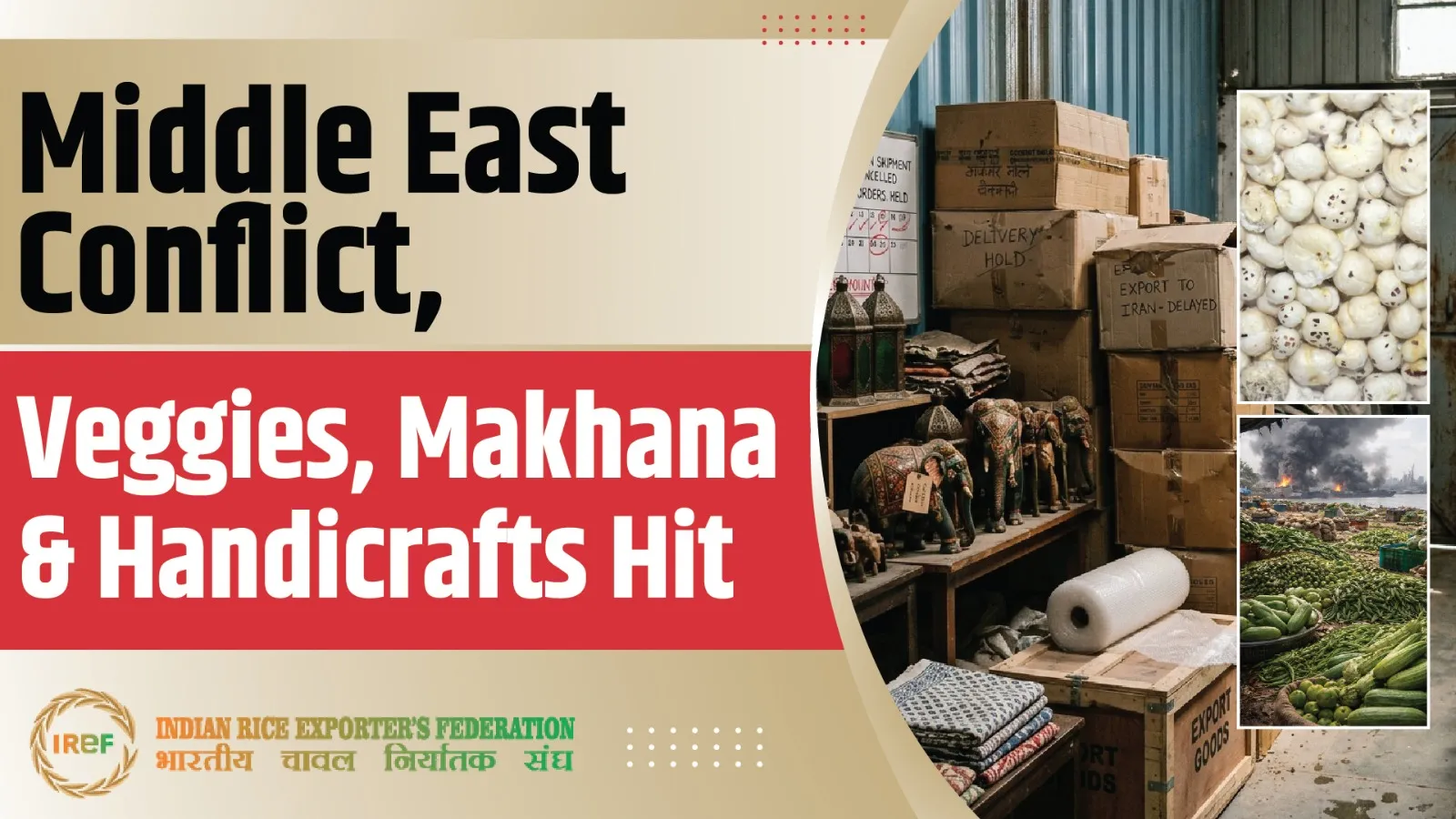
The Middle East conflict may have halted or remain under a two-week ceasefire, but it has sent shockwaves across the sectors. Its footprints can be observed thoroughly in the different sectors of the markets. In India, the Middle East conflict has already shown its impact on Basmati rice exports since Gulf countries are the key destinations for India’s Basmati rice exports. Now, this dreadful impact has extended its wings by affecting some of the other exports, such as Vegetable exports, Makhana exports and handicraft exports.
Disruption of Vegetable Exports from Palakkad amid the Middle East Conflict
The vegetable exports from Palakkad, including the traditional golden cucumber is combating a major crisis this season since the consignments to Gulf countries being sent in chartered flights amid severe disruptions in regular cargo services. According to exporters, the geopolitical tensions in West Asia have caused restrictions on air cargo services and uncertainty in sea transport. The disruption has emerged when demand for vegetables typically doubles among Malayalis in the Gulf during the Vishu season. Moreover, a reduction in vegetable exports has caused a drop in vegetable prices in the local market during Vishu. As per traders, the Golden cucumber is priced at 20 to 25 Rs per kg, which has been used to be priced at nearly Rs 100 earlier.
Bengal’s Makhana is also in the queue, facing an export crisis
Surprisingly, Bengal’s Makhana is also in this que, facing an export crisis amid the Middle East conflict. The Fox nut industry of West Bengal’s Malda district has suffered a major setback amid the West Asia crisis since Makhana exports to significant Middle Eastern markets have been disrupted. Undoubtedly, Makhana was considered a superfood in international markets. Additionally, traders and exporters reported that logistical obstacles such as delays and reduction in demand and prices of the commodities, as well as severe disruptions on shipments to the Middle East region, have substantially affected the market. Moreover, local businesses requested the state government to step in with measures to promote and stabilise the industry. Not only this, but they have also asked for policy support and market expansion initiatives to protect livelihoods dependent on the trade.
The Middle East Conflict has not left the Udaipur Handicraft Industry either
Besides these, Udaipur’s renowned handicraft industry has also been severely affected by West Asia tensions. Notably, Handicraft exports have been completely halted, resulting in mounting losses of crores every month. Interestingly, Rajasthan’s Udaipur exports furniture with glass and bone inlay work, silver furniture, wood products painted with natural dyes, white metal decorative pieces, and carved marble fountains to International markets. But the conflict situation has brought these products into showrooms at low prices. Now, the traders are expecting that the tourist season of September could revive the pathetic market.
Apparently, export orders are declining, and a vague uncertainty is looming over the future of these sectors. Whether rice or makhana, handicraft or vehicle sector. Not even a single sector has remained intact from the impact of the Middle East conflict.
Share this article
Article Info
Read Time
3 min read
Published
15 Apr 2026
Author
Megha Bajaj
Category
News