Bangladesh Rice Imports Hit 7-Year High Amid Production Shortfalls
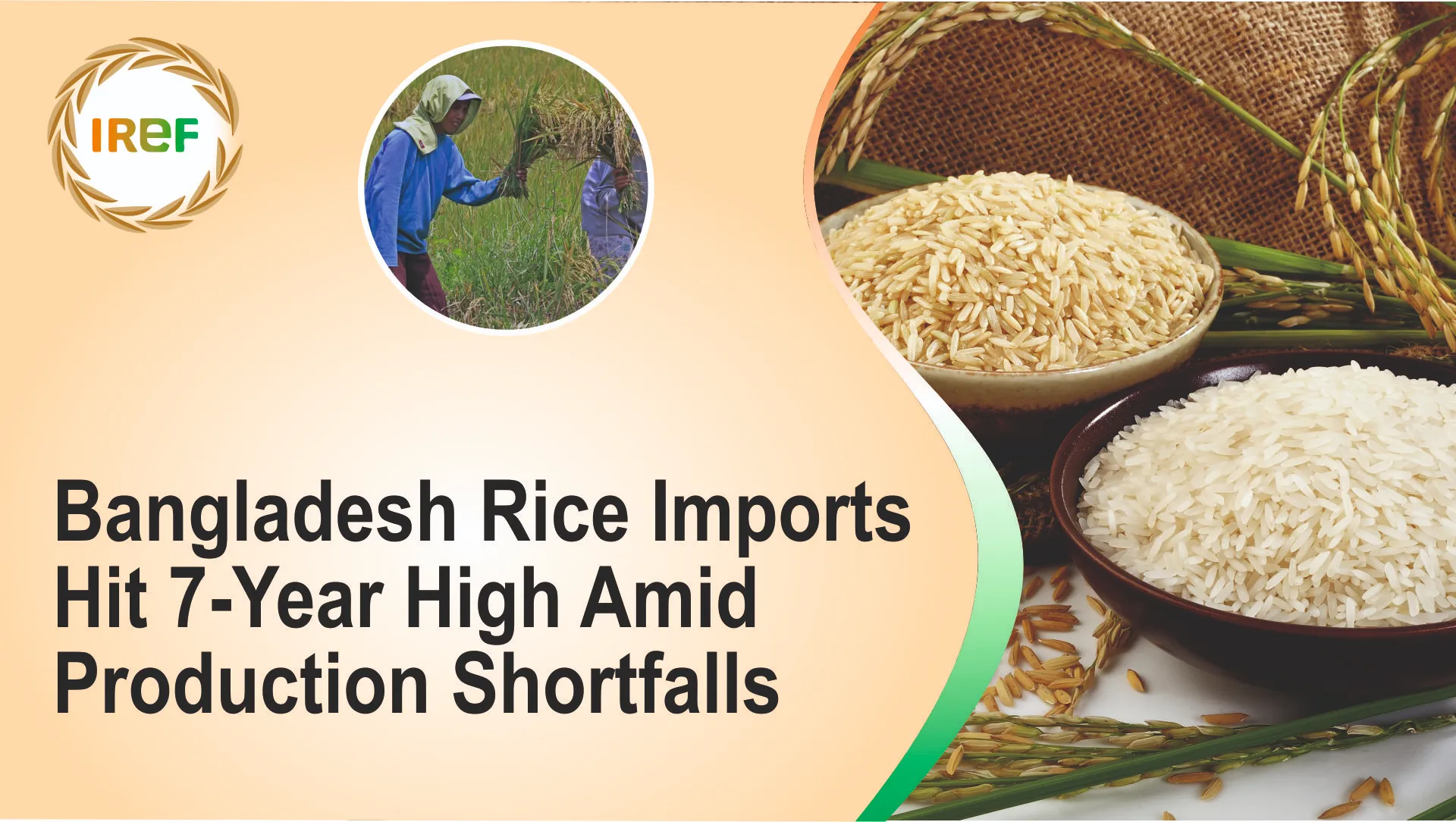
Bangladesh’s rice imports hit a new high breaking a seven-year-old record in the last fiscal year (FY25) of 2024-25. Unfortunately, the record is not worth celebrating and is driven by a shortfall in domestic production. As per the official data released, Bangladesh public and private importers brought a surprising quantity of 14.36 lakh tonnes of rice last fiscal year, the highest since FY18, when Bangladesh imported 31.6 lakh tonnes of the staple.
Experts Say- “The Nation was Supposed to Have a Surplus”
Commenting on the latest import data released experts said Bangladesh was in any case not supposed to import any rice if the production had been up to the mark. Instead of having the need of import of rice the country was in the condition of having a surplus of rice. "Sudden floods in the southeast region damaged a substantial amount of Aman season paddy, necessitating a significant amount of imports," said Food Adviser Ali Imam Majumder. Floods in August and September damaged around 10 lakh tonnes of Aman (a major rice growing season in Bangladesh) just prior to flowering in Chattogram, Sylhet, and Mymensingh divisions, according to the Department of Agricultural Extension's previous estimate. Rice Production data of FY25 is yet to be published. The Bangladesh Bureau of Statistics (BBS) has so far published estimates of the production of Aus and Aman for FY25, citing that it fell 1.5 percent year-on-year to 1.93 crore tonnes.
Questions Over Data
The US Department of Agriculture forecasted the production of Bangladesh’s Boro Rice at 2.05 crore tonnes. Considering the forecast of the US Department of Agriculture total rice production in FY25 stans at 3.98 crore tonnes- which is much higher than the annual demand of rice.
In the previous FY24, rice production hit the highest at over 4 crore tonnes, leaving a surplus against the estimated demand.
"If we consider production, demand, and consumption altogether, there appears to be a gap somewhere in the statistics," Bangladesh Rice Research Institute (BRRI) Director General Mohammad Khalequzzaman told The Daily Star.
Being the staple food for Bangladeshis any discrepancy in rice production or its data means inflation and food stress for low-income households who are mainly dependent on rice.
Share this article
Article Info
Read Time
2 min read
Published
12 Aug 2025
Author
Megha Bajaj
Category
News