Top Rice News: Kharif Acreage Fall, Odisha’s New Storage And Biomass Hub
Here’s the latest top rice news today which highlights how rice takes biggest hit as Kharif acreage drops 15.56 lakh hectares and why does Odisha Plan 10 Lakh MT Additional Rice Storage. Moreover, Vitenam builds Rice Husk Biomass Hub in Mekong Delta. These are some of the major rice developments in the global rice sector today. Keep yourself updated with such rice stories on daily basis.
Rice Takes Biggest Hit as Kharif Acreage Drops 15.56 Lakh Hectares
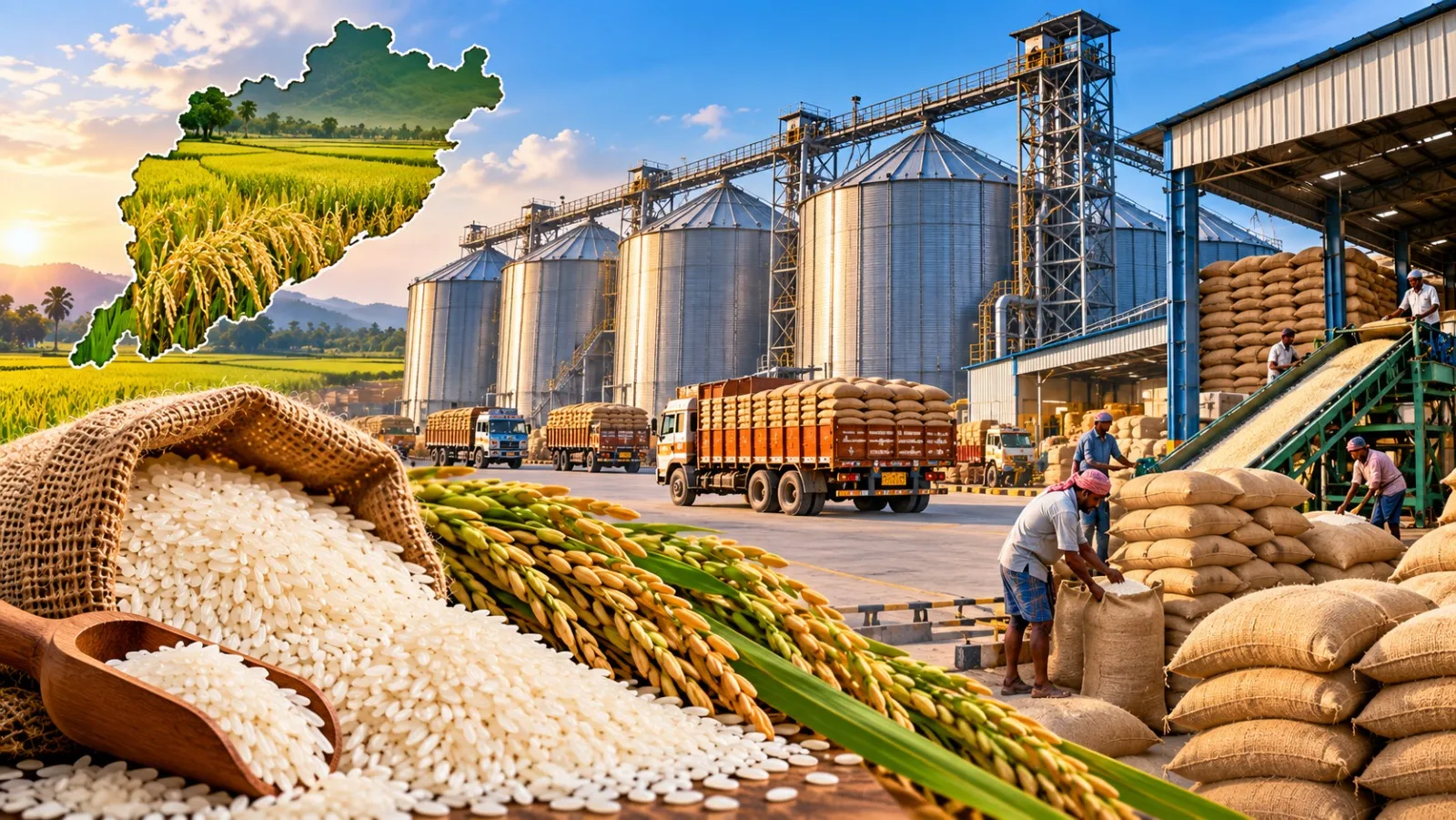
Rice has emerged as the worst-hit major kharif crop in India this season. The area under paddy cultivation dropping by 15.56 lakh hectares, or 3.5%, compared with last year. The Agriculture Ministry’s final crop-wise sowing data stated that the rice was planted in the 433.62 lakh hectares as of October in the comparison of 449.18 lakh hectares during last year.
Notably, the decrease has been attributed largely to below-normal and uneven monsoon rainfall, which impacted sowing and water availability in several significant rice-producing states. In this case, Telangana recorded the sharpest decline, with rice acreage falling by 4.26 lakh hectares. Karnataka followed with a reduction of 4.23 lakh hectares. It takes its paddy area to 6.20 lakh hectares. In addition, Uttar Pradesh reported a decline of 1.84 lakh hectares. The states such as Madhya Pradesh, Andhra Pradesh, Tamil Nadu, Jharkhand and Maharashtra recorded reductions.
But, rice acreage increased in some states, including Odisha, Assam and Bihar. Despite the national decline, the government continues to monitor food grain availability closely. The reduced rice acreage is important because paddy is one of India’s most important kharif crops, and lower cultivation could affect yields, prices and supplies if production also falls substantially.
Why Does Odisha Plan 10 Lakh MT Additional Rice Storage?
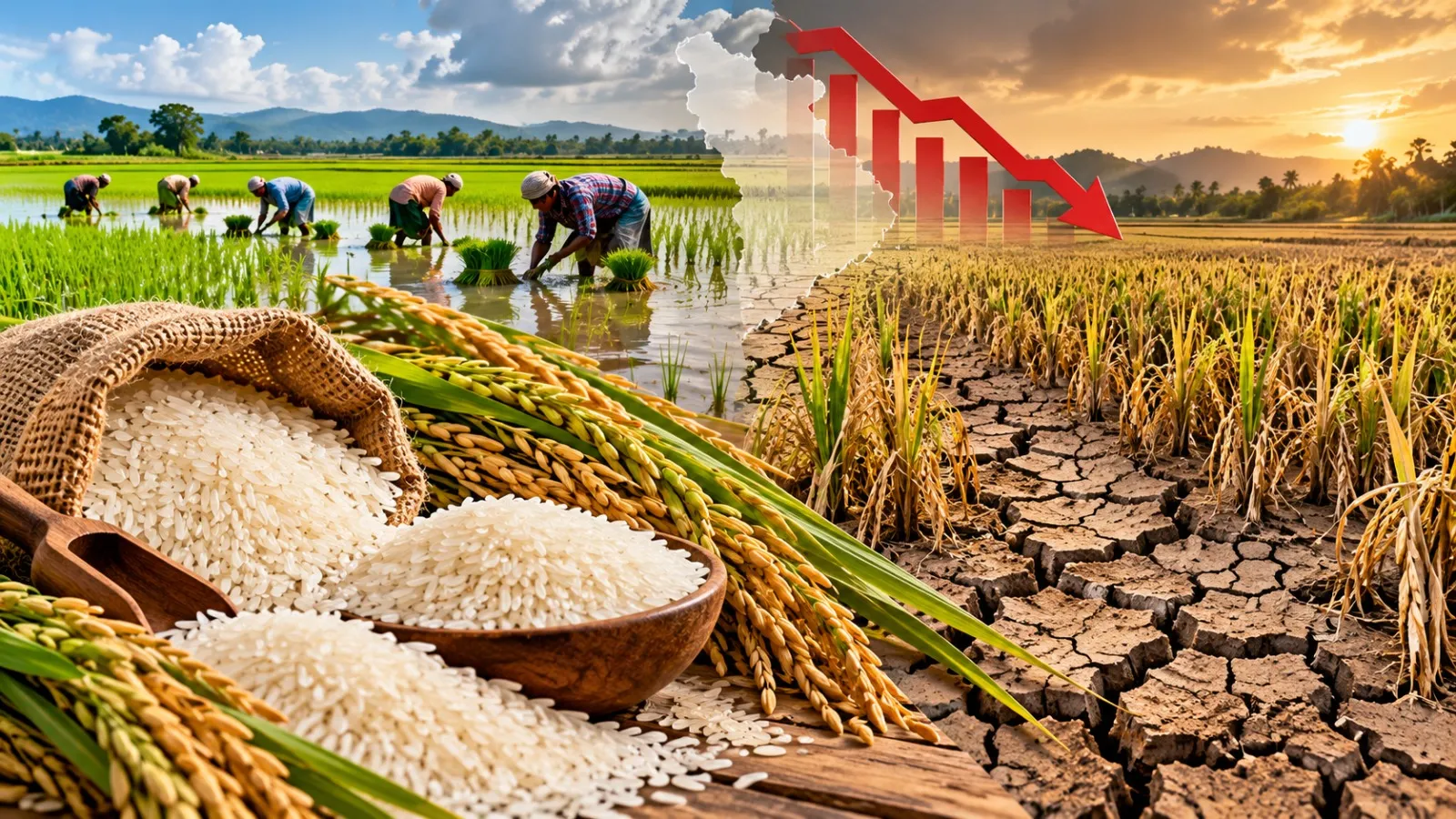
In order to manage the state’s growing paddy procurement, the Odisha government is planning to create 10 lakh metric tonnes of additional storage capacity for rice. The new capacity will be developed under the Odisha State Private Entrepreneur Guarantee Scheme through a public-private partnership model.
The project will be take place in two phases. Nearly 4 lakh metric tonnes of storage capacity will be developed in the first phase. It is followed by another 6 lakh metric tonnes in the second phase. The move comes as Odisha has witnessed a substantial increase in paddy procurement in recent years.
Moreover, government data shows that paddy procurement increased from 70.88 lakh metric tonnes in 2023–24 to 97.94 lakh metric tonnes in 2025–26. The increase has been supported by higher minimum support prices and increased participation by farmers. The state government has spent more than ₹30,126 crore on procurement during the period. The storage expansion is aimed at boosting Odisha’s food supply chain and addressing the growing gap between procurement and available storage infrastructure. Of the 26.27 lakh metric tonnes of rice received from custom millers, the Food Corporation of India lifted 8.12 lakh metric tonnes during 2025–26. The additional storage is expected to help Odisha manage its paddy glut more efficiently.
Vitenam’s Mekong Delta Gets Rice Husk Biomass Hub
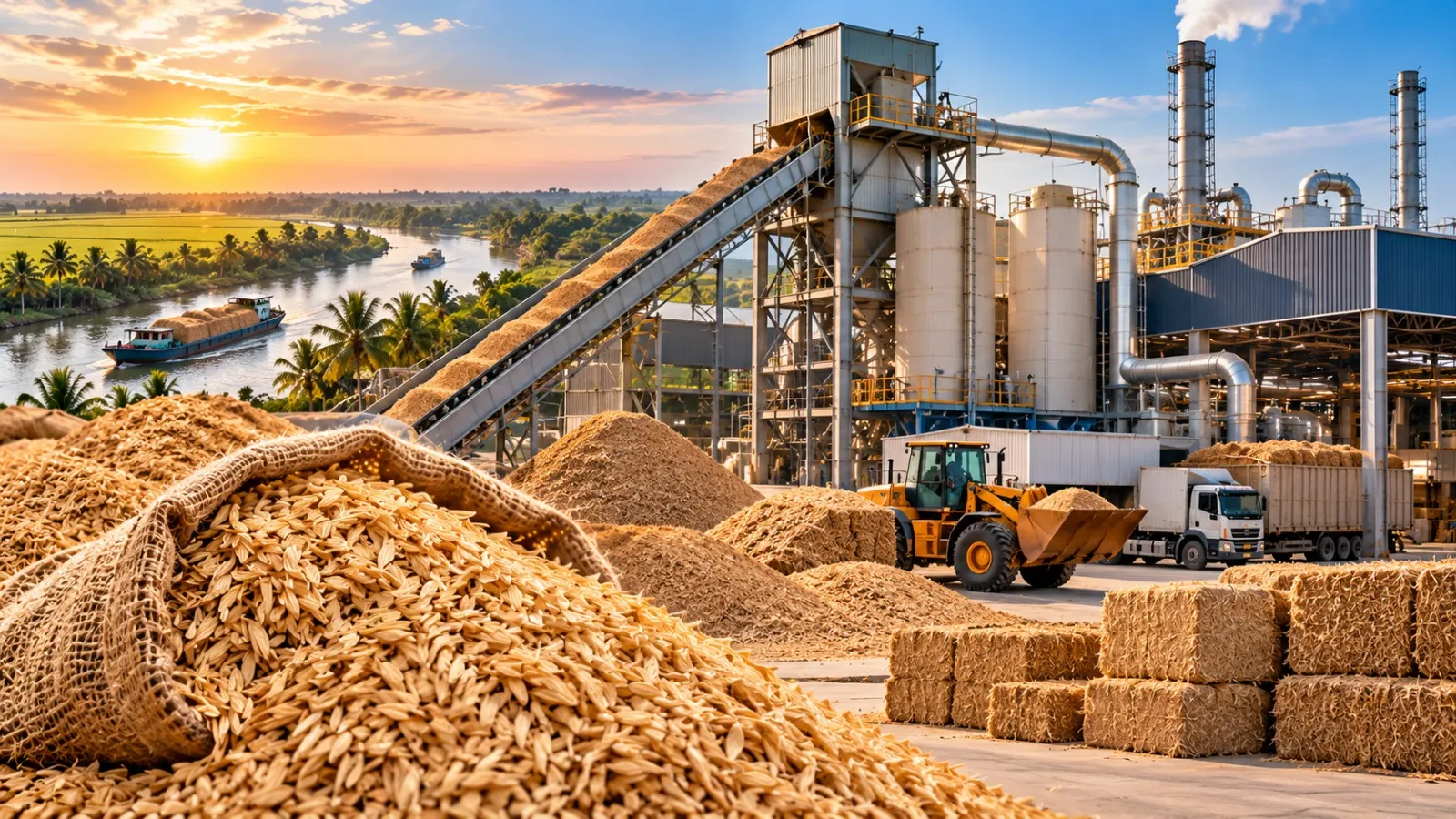
Vietnam, one of the major rice exporters, has begun construction of a major rice processing and biomass fuel complex in Can Tho City. It aims to convert rice husks into renewable energy It is developed by Green CT Company and the facility will have an annual rice-processing capacity of 500,000 tonnes. It is the first of five integrated rice-processing complexes with biomass supply centres planned in the Mekong Delta.
The project will collect rice husks generated during milling and supply them to the Hau Giang Biomass Power Plant. It turns an agricultural by-product into a source of clean energy. Currently, the plant consumes more than 100,000 tonnes of rice husks annually and supplies electricity to nearly 50,000 households. Japanese renewable energy company Erex, which invested in the facility, plans to develop 18 biomass power plants in the Vietnam.
Notably, the Mekong Delta is Vietnam’s largest rice-producing region. It covers about 3.6 million hectares and produces more than 24 million tonnes of paddy annually. The initiative is expected to support a circular economy by reducing agricultural waste, increasing the value of rice production and creating an additional revenue stream for farmers and cooperatives.
Share this article
Article Info
Read Time
4 min read
Published
7 Oct 2026
Author
Megha Bajaj
Category
Rice News