Top Rice News: Centre Restricts PDS, Thailand’s Push, And El Niño Looms
Top rice news Today: India has tightened Public Distribution System (PDS) rice quality standards by decreasing the permissible broken grain limit to enhance food quality for over 80 crore beneficiaries while generating significant savings. At the same time, Thailand is investing €118 million in climate-smart rice farming to reduce emissions, improve resilience, and strengthen its global rice competitiveness. Moreover, scientists have warned that a severe El Niño could disrupt rice production in major Asian producers, including India, China, and Southeast Asia, potentially driving up global rice prices and threatening food security for millions worldwide.
Centre restricts PDS Rice Quality, Cuts Broken Grain Limit to 10%
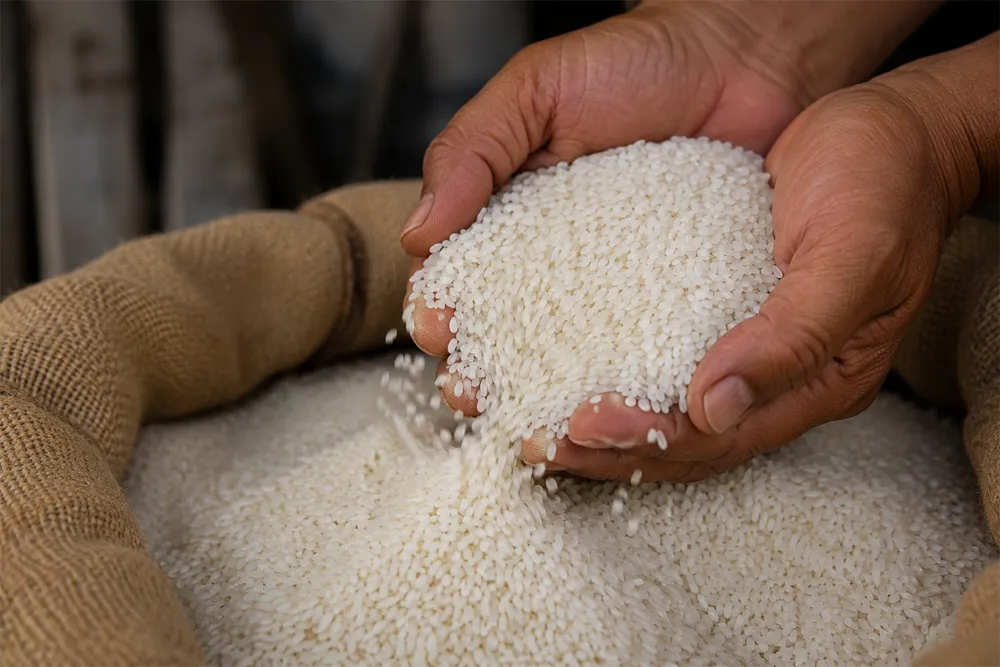
The Union Cabinet has recently approved a major revision to the quality standards of rice distributed under the Public Distribution System (PDS). It marks the first significant update in nearly three decades. Under the revised norms, the permissible broken grain content has been reduced from 25% to 10% for raw rice and from 16% to 5% for parboiled rice. Moreover, the decision is aimed at providing better-quality food grains to more than 80 crore beneficiaries covered under the Pradhan Mantri Garib Kalyan Anna Yojana (PMGKAY). Apart from improving the quality of rice supplied through welfare schemes, the government expects the move to generate estimated savings of ₹2,161 crore by decreasing handling, storage, and transportation costs. In addition, the policy will free up surplus broken rice, which can be diverted for value-added uses, including ethanol production, animal feed, and industrial applications, supporting the country's biofuel and circular economy objectives. The revised standards are expected to improve transparency and efficiency in the procurement and distribution process along with ensuring that beneficiaries receive better-quality rice. Additionally, the decision indicates the government's focus on boosting food security, enhancing public welfare, and optimising the utilisation of food grain resources.
Thailand’s Net-Zero Push Targets Rice Sector for Greener Farming
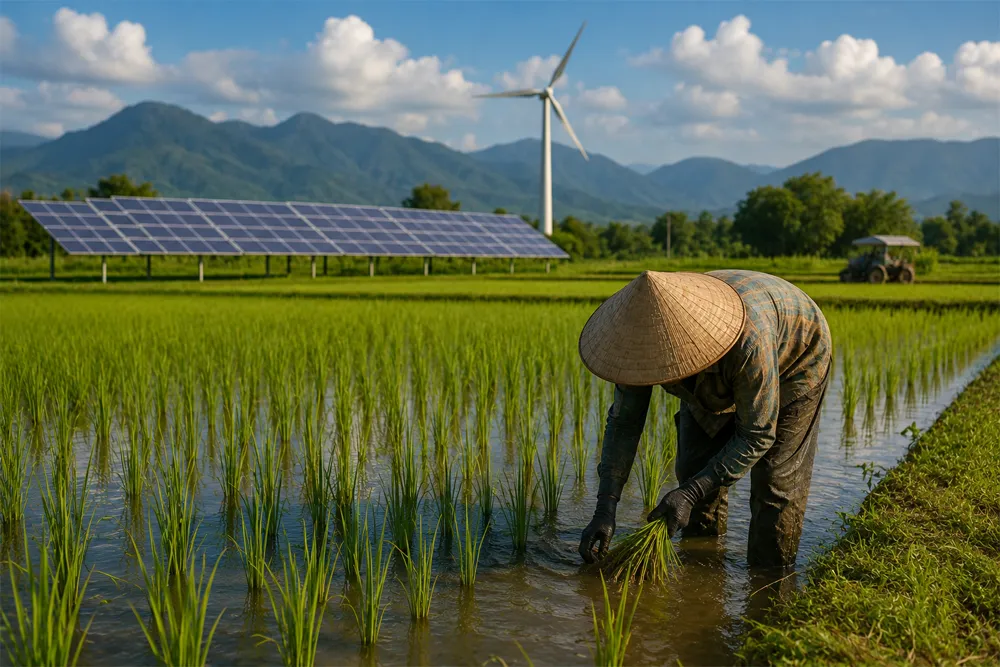
Thailand is escalating its transition to climate-smart rice farming to protect one of its most valuable agricultural sectors from the growing impacts of climate change. Through the Thai Rice: Strengthening Climate-Smart Rice Farming Project (2024–2028), backed by an investment of €118 million. The country aims to help nearly 253,400 rice farmers adopt sustainable cultivation practices while decreasing greenhouse gas emissions by 2.44 million tonnes of CO₂ equivalent by 2028. The initiative promotes innovative techniques including alternate wetting and drying, laser land levelling, site-specific nutrient management, integrated pest management, and climate-resilient rice varieties that can hold droughts, floods, heat, and salinity without compromising grain quality. These measures are expected to enhance water efficiency, sustain crop yields, and protect farmers' incomes along with preserving the global reputation of Thai jasmine rice. Beyond environmental benefits, the programme boost food security, improves export competitiveness, and demonstrates Thailand's commitment to building a resilient, low-carbon agricultural sector capable of meeting future climate and market challenges.
Severe El Niño Looms Over Global Rice Supplies, Warn Scientists
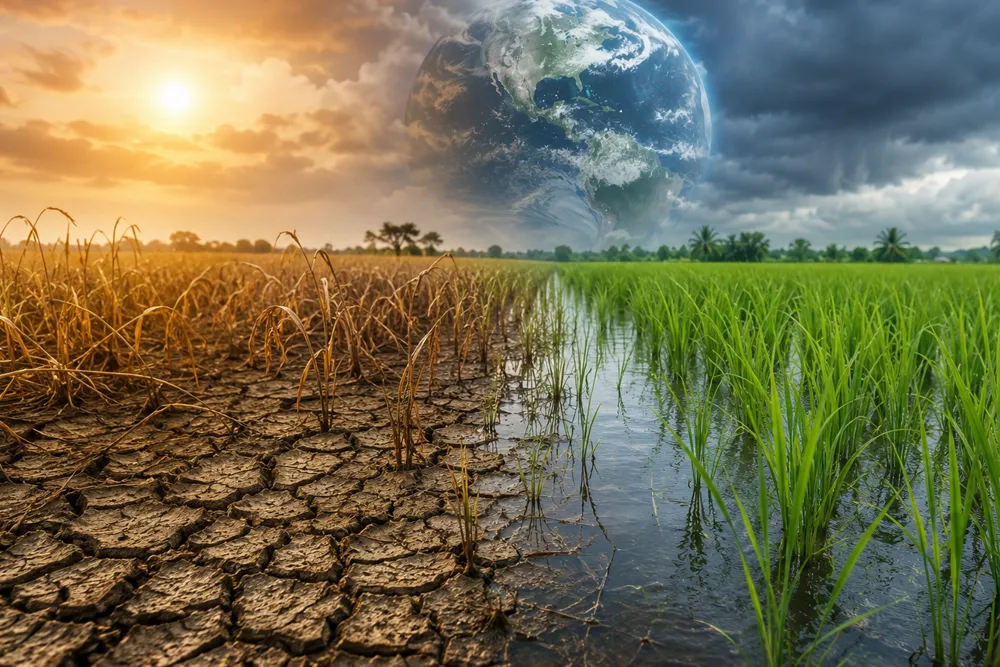
Some scientists have warned that a severe El Niño, which is amplified by rising global temperatures, could significantly disturb rice production in some of the world's most significant rice-growing regions. Countries such as India, China, Bangladesh, Vietnam, Cambodia, much of Southeast Asia, and eastern Australia may witness below-normal rainfall, prolonged droughts, and rising heat stress, threatening crop yields and agricultural productivity. Since rice is the staple food for more than half of the global population, any substantial decline in rice production could have far-reaching consequences for food security and international trade. Notably, lower rice output is likely to restrict global supplies, pushing up prices and increasing pressure on food-importing nations, particularly in developing economies. Also, the impact could influence farmers' incomes, disrupt export markets, and strain government food distribution programmes. Experts focus on the need for climate-resilient rice varieties, enhanced water management, and sustainable farming practices to decrease vulnerability to extreme weather events. Boosting early warning systems and investing in climate-smart agriculture will be essential to protect global rice supplies against future climate-related risks.
Share this article
Article Info
Read Time
4 min read
Published
2 Jul 2026
Author
Megha Bajaj
Category
Rice News