Top Rice News: Bengal’s Appeal, India's Exports Drop & Global Prices
Top rice news today highlights a request by the West Bengal rice industry for faster clearances and better infrastructure, a fall in India’s rice exports as Middle East Conflict disrupts Basmati trade and a rise in global rice prices amid supply deficit, geopolitical tensions and weather risks.
West Bengal Rice Industry Appeals New BJP Government for Faster Clearances, Better Infrastructure
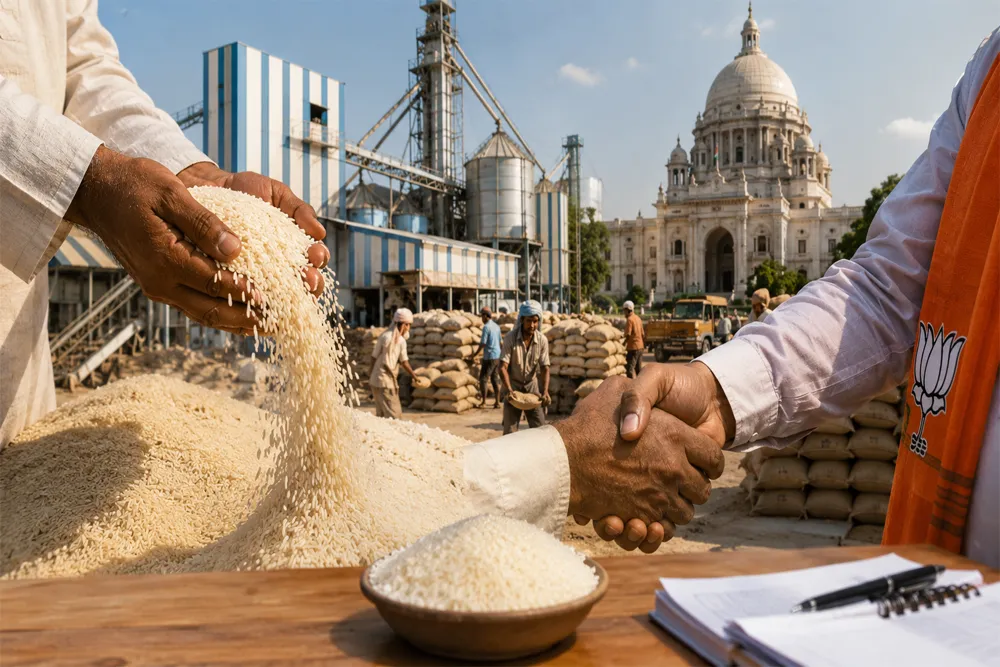
West Bengal’s rice industry has appealed to the newly formed BJP-led state government to take immediate steps to enhance infrastructure, simplify approvals, and boost export support to restore the sector and attract fresh investment. According to industry representatives, the rice sector, which plays a crucial role in the state’s rural economy and employment generation, has been facing various operational and logistical challenges over the past few years. The industry leaders stated that delays in getting electricity connections for rice mills, poor road connectivity in rural areas, and weak transportation infrastructure are affecting the smooth movement of paddy and rice in the state. Mill owners also indicated that inadequate warehousing and high logistics costs are affecting the competitiveness of West Bengal’s rice exports in international markets. Moreover, the industry has requested the government to introduce a single-window clearance system to speed up approvals and diminish bureaucratic delays for setting up and expanding rice mills. In addition, stakeholders have demanded the formation of a dedicated Rice Industry Development Board to address sector-specific issues, challenges, and support long-term growth. As per Industry experts, improving rail and port connectivity can improve export efficiency, especially for premium rice varieties like Gobindo Bhog and Tulai Panji, which have strong domestic and international demand. They also focused on the need for branding and promotional support to surge in global recognition of these speciality rice varieties. The sector hopes that stronger policy support and infrastructure development will help restore struggling rice mills, boost exports, and create more employment opportunities in rural West Bengal.
India’s Rice Exports fall 6% in April as Middle East Conflict Disrupts Basmati Trade
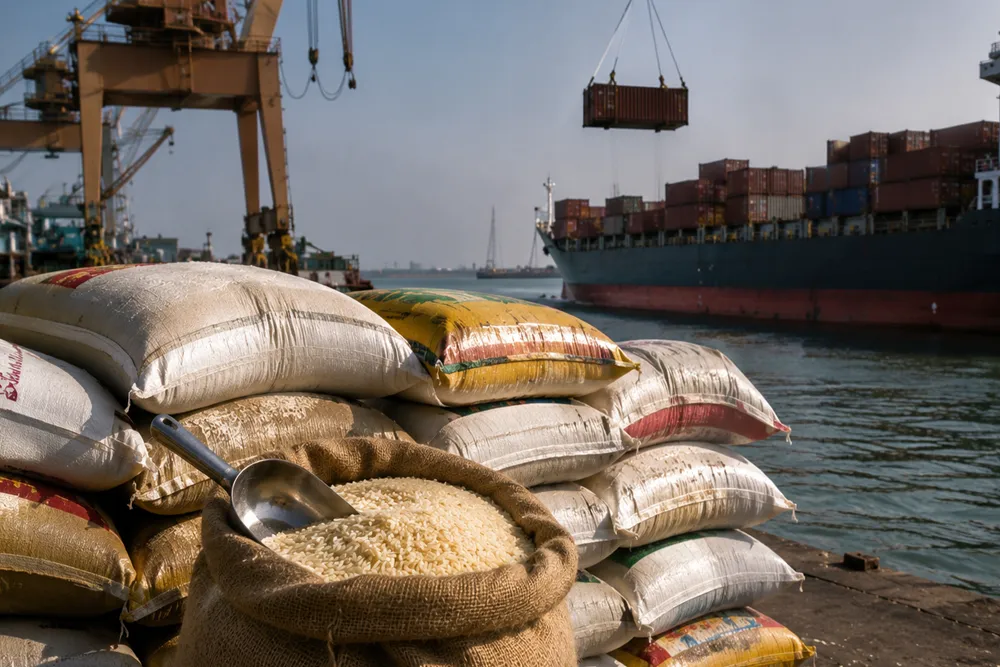
India’s rice exports have decreased by 6% year-on-year to $1.01 billion in April 2026, mainly due to major disruptions in basmati rice shipments caused by the ongoing conflict in the Middle East. Exporters and trade bodies have stated that rising geopolitical tensions in the Red Sea and the Strait of Hormuz have affected shipping routes, resulting in higher freight charges, increased insurance costs, and delays in cargo movement. As per industry sources, container shipping charges to Gulf countries have surged nearly tenfold in recent weeks as shipping companies face growing security concerns and rerouting challenges. The Gulf region is a crucial market for India’s basmati rice exports, accounting for nearly 70% of total shipments. Consequently, exports to major destinations like Iran, Saudi Arabia, the United Arab Emirates, Iraq, and other West Asian countries were severely affected during the month. Moreover, exporters stated that uncertainty in maritime trade routes has made buyers careful, while rising transportation costs have decreased the competitiveness of Indian basmati rice in global markets. Several exporters also reported delays in deliveries and difficulties in securing vessels and containers. At the same time, non-basmati rice exports remained stable despite lower price realisation due to global oversupply and weak international demand. Countries like Thailand and Vietnam continue to offer competitive pricing, putting additional pressure on Indian exporters. According to industry experts, unless geopolitical tensions ease and shipping routes stabilize, India’s rice export sector could continue to face volatility in the upcoming months.
Global Rice Prices Likely to Rise Amid Supply Deficit, Geopolitical Tensions, and Weather Risks
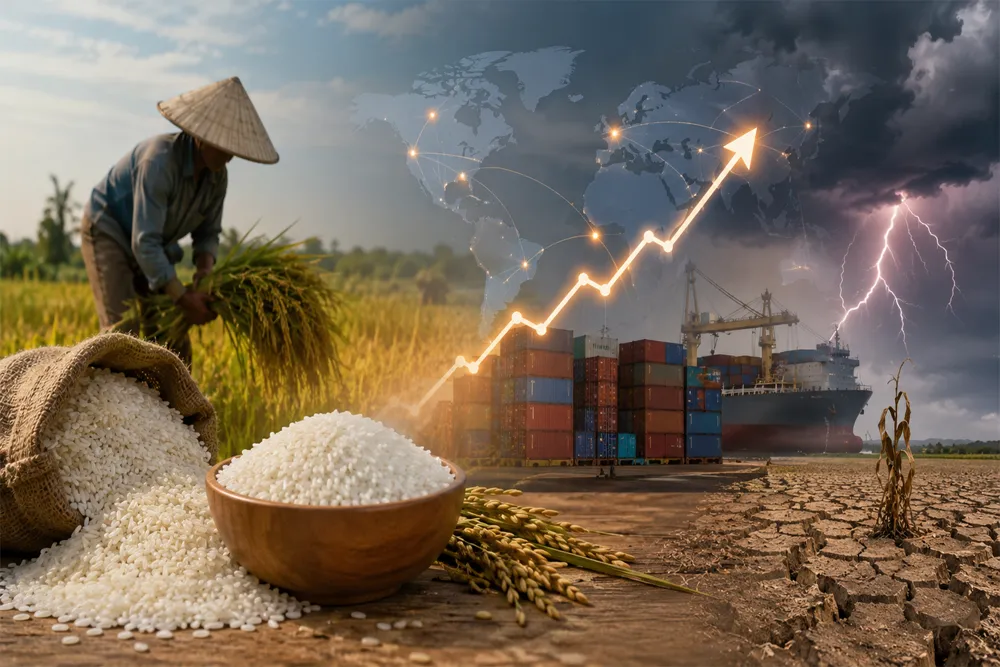
Global rice prices are expected to strengthen in the upcoming months as growing concerns over production deficits, geopolitical instability, and unpredictable weather patterns surge pressure on global supply chains. According to Market analysts, whereas current rice stocks remain comfortable, various emerging risks could tighten availability and lead to fresh volatility in international rice prices. One of the major concerns is the performance of the monsoon in the significant rice-producing regions in Asia. Countries like India, Thailand, Vietnam, Bangladesh, and Indonesia are heavily dependent on seasonal rainfall for crop production. Any irregularity in monsoon patterns could directly affect sowing, yield, and overall rice output. In addition, weather disruptions associated with El Niño and changing climate conditions are creating uncertainty around crop productivity and water availability. Geopolitical tensions are also adding pressure to the market. Ongoing disruptions in significant trade routes in the Red Sea and the Strait of Hormuz, have increased shipping costs and delayed cargo movement. This has made global rice trade more expensive and less predictable for exporters and importers alike. Market participants are closely examining production and export trends in major rice-exporting countries such as India, Thailand, and Vietnam. Any reduction in output, export restrictions, or logistical disruptions in these countries could quickly push prices higher.
Share this article
Article Info
Read Time
4 min read
Published
18 May 2026
Author
Megha Bajaj
Category
Rice News