Top Rice News: How Hormuz Tensions Disrupt India's Basmati Rice Exports?
Top rice news today covers how a reduction in the sowing of major kharif crops, including rice, oilseeds, and pulses, has begun pushing retail prices higher and why the steady increase in rice prices over the past few months has made it difficult for several households to manage their monthly expenses. Lastly, the ongoing US-Iran conflict is affecting India’s tea and basmati rice exports to West Asia, along with shipments delayed due to shipping disruptions, higher freight costs, and concerns over insurance and payment risks.
How Does Hormuz Shipping Turmoil Disrupt India's Tea And Basmati Exports?
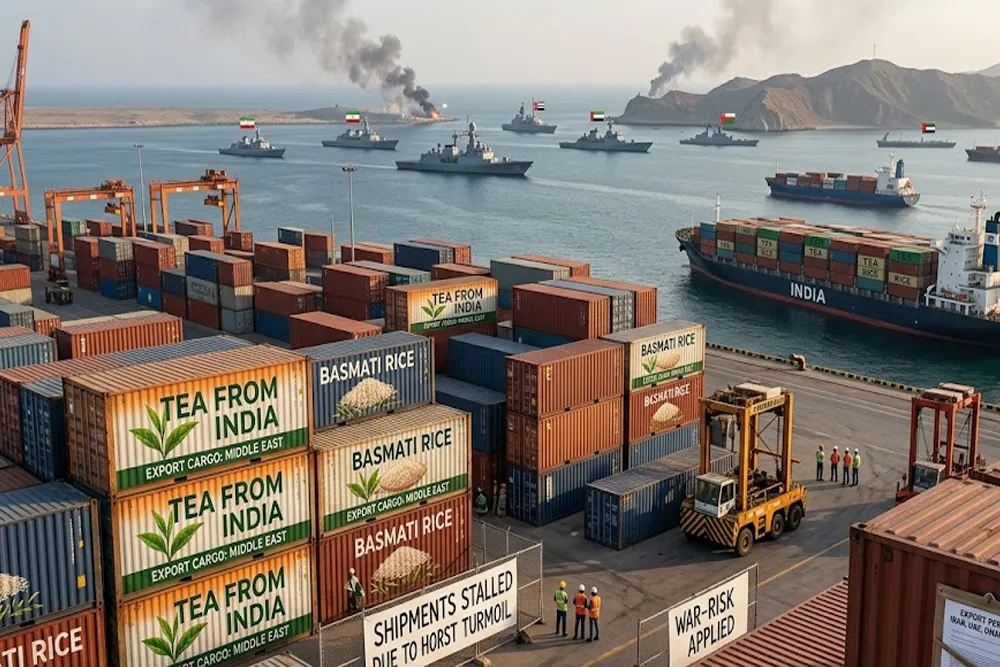
Amid the ongoing US-Iran conflict, rising tensions around the Strait of Hormuz have disrupted India’s commodity markets and export activities. The conflict has triggered fluctuations in precious metals, with gold and silver prices falling as investors react to uncertainty and changing market conditions. Moreover, the impact can also be observed on India’s tea and basmati rice exports to West Asia which have affected, with shipments delayed due to shipping disruptions, higher freight costs, and concerns over insurance and payment risks. In addition,
Tea exporters reported a slowdown in consignments to Gulf markets, whereas basmati rice containers remained stuck at ports, creating supply chain challenges. Exporters fear that a prolonged disruption could increase logistics expenses, reduce profit margins, and delay deliveries. The situation highlights India’s vulnerability to geopolitical shocks that affect trade routes, particularly through critical waterways. Businesses are preparing for higher costs and potential inflationary pressures if the crisis continues.
How Does Weak Kharif Sowing Push Up Rice, Pulses And Oilseed Prices?
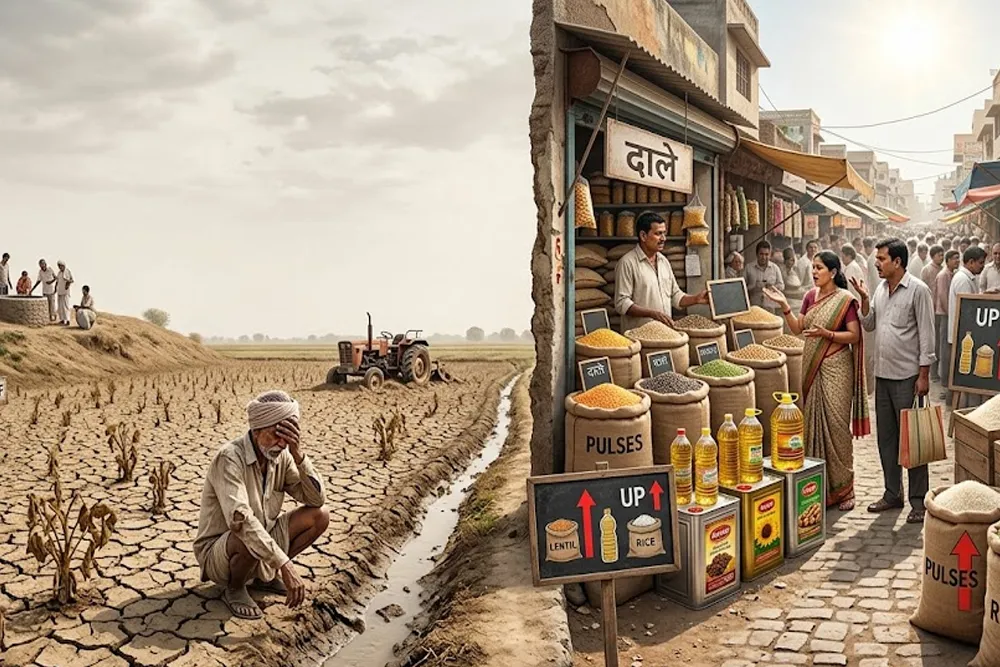
A reduction in the sowing of key kharif crops, including rice, oilseeds, and pulses, has begun pushing retail prices higher, creating fresh inflation concerns. Lower acreage compared with last year, along with delayed and below-normal monsoon rainfall, has raised fears of supply shortages in the upcoming months. Rice inflation increased as paddy cultivation declined, whereas pulses like tur, urad, and moong also saw higher price pressures due to reduced planting. Oilseed prices have risen further as acreage has fallen. Traders and wholesalers are holding stocks in anticipation of better prices, limiting market supply. According to experts, pulse prices may remain elevated until there is more clarity on crop output and harvest conditions. States with lower irrigation coverage are considered weaker and more prone to rainfall shortages. The situation underscores the impact of weather uncertainty on food prices and India’s agricultural supply chain.
Why Does A Surge In Rice Prices Strain Household Budgets In Andhra Pradesh?

According to reports, the sharp rise in rice price has become a significant issue of raising concern for common and middle-class families in the state, as the increasing cost of the staple food is placing a heavy burden on household budgets. Notably, the steady increase over the past few months has made it challenging for several households to manage their monthly expenses as they are raising constant demands for the government to intervene and check the price rise. Significantly, the rice price hike is shaking the household budget of numerous families in the state. Shockingly, a 26-kg bag of rice, which was sold around Rs 1,000 and Rs 1,300 during the Sankranti season in January, particularly on the variety and brand, is now being sold b/w Rs 1,500 and Rs 1,800. The rise of Rs 300 to Rs 500 per 26 kg bag is added to the household expenditure. Not only this, the widening gap between paddy procurement prices and retail rice prices has also become part of the inspection. Moreover, the pricing pattern has sparked allegations that rice millers are the biggest beneficiaries, leading to demands for greater transparency in pricing and stricter market monitoring.
Share this article
Article Info
Read Time
4 min read
Published
15 Jul 2026
Author
Megha Bajaj
Category
Rice News