Top Rice News: Grain Markets, Methane Emissions & Modern Agricultural Cooperatives
Top Rice News Today highlights the news from Indian grain markets, and rice farmers from Indonesia adopt climate-friendly methods to cut methane emissions. The strengthening of Cambodia’s rice sector by modern agricultural cooperatives.
India Grain Markets Mixed: Wheat Steady, Maize Weakens as Rice Demand Remains Tepid
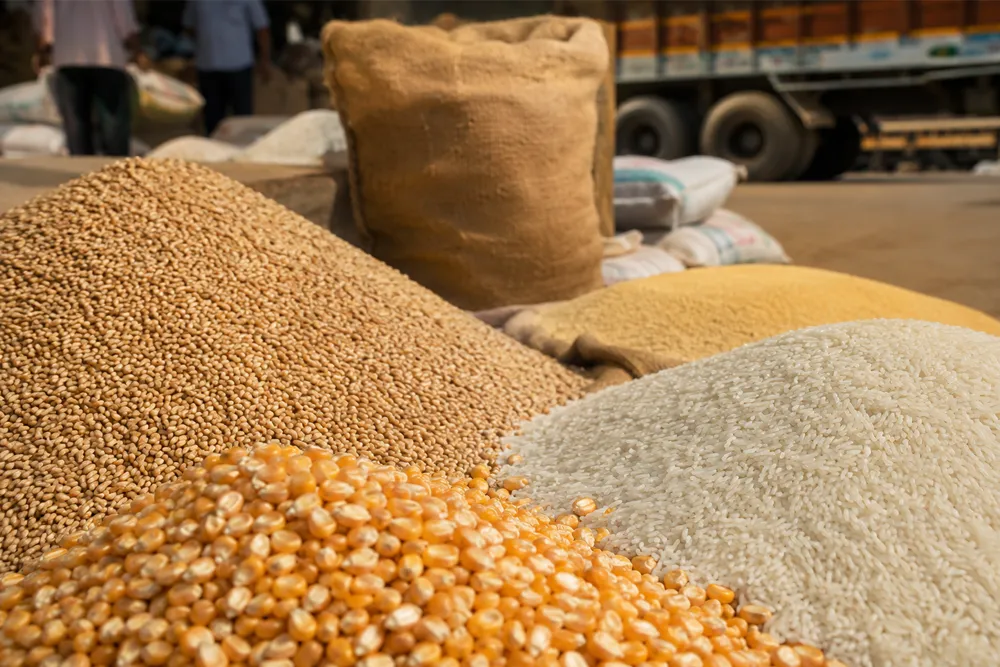
Grain prices remained unchanged in the major spot markets on Monday. Traders are expecting wheat prices to stay range-bound due to strong government procurement and limited market demand. At the same time, maize prices may face pressure from increasing arrivals of the summer crop, whereas select basmati rice varieties could reduce amid sluggish export demand. Notably, wheat prices in Indore rose by ₹20 to ₹2,600 per 100 kg compared to Friday. It was supported by the Centre’s aggressive procurement drive. Moreover, the traders stated that demand remained muted despite stable prices, as supply in the market continues to remain ample.Interestingly, the government is actively purchasing wheat to replenish foodgrain stocks before procurement deadlines ending May 31 in various states, whereas Gujarat has extended purchases until June 15. Not only this, but Market participants also expect wheat procurement to surpass last year’s levels. The government aims to achieve its target of 34 million tonnes. Wheat prices remained unchanged at ₹2,700 per 100 kg amid weak trading activity in Navi Mumbai’s Vashi market. Maize prices in Indore were also unchanged at ₹2,080 per 100 kg as demand remained stable. However, some traders expect prices to relax in the upcoming weeks due to increasing arrivals of the fresh summer crop. Despite this, fears of decreased kharif enclosure due to expectations of a below-normal monsoon may limit a sharp decline in prices. In Karnataka’s Davanagere market, maize prices ruled steady at ₹1,800-₹2,050 per 100 kg, although arrivals declined by 700 bags. In the rice segment, prices of major basmati rice varieties remained unchanged in Vashi due to subdued market activity.
Indonesia’s Rice Farmers Adopt Climate-Friendly Methods to Cut Methane Emissions
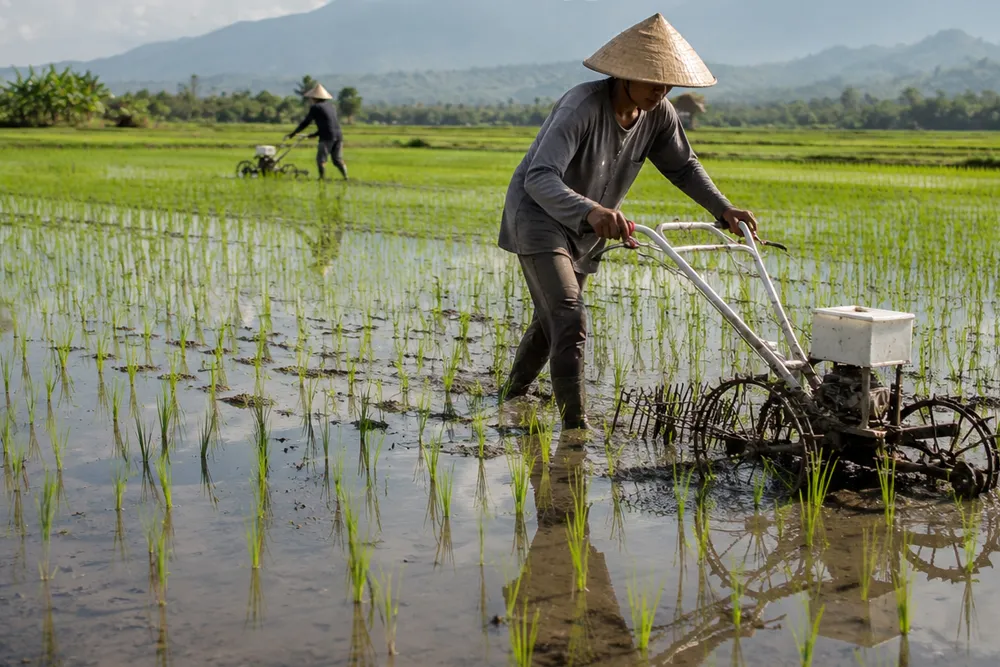
Rice farmers in Indonesia are adopting sustainable farming techniques since climate change and food security concerns are intensifying across Southeast Asia. Rice is a staple food for Indonesia, but traditional flooded paddy cultivation is also one of the major sources of agricultural methane emissions, a greenhouse gas that significantly contributes to global warming. Consequently, farmers and agricultural authorities are now exploring ways to make rice production more environmentally friendly while maintaining or even improving production. Notably, one of the most widely tested methods is alternate wetting and drying (AWD), a water management technique in which fields are periodically allowed to dry instead of being continuously flooded. This approach decreases methane emissions from paddy fields and lowers water consumption, making rice farming more efficient and climate-resilient. Not only this, but early studies and field trials note that AWD can cut emissions substantially without negatively affecting crop productivity when properly managed. Besides AWD, farmers are also experimenting with improved seed varieties, better fertiliser management, and precision irrigation techniques. These innovations seek to balance environmental sustainability with the need to feed a growing population. According to experts, such practices could play a vital role in transforming rice farming in the region, especially as extreme weather events become more frequent. However, challenges remain, including the need for farmer training, infrastructure support, and financial incentives to encourage large-scale adoption.
Modern Agricultural Cooperatives Strengthen Cambodia’s Rice Sector
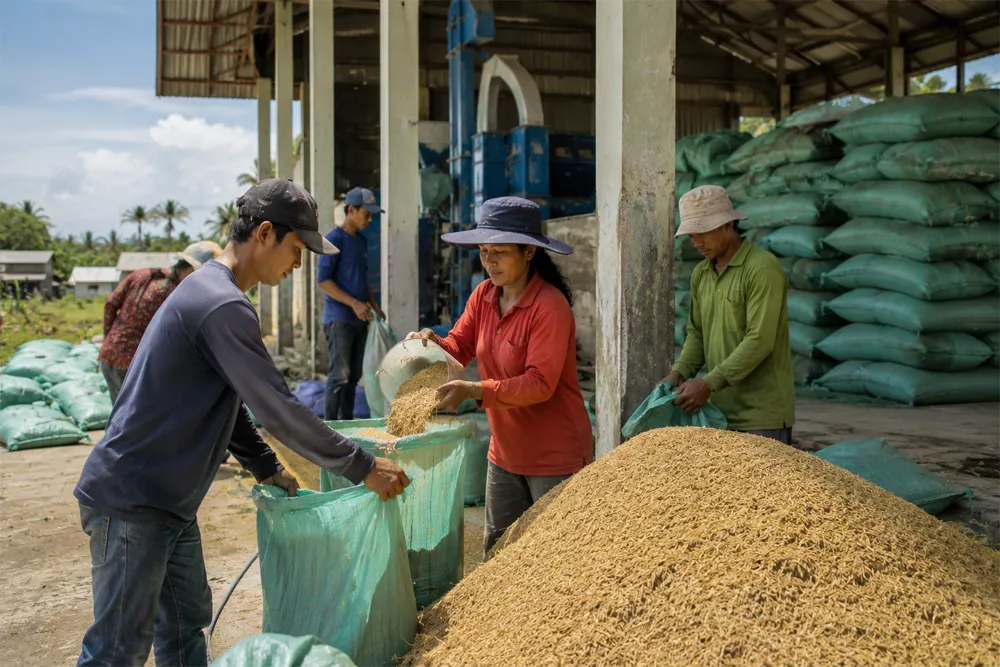
In a significant development, the Royal Government of Cambodia (RGC) is promoting the establishment of Modern Agricultural Cooperatives (MACs) to improve the agricultural sector, decrease production costs, and boost farmers’ competitiveness in the market. One notable example is the Srov Rung Chrey Meanchey Modern Agricultural Cooperative in Thma Kol district, Battambang province. The cooperative has 187 members who manage nearly 935 hectares of rice fields. It demonstrates the benefits of large-scale cooperation and modern farming practices.
Under the Cambodia Agricultural Sector Diversification Project (CASDP), financed by the World Bank (WB) and implemented in partnership with the Ministry of Agriculture, Forestry and Fisheries (MAFF), the Ministry of Economy and Finance (MEF), the Ministry of Water Resources and Meteorology (MoWRAM), and the Ministry of Rural Development (MRD), the cooperative received agricultural machinery, such as 25 hand tractors. The machinery has enhanced rice-harvesting efficiency, decreased grain losses, and sustained crop quality. Like 27 other cooperatives supported by the project, the cooperative is now better able to plan rice production and secure contracts with private companies ahead of harvest. It helps farmers access more stable markets and better prices.
Share this article
Article Info
Read Time
4 min read
Published
19 May 2026
Author
Megha Bajaj
Category
Rice News