Rice Trade in Turmoil: Global Headwinds Hit Pakistan’s Rice Exports
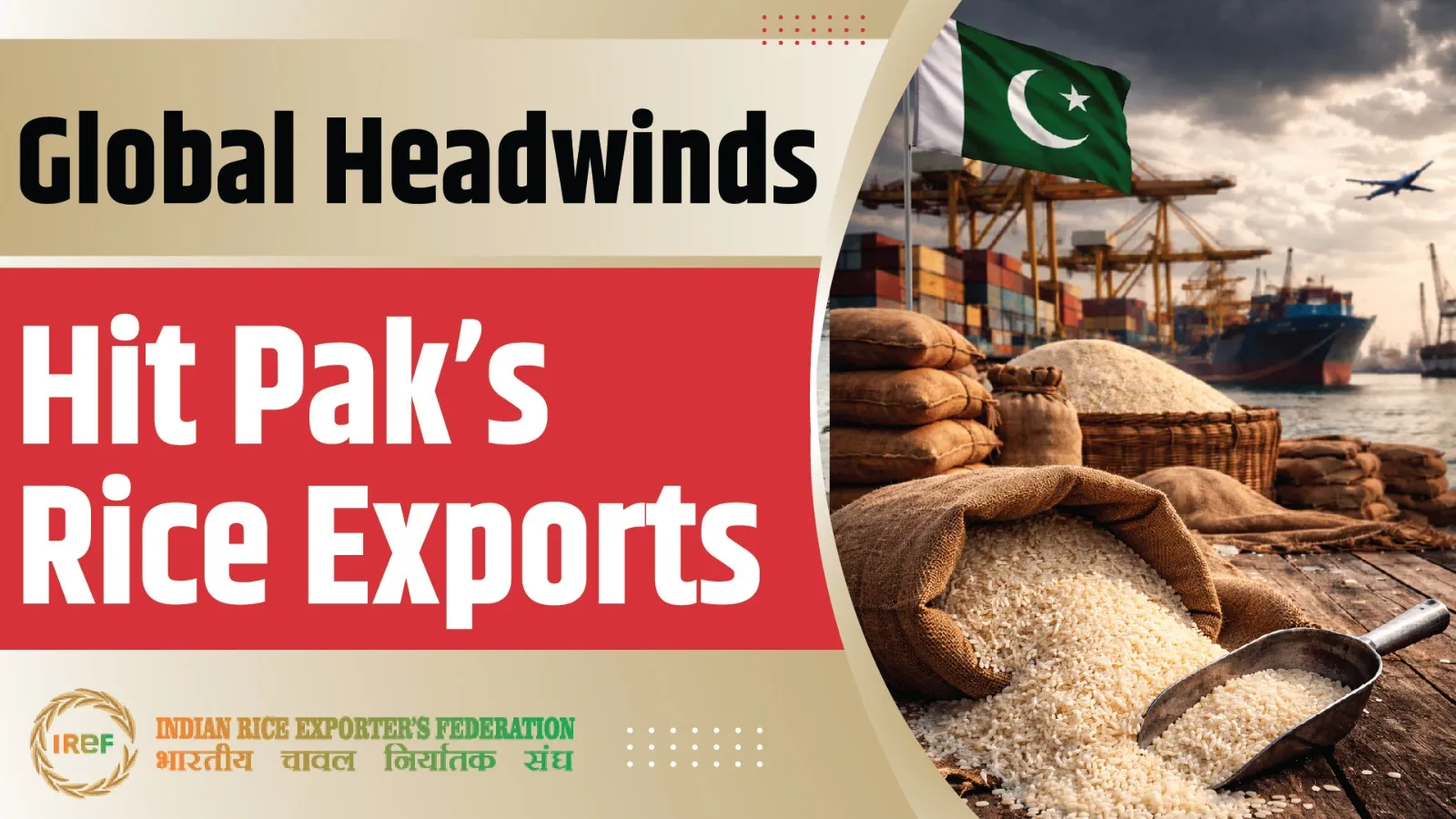
Recently, Pakistan's rice exports have been facing global headwinds and sharp decline. It can be seen by the current stance of stakeholders within Pakistan's rice sector, who are now demanding policy reforms to address the impediments hindering export growth. Moreover, stakeholders in the rice sector have urged the Pakistani government to intervene immediately to resolve the policy and operational challenges currently stifling the sector's expansion. Issuing a warning, the stakeholders stated that any delays or shortcomings in this regard are undermining Pakistan's competitiveness in the global market. Notably, these concerns were raised by the stakeholders during a meeting with Pakistan's Minister for National Food Security and Research, Rana Tanveer Hussain.
Pakistan rice exports momentum should be sustained
Responding to this, Rana Tanveer Hussain assured the rice stakeholders that these issues would be resolved on a priority basis and that support for export-oriented sectors would continue. Calls for policy changes to address the stagnation in export growth have been voiced by representatives of the Lahore Chamber of Commerce and Industry (LCCI), as well as by major rice exporters. All parties emphasised the need to work collaboratively to sustain Pakistan's rice exports momentum. Commenting on the impact on Pakistan's rice exports, Waqas Aslam, a member of the LCCI Executive Committee, stated that these issues were thoroughly discussed during a meeting where key stakeholders across the entire rice value chain deliberated on the challenges confronting the sector. During these discussions, concerns were raised related to the backlog, which is reportedly adversely affecting the liquidity and operational efficiency of exporters, flagging the urgency of policy reforms needed to boost Pakistan rice export growth.
Demands Made For Elimination of Bottlenecks
Furthermore, the export mechanisms facilitating Pakistan's trade with markets in the Gulf region, such as Iran, and the Far East were reviewed during the meeting; consequently, demands were made to eliminate process-related bottlenecks and to enhance trade facilitation measures. In addition, the meeting emphasised shortcomings in research and development, with participants highlighting the adoption of innovation, improved seed varieties, and modern farming techniques as the need of the hour to boost productivity and quality. Discussions also focused on pesticide residue compliance, during which stakeholders urged strict adherence to international standards to safeguard Pakistan's position in export markets. Additionally, participating stakeholders and members of Pakistan's rice industry called for better regulation of the paddy and rice trade to curb hoarding and artificial price manipulation.
Pakistan - World's third-largest rice exporter
Such practices serve to erode global market confidence in Pakistan. During the meeting, Rana Tanveer Hussain, Pakistan's Minister for National Food Security and Research, reiterated the government's commitment to stakeholders and all attendees, assuring them that the issues raised by the rice industry would be resolved promptly. Minister Rana affirmed that efforts are currently underway to introduce business-friendly policies for the rice sector and to bolster agricultural exports. Significantly, on one hand, Pakistan has been consistently striving to boost its rice exports, whereas on the other hand, it has yet to achieve the level of success in this sector that it aspires to. Although statistics currently rank Pakistan as the world's third-largest rice exporter along with data indicating that during the first seven months of the 2025-26 fiscal year, Pakistan's rice exports plummeted by 40.5 percent, falling to a value of $1.31 billion.
This decline has been attributed to a reduction in Islamabad's market share and pricing power within the global market, largely resulting from India's return to the international rice trade arena. According to the Pakistan Bureau of Statistics, non-Basmati rice exports fell by 50.8 per cent over the seven months, dropping to $827.8 million, whereas export volume contracted from 3.15 million tons—recorded a year earlier—to 2.0 million tons. Pakistan's Basmati rice exports witnessed a decline of 6.62 per cent, causing the value of its Basmati trade to drop to $477.7 million; meanwhile, export volume fell from 487,278 tons to 436,484 tons.
India’s re-entry into the global rice market- major factor to decline
Addressing this matter in two separate meetings held in December and January, Pakistan's Ministry of National Food Security informed a parliamentary committee that India's re-entry into the global rice market was a major contributing factor to this decline. Pakistan asserted that India's increasing supply has rendered Pakistani rice less competitive. Apparently, Pakistan argues that India benefits from Free Trade Agreements, which provide significant support to its rice exports. Consequently, Pakistan contends that this situation exerts considerable pressure on its own rice trade.
Data from the Pakistan Bureau of Statistics (PBS) for the July-to-January period indicates a 40.5 percent decline in the country’s earnings from rice exports Meanwhile, figures from the Federal Board of Revenue (FBR) for the July-to-December period reveal an even steeper decline of 47 percent compared to the $1.82 billion recorded during the same period last year, representing a revenue shortfall of over $800 million. According to observers monitoring the global rice trade, the country is now focusing on market diversification as a strategy to counter this downturn.
Share this article
Article Info
Read Time
5 min read
Published
9 Apr 2026
Author
Megha Bajaj
Category
News