What’s Odisha’s Plan of 10 Lakh MT Rice Storage Capacity?
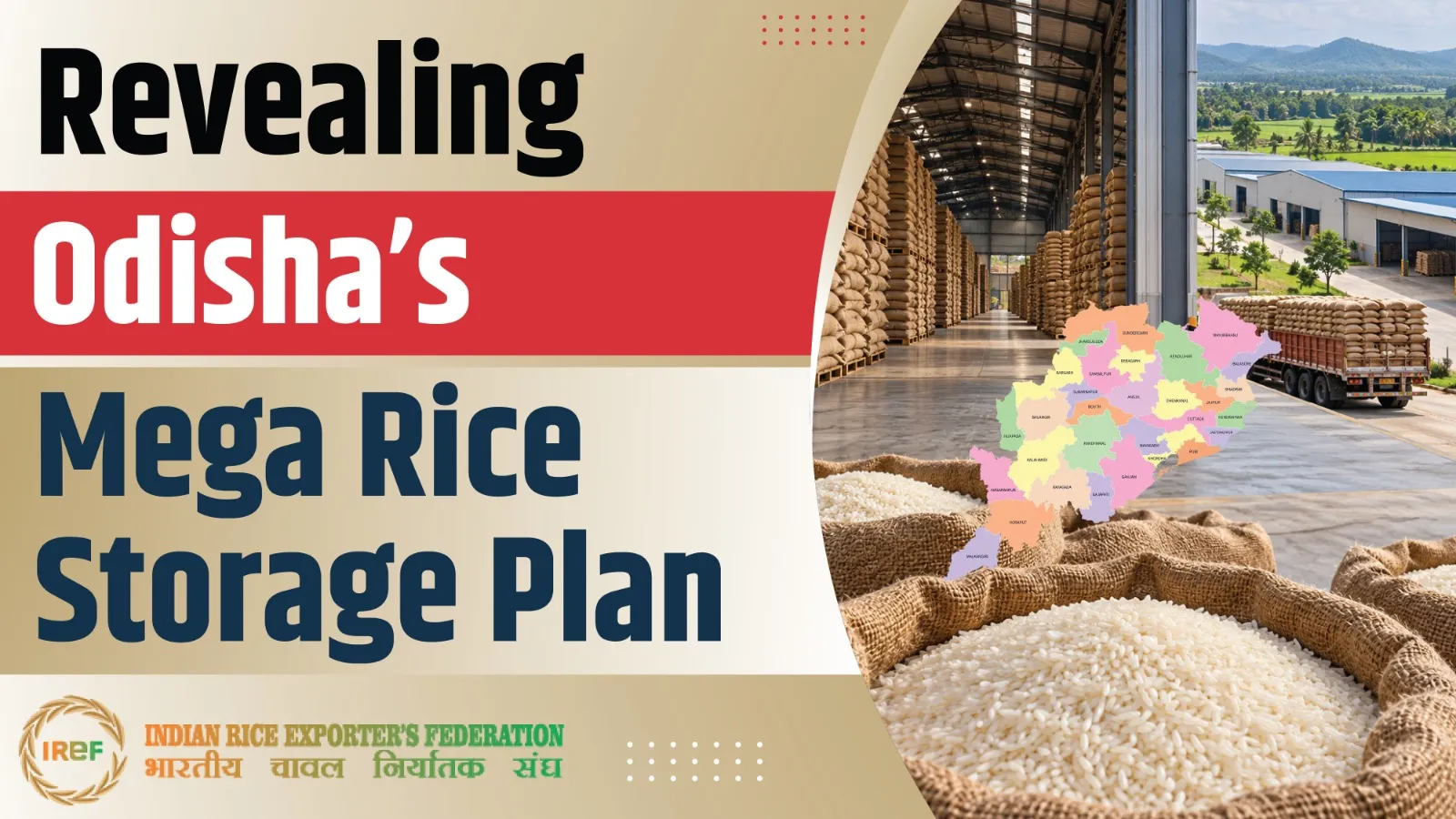
The Odisha government has recently announced plans to expand rice storage capacity by 10 lakh metric tonnes (LMT). The reason behind this plan is rising procurement and a growing paddy harvest that creates pressure on the state’s existing warehousing infrastructure. Moreover, it is aimed at strengthening the food supply chain and ensuring proper space for procured foodgrains.
Under the Odisha State Private Entrepreneur Scheme (OSPEG), the state will develop additional storage for rice through a Public private partnership (PPP) model. The proposed capacity will be created in two phases, with 4 LMT planned in the first phase and another 6 LMT in the second phase. The government stated that the additional facilities will help accommodate surplus rice and support timely distribution through public welfare programmes.
Why did the Rice storage requirement emerge?
In addition, the requirement for expanded rice storage has emerged as Odisha’s paddy procurement has increased significantly. Procurement rose from 70.88 LMT in 2023–24 to 97.94 LMT in 2025–26. It reflects both higher paddy production and greater participation by farmers. Moreover, the increase has also been supported by a higher minimum support price which has encouraged farmers to bring more paddy into the procurement system.
According to the state government, it spent more than ₹30,126 crore on procurement. However, the pace at which rice is being procured has created a storage challenge. During 2025–26, custom millers supplied 26.27 lakh tonnes of rice, while the Food Corporation of India lifted 8.12 lakh tonnes. The remaining stock has increased pressure on available warehouses.
Currently, procurement, storage and distribution activities are managed largely through the Odisha State Civil Supplies Corporation. The state has been expanding scientific warehousing as procurement volumes rise. The new scheme will allow private entrepreneurs to develop, operate and maintain scientifically designed godowns according to government specifications.
In addition, the government has specified that godowns created under the programme should have a minimum capacity of 2,500 tonnes. Storage planning will take into account procurement levels in surplus districts and the stock requirements of consuming districts for the public distribution system.
Besides that, the expansion of storage for rice is expected to enhance grain management, reduce pressure on existing facilities and facilitate smoother movement from procurement centres to consumers. Whereas the initiative is aimed at infrastructure, improved storage could also support market stability and help in managing the impact of changing rice prices during periods of high procurement. As the rice production and procurement expected to remain significant in Odisha, expanding rice storage infrastructure will be crucial for handling future paddy harvest volumes and ensuring proper foodgrain distribution.
Share this article
Article Info
Read Time
3 min read
Published
8 Oct 2026
Author
Megha Bajaj
Category
News