India Looks for New Global Markets as Iran Reduces Basmati Rice Imports
India Looks for New Global Markets as Iran Reduces Basmati Rice Imports
By Megha Bajaj
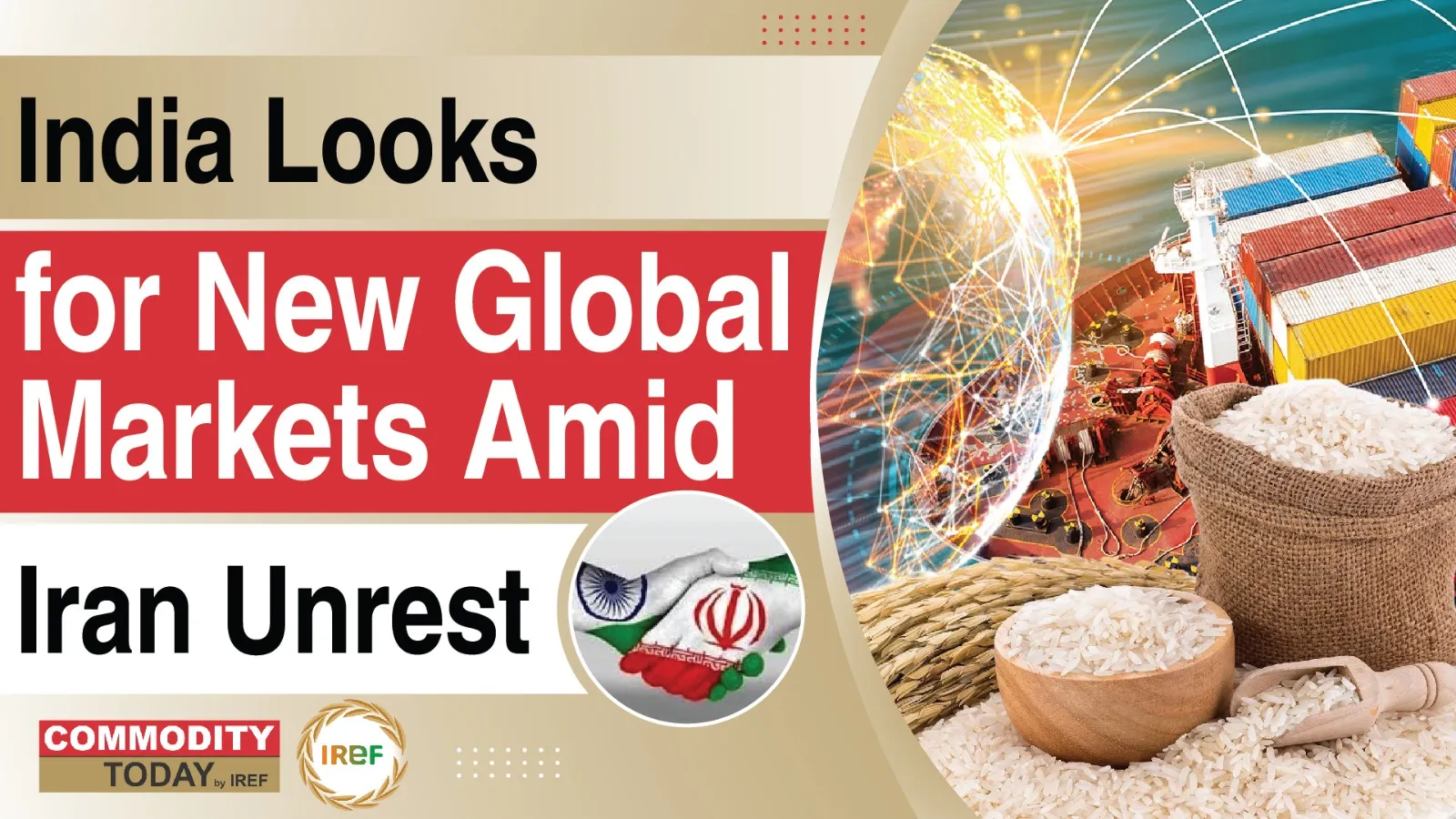
The recent situation in Iran has affected India's basmati rice exports to the country. Notably, India exports more basmati rice to Iran than any other variety. In its aftermath, India is now exploring new global markets for its basmati rice exports and other rice varieties. Since, Iran has reduced the Basmati rice imports.
India is actively looking for new global markets for Basmati Rice Exports
To mitigate risk and maintain export revenue, India is seeking alternative markets in Africa, West Asia, and Europe. Several countries in Africa, particularly Nigeria, have a high demand for rice. India is currently shipping the largest volume of its rice exports to Africa due to strong orders. Undoubtedly, India's rice exports are continuously reaching new heights. Furthermore, there is good demand for Indian rice in various European countries. India is actively working to find new global markets for its Basmati rice exports. Apparently, Iran was, until recently, the largest buyer of Indian basmati rice, but it has now dropped to third place on the list. The decline in basmati rice imports from Iran has significantly impacted Indian Rice exporters.
The Issue of delayed payments- significant problem for Indian rice exporters
Currently, the significant problem for Indian rice exporters, especially basmati rice exporters, is the issue of delayed payments, and the increasing losses over time are further exacerbating their difficulties. In addition, Experts cite statistics to illustrate the decline in basmati rice imports from Iran, stating that Iran's basmati rice imports from India have been decreasing continuously. According to the data, when it comes to the rice trade between Iran and India. Iran is one of India's major rice buyers. India earns good revenue by exporting rice to Iran, but in the last few years, there has been a decline in rice exports from India to Iran. They mentioned that in 2024-25, India exported agricultural products worth ₹8897 crore to Iran, of which Basmati rice alone accounted for ₹6,374 crore. Meanwhile, between April and November of 2025-26, India exported 5.99 lakh metric tons of Basmati rice to Iran.
Iran's share in India's Basmati rice exports was more than 33%
Not only this, in 2018-19, Iran's share in India's Basmati rice exports was more than 33%, but this figure is declining due to the fragile economic situation in Iran. The export of Basmati rice from India to Iran decreased from approximately 14.8 lakh metric tons in 2018-19 to slightly more than 8.5 lakh metric tons in 2024-25. These figures are sufficient to show how Iran has reduced its import of Indian rice. Currently, the fact is that Iran's economic situation is extremely precarious, due to which the public has taken to the streets against the Iranian government. Moreover, soaring inflation has weakened the Iranian rial, severely impacting Iran's purchasing power. The decline in the value of the Iranian rial against the dollar has shaken the Iranian government, and this falling value of the rial is reducing Iran's purchasing power.
Currently, India has a surplus of rice
Therefore, Iran has started reducing the import of Basmati rice and other varieties of rice from India. However, India cannot simply stockpile its rice. The country will either have to contact its existing rice buyers to sell its rice or explore new markets as an alternative. Experts advise Indian rice exporters to be cautious in light of the recent situation in Iran. Individuals monitoring the rice industry and global rice trade suggest that the rice currently destined for Iran needs to be diverted to other markets. Currently, India has a surplus of rice and it will aim to take advantage of it. Therefore, it seems imperative to focus on ensuring successful rice exports to other markets where India's rice trade is being affected for any reason, so that India maintains its dominance in both rice production and rice exports.
Share this article
Article Info
Read Time
4 min read
Published
22 Jan 2026
Author
Megha Bajaj
Category
News