Are India’s Rice Exports Set to Surge as EU Inspection Rules Ease?
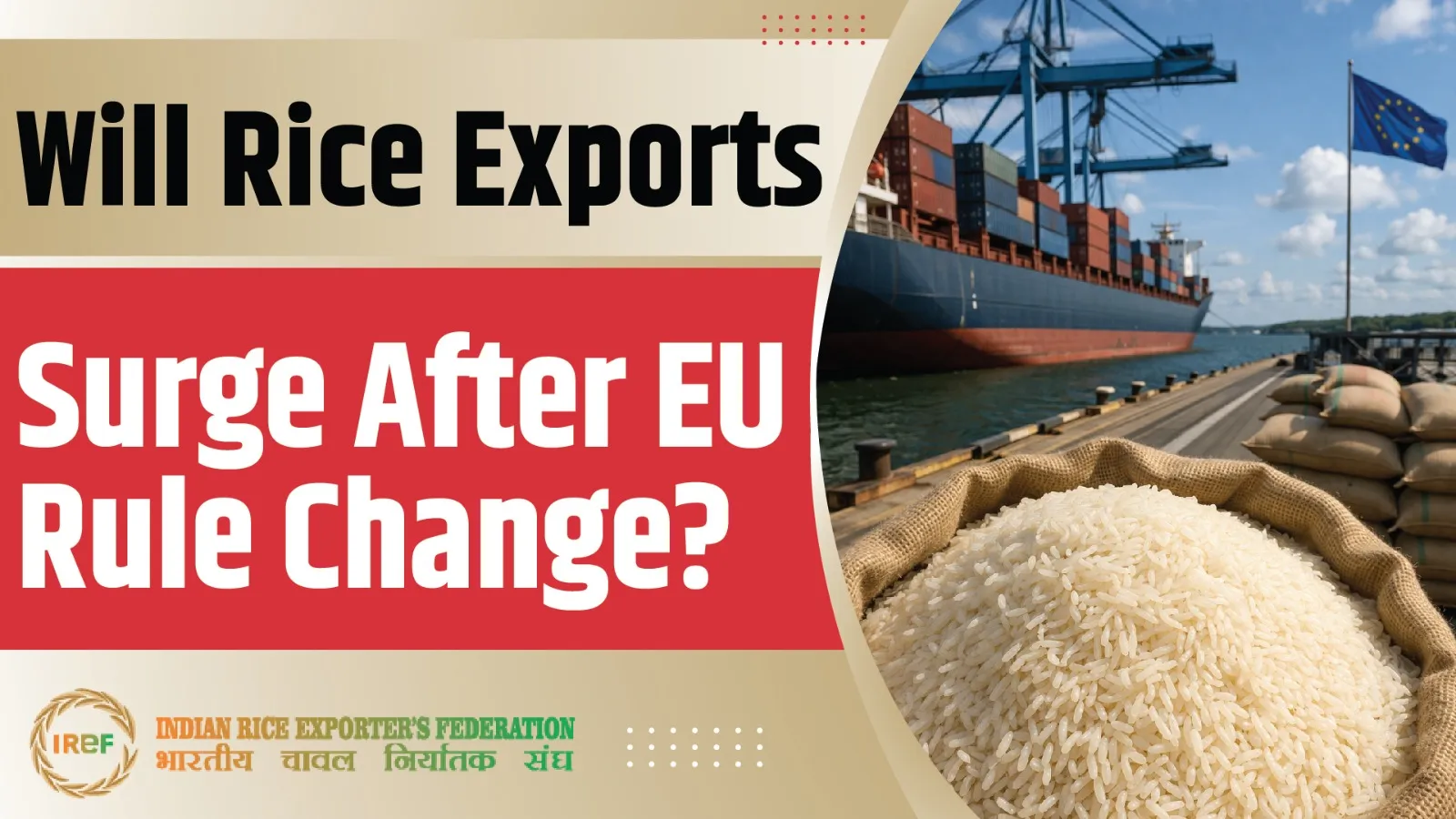
On Friday, April 10, the Union government issued a notification stating that the exports of Basmati and non-Basmati rice to certain European nations have been authorised, and rice exporters will no longer be required to obtain the mandatory inspection certificate from the Export Inspection Agency for these export shipments. Not only this, but the notification also clarifies that the requirement for this certificate is now restricted solely to EU member states, the United Kingdom, Iceland, Liechtenstein, Norway, and Switzerland. Interestingly, there is no doubt in this fact that India's rice exports have been significantly impacted by tensions in the Middle East Conflict. However, there is a slight ease following the announcement of a two-week conditional ceasefire.
A significant relief to rice exports
All other European nations have been exempted from this requirement for a period of six months. Notably, an inspection certificate is typically issued by a country's export inspection agency and serves to verify compliance with quality standards. This recent decision by the Union Government appears to be a measure offering significant relief to rice exports targeting these eligible markets. Furthermore, this decision is expected to streamline timelines and simplify shipment procedures during this interim period.
The authorisation to rice exports of Basmati and non-Basmati to specific European nations, along with the exemption from the requirement to obtain the mandatory inspection certificate from the Export Inspection Agency, is currently valid for a period of six months. However, it remains unclear at this juncture whether this exemption will be extended beyond the initial six-month period. It is pertinent to mention that rice exporters have breathed a sigh of relief following the news regarding the permission to export to certain European nations and the waiver of the mandatory inspection certificate requirement for the next six months, as exporters are currently facing massive distress due to the suspension or drastic reduction of Basmati rice shipments to the Gulf nations. Notably, the European market constitutes a significant destination for Indian rice exporters.
India-EU FTA to deepen these ties further
The recently concluded Free Trade Agreement (FTA) between India and Europe has served to further deepen the ties between India and the EU. India exports Basmati rice to European nations. According to statistics, in 2024–25, India exported Basmati rice worth approximately $237 million to the EU. Based on 2023 data, India held a share of approximately 16.5% in the EU's rice import market. Statistics indicate that the European Union imports 1.2 million tons of rice annually to meet its consumption needs, a process in which India, the world's largest rice exporter, plays a crucial role.
When it comes to the outlook for India's rice exports this year, it is projected that in the fiscal year 2026, India's rice exports will grow by over 10%, driven by robust global demand. Apparently, strong growth is anticipated in both the Basmati and non-Basmati rice sectors. Currently, India is the one of the world's largest rice-producer but also its largest rice exporter. Moreover, India recently surpassed China to claim the title of the world's largest rice producer. At present, India possesses a rice surplus, a fact that underscores the strength of the country's food security.
Share this article
Article Info
Read Time
3 min read
Published
11 Apr 2026
Author
Megha Bajaj
Category
News