Top Rice News: GI tagged rice exports, Telangana as Paddy Powerhouse & Rice-to-Ethanol Policy
Top Rice News today highlights GI tagged rice varieties' export potential as per Wayanad farmers, Telangana becoming India’s Paddy Powerhouse with Record Rice Production and the Indian agricultural economist Rice-to-Ethanol Policy questioned by Ashok Gulati
Wayanad Farmers Eye Export Boom for GI-Tagged Rice Varieties Amid Mounting Challenges
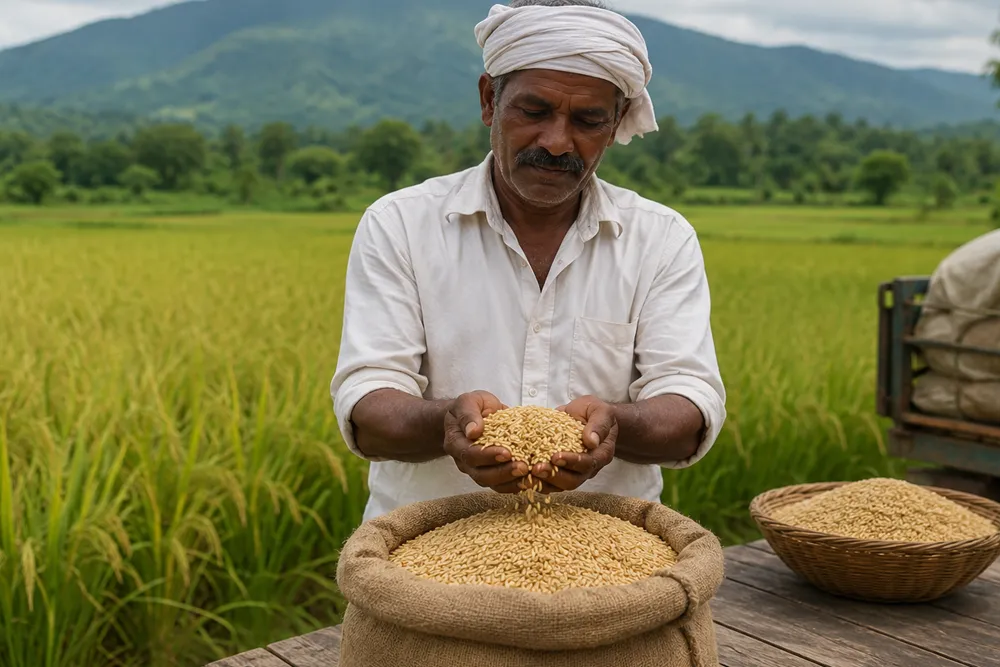
Farmers in Wayanad are hoping that exporting their traditional rice varieties, which are Gandhakasala and Jeerakasala, will help them to overcome ongoing challenges in rice cultivation. These rice varieties are known for their strong aroma and are often used in special dishes and festivals. In addition, these Geographical Indication (GI) tagged rice varieties are unique to the region. However, cultivating these varieties has become a herculean task in the recent years. High production costs, labour shortage, changing weather patterns, and wildlife damage have affected farmers’ income. As a result, several farmers have reduced or stopped cultivating these traditional crops.
Efforts are now being made to connect these rice varieties to international markets to support them. The Agricultural and Processed Food Products Export Development Authority (APEDA) has already helped export Gandhakasala rice to Dubai through private exporters, giving farmers hope that they can get better prices outside India compared to local markets. Additionally, the enclosure of these rice varieties has dropped sharply over the years, showing stress in Wayanad’s farming sector. However, the GI tag and growing export interest are seen as positive sign to restore this traditional farming system.
Telangana Emerges as India’s Paddy Powerhouse with Record Rice Production
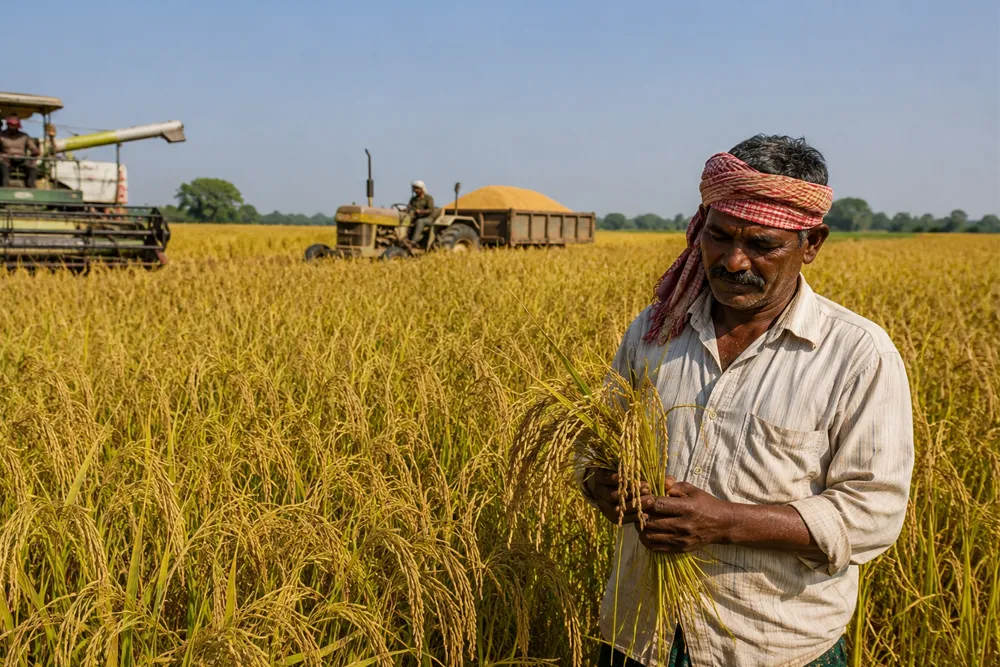
Telangana has once again attracted the attention of the country in the agricultural sector. In the 2025-26 Yasangi season, it created a new history by standing at the top of the country in rice cultivation area and grain purchases. Rice was cultivated in a record 65.91 lakh acres in the state, and nearly 141 lakh metric tons of grain were produced. Telangana's share of 61 per cent of the total rice area cultivated in the Yasangi season in the country is an unprecedented success for the state's agricultural sector. The Planning Department reports stated that rice cultivation is limited in several states of the country due to water scarcity. Farmers in Telangana have taken up rice cultivation on a large scale. The availability of abundant water through irrigation projects, government incentives to farmers, and schemes like free electricity have been the main reasons for this success. Moreover, Paddy cultivation was recorded in 65.91 lakh acres in Telangana during the Yasangi season. Paddy cultivation was recorded in only 30.76 lakh acres in Tamil Nadu and 17.29 lakh acres in Andhra Pradesh. Looking at the Kharif and Yasangi seasons together, it is noteworthy that Telangana has secured the second position after Uttar Pradesh in the highest paddy cultivation area. Telangana continues to dominate in grain procurement. It has procured 75 lakh tonnes of grain through the procurement centres set up by the state government so far. Officials estimated that this figure is likely to cross 80 lakh tonnes as the procurement will continue for another week. On the other hand, the fact that the combined total grain procurement of Tamil Nadu and Andhra Pradesh is less than 40 lakh tonnes is a testament to Telangana's remarkable achievement.
Ashok Gulati Questions Rice-to-Ethanol Policy, Calls It a “Massive Inefficiency”
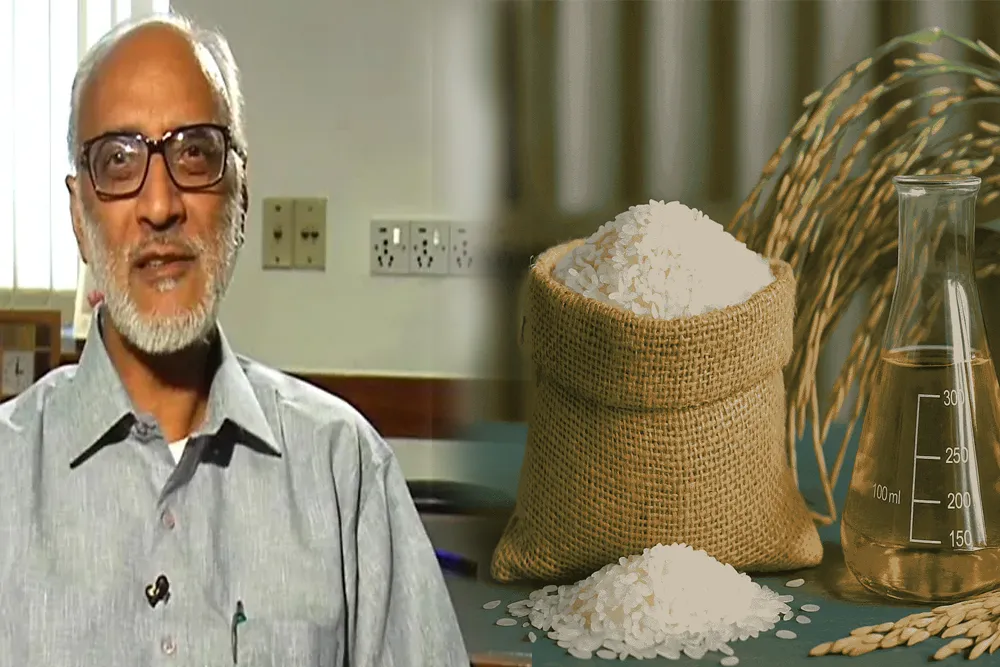
Agricultural economist Ashok Gulati has raised concerns over India’s policy of using rice for ethanol production. He describes it as both economically and environmentally inefficient. According to Gulati, the government procures rice from farmers at a relatively high cost through the public procurement system and then supplies it to ethanol producers at lower prices. This effectively creates a subsidy for ethanol production, rising the burden on public finances. Gulati argues that using food grains such as rice for fuel production is not the most efficient use of resources, particularly in a country where food security and water conservation remain significant priorities. He believes that the current approach could lead to unnecessary expenditure while putting additional pressure on natural resources.
Instead, Gulati has advocated greater use of maize as a feedstock for ethanol production. Maize requires significantly less water than rice and can be cultivated more sustainably in many regions. Shifting towards maize-based ethanol, he argues, would help India achieve its ethanol-blending targets without placing excessive strain on water resources.
The debate comes as India continues to push its ethanol blending programme to reduce dependence on imported crude oil and boost energy security. While the programme has made substantial progress, experts are increasingly discussing the need to balance energy goals with concerns related to food security, fiscal costs, and environmental sustainability. Gulati’s comments have reignited discussions on whether India should re-contemplate its ethanol strategy and prioritise more resource-efficient crops for future growth.
Share this article
Article Info
Read Time
4 min read
Published
11 Jun 2026
Author
Megha Bajaj
Category
Rice News