Top Rice News: Why Does Indian Army Launch ‘Bharat Rice ?
Top rice news today highlights the launch of Indian Army’s Bharat rice for the enhancement of ration quality for defence personnel. Additionally, the rice will be supplied through the National Agricultural Cooperative Marketing Federation of India during Financial year 2026-27. In Tamil Nadu, free ration rice allegedly repackaged as premium Pooni rice and sold at higher prices.
Why Does Indian Army Launch Bharat Rice ?
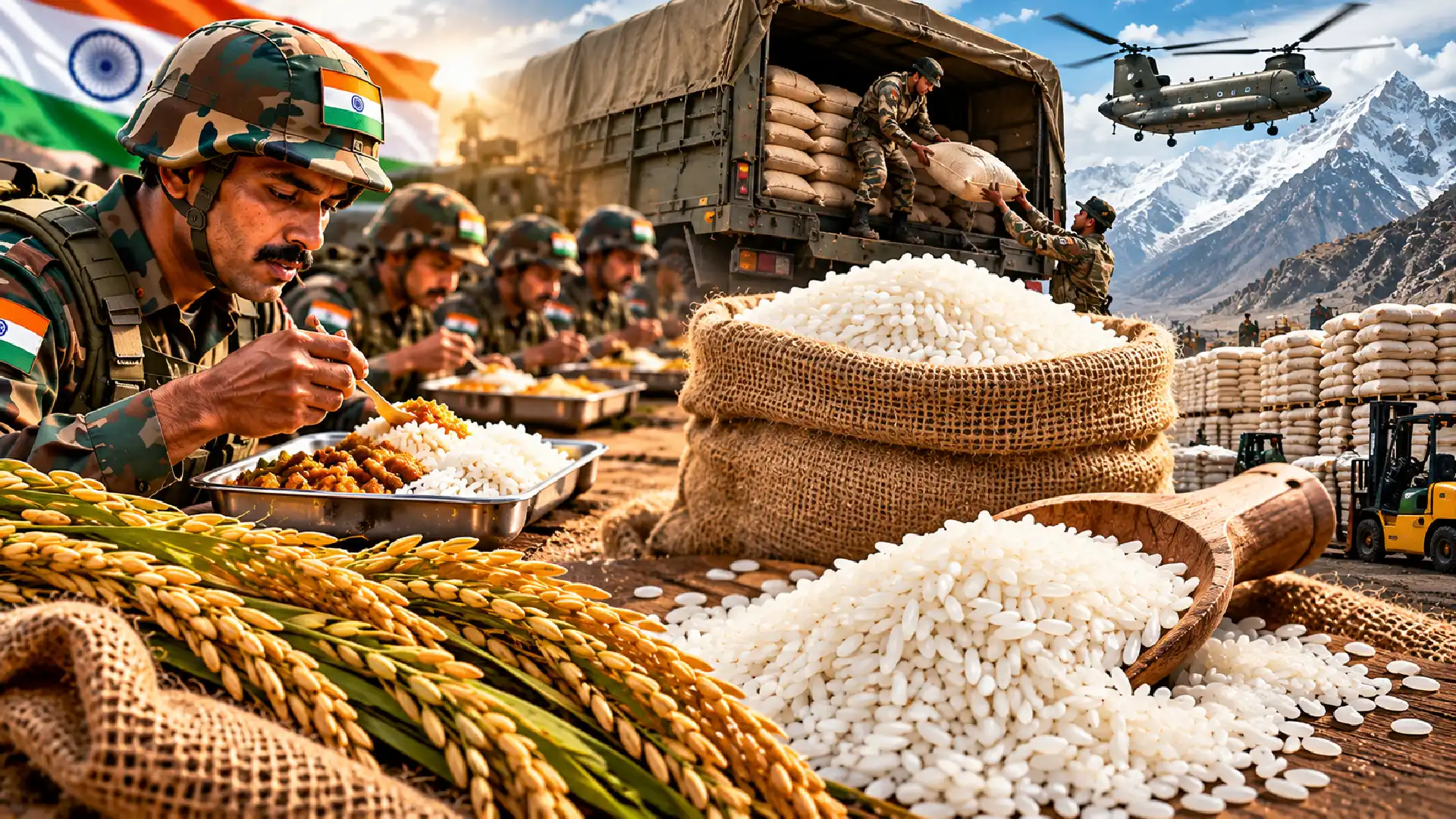
On October 12, the Indian Army launched Bharat Rice to improve ration quality for defence personnel, incorporating feedback from troops to enhance food provisions. The rice will be supplied through the National Agricultural Cooperative Marketing Federation of India (NAFED) during the financial year 2026–27. It will be delivered directly to Army supply depots such as Ladakh and the Northeast.
Moreover, the initiative aims to boost the quality and reliability of food supplies for personnel stationed in various operational environments. In addition, the Army signed a memorandum of understanding (MoU) with the Food Corporation of India (FCI) to utilise its warehousing and logistics infrastructure during operational contingencies. Broadly speaking, the partnership is expected to improve supply-chain resilience, correct the food distribution and ensure reliable access to essential rations for troops serving in remote and important locations.
Free Ration Rice Allegedly Repackaged as Ponni and Sold at Higher Prices. Is It a Scam?
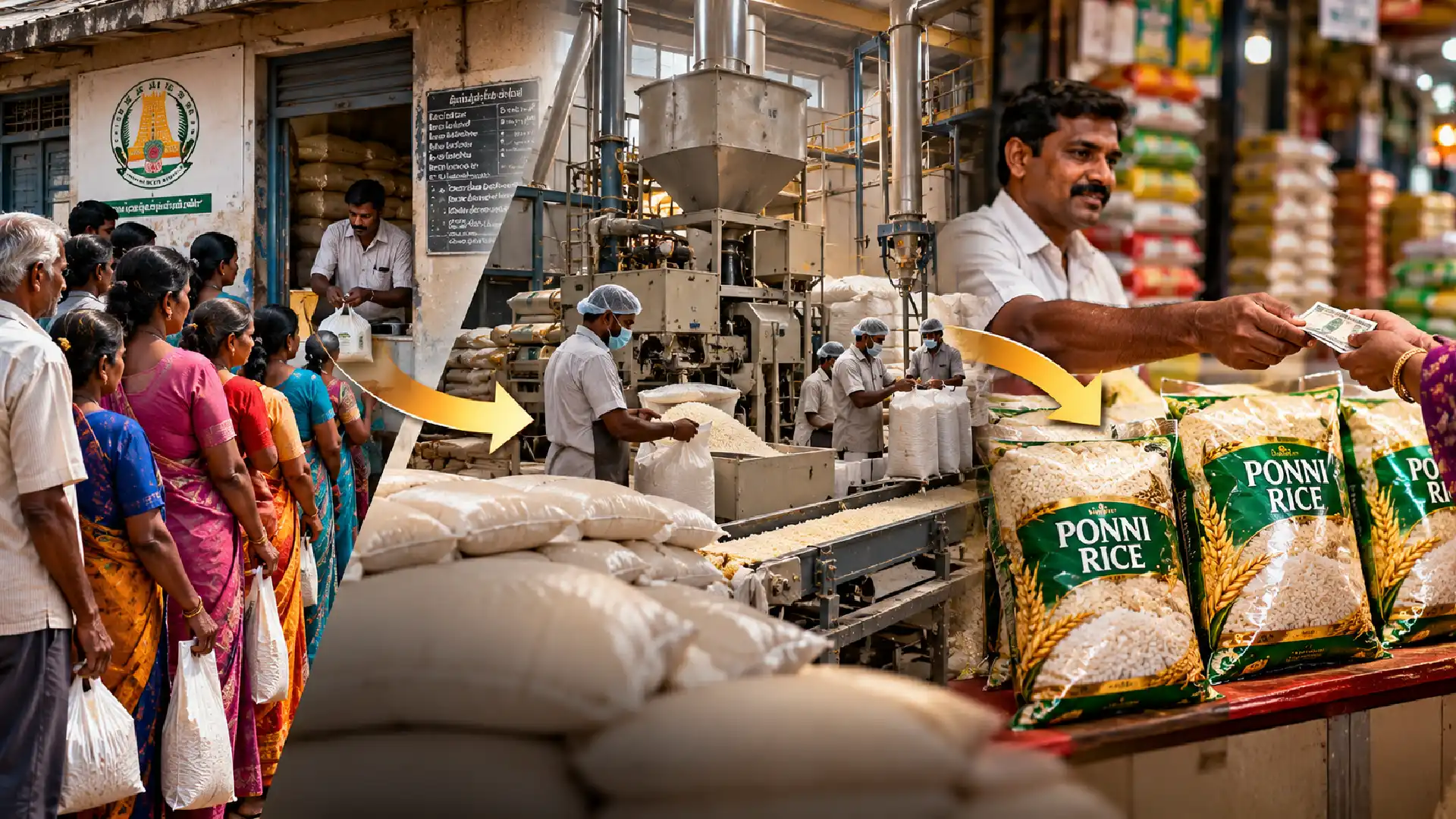
As per media reports, suspected rice diversion racket has raised concerns over the misuse of subsidised food grains distributed under Tamil Nadu’s public distribution system. The reports stated that the traders in Kerala allegedly purchase free ration rice supplied to economically marginalised families in Tamil Nadu for nearly ₹25 per kilogram. Reportedly, the rice is processed at mills to resemble premium Ponni rice before being transported back to Tamil Nadu for resale at prices like ₹65 to ₹80 per kilogram.
In this aftermath, Tamil Nadu’s Food Department has sought action against Kerala mill owners allegedly involved in this activity. The reported practice highlights concerns about the diversion of subsidised rice meant for vulnerable households and the exploitation of government welfare schemes. Moreover, the case highlights the need for stronger examination of food-grain movement, improved enforcement and accountability in the public distribution supply chain.
Share this article
Article Info
Read Time
2 min read
Published
13 Oct 2026
Author
Megha Bajaj
Category
Rice News