Top Rice News Today: Prices, Ration & Farmer Crisis

Top rice news today covers ration rice, retail prices and essential commodities. Gujarat cuts the ration rice quota, while Bengal households face rising rice prices. Meanwhile, rice farmers in Vietnam’s Mekong Delta are struggling as paddy prices fall sharply amid weak export demand. From ration shopkeepers to farmers and consumers, these developments highlight the changing rice market and its impact on food prices, supplies and livelihoods.
Gujarat Ration Shock: Rice Quota Slashed From 3 Kg to Just 1 Kg Per Person
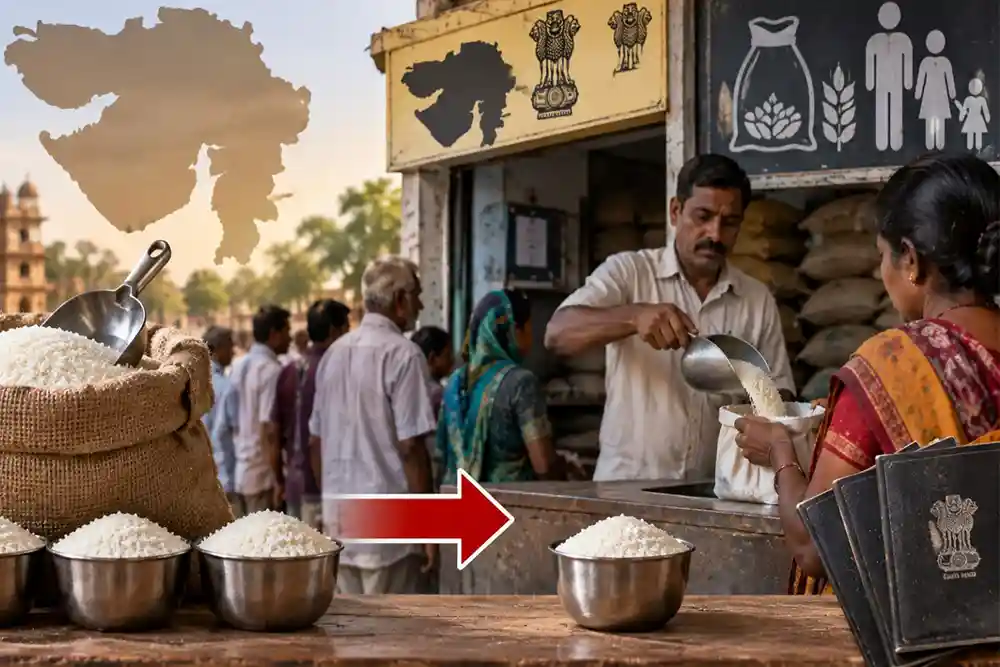
The Gujarat government has reduced the monthly ration rice quota from 3 kg to 1 kg per person from September. To partly compensate for the cut, beneficiaries will receive 2 kg of wheat and 2 kg of millet (bajra) per person. But, many ration-card holders are unhappy, saying rice is a regular part of their diet, especially for dal-rice and khichdi. The increase in millet has not satisfied their needs. Ration shopkeepers say they are simply following the government’s new distribution instructions. In several places, arguments between beneficiaries and ration dealers have reportedly taken place. Earlier, beneficiaries received 1 kg of millet, which has now been increased to 2 kg. Cardholders are demanding that the government restore the earlier 3 kg rice quota and reconsider the distribution pattern based on people’s actual food preferences and requirements.
Bengal Rice Prices Rise by ₹5–10/kg, CM Orders Market Check

Rice prices have risen in West Bengal, which has added a burden on middle-class households already facing higher kitchen expenses. Retail prices of popular varieties such as Minikit, Banskathi and Dudh-Sar have increased by Rs 5–10 per kg in the past 15 days, whereas Swarna has become Rs 3–5 per kg more expensive. The price rise has prompted Chief Minister Suvendu Adhikari to question the increase by pointing out that rice is produced within the state. He has rolled out Consumer Protection Week from September 1 to 7 to monitor market prices and food quality and regulate prices of essential commodities. Consumers stated that the increase was forcing them to change their choices. A customer said: "I am now buying a lower-priced variety of rice instead of the one I usually purchase" Traders attributed the rise to supply disruptions following floods in Medinipur, Hooghly and Burdwan, which affected rice mills. Not only this, but they also alleged that some stockists in Habra have slowed the release of fine rice. Mill owners said paddy prices have risen by over Rs 200 per 60-kg bag from last year, whereas higher machinery costs and GST-related issues have increased production expenses. The Consumer Affairs Department expects prices to ease soon.
Vietnam Rice Farmers Face Losses as Paddy Prices Fall 17%
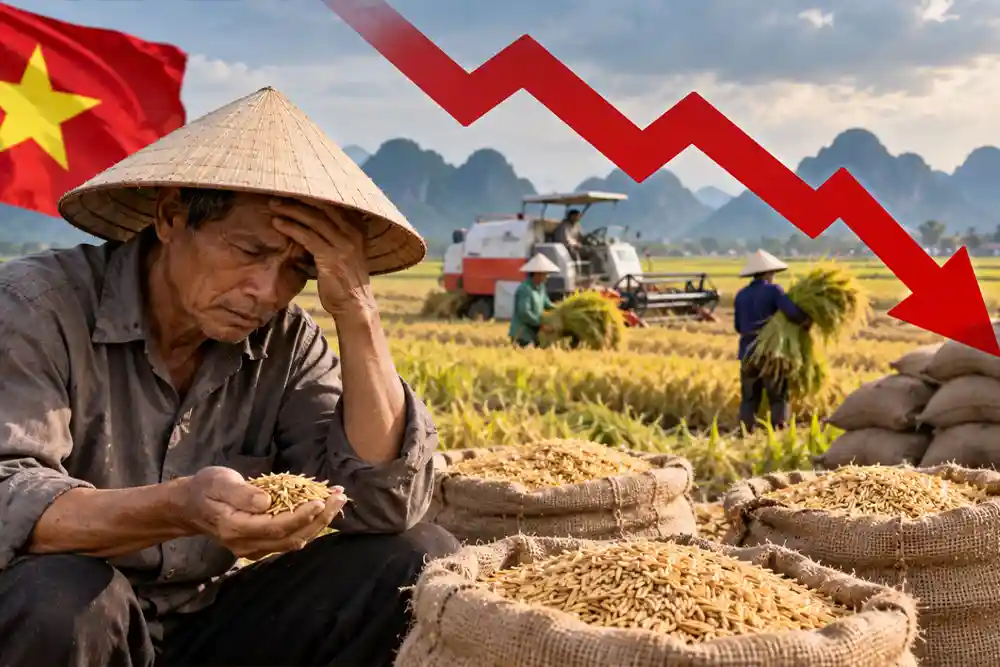
Vietnamese Rice farmers in the Mekong Delta are facing growing financial pressure as paddy prices have dropped by as much as 17% in just one week. Farmers say the sharp decline is making it difficult to cover rising costs of fertiliser, pesticides and labour. In some areas, traders have reduced their buying prices by hundreds of Vietnamese dong per kilogram within days.
Moreover, the price fall is being linked to weak demand from major export markets, including the Philippines, China and several African countries. In addition, tighter bank credit has also made it harder for rice businesses to secure funds for purchases. Vietnam carried out rice exports of around 6.03 million tonnes of rice worth $2.91 billion in the first eight months of 2026, with both export volume and value lower than a year earlier. The weaker market is putting further pressure on farmers already dealing with higher production costs.
Share this article
Article Info
Read Time
3 min read
Published
7 Sept 2026
Author
Megha Bajaj
Category
Rice News