Top Rice News: Karnataka Prices Rise, & Telangana Surplus

Top rice news today highlights how Karnataka has been witnessing a sharp rise in rice prices amid deficient rainfall, water shortages and panic buying. At the same time, Telangana is expected to remain a rice-surplus state, but El Niño and uncertain water availability could reduce its surplus. Farmers, traders and policymakers are closely monitoring rainfall, irrigation, production, procurement and market prices across both states.
Rice Prices Surge In Karnataka. Here’s Why?
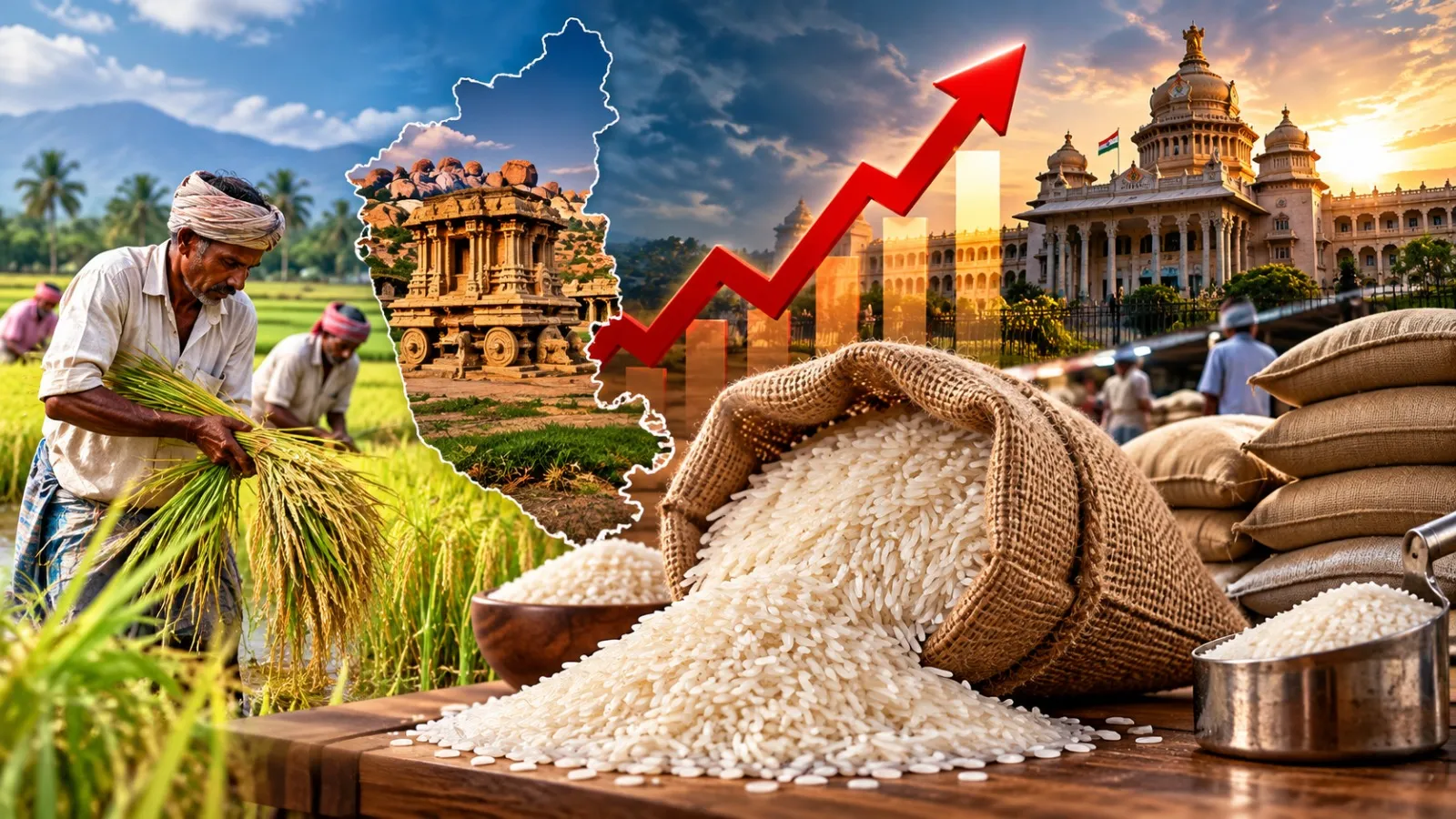
Rice prices in Karnataka have risen sharply, increasing by more than 25% in just two to three weeks. The surge has caused by deficient rainfall, water shortages and panic buying. According to Traders, prices of popular rice varieties such as Sona Masoori, RNR and Kolam rice have increased by around ₹15–20 per kg. Moreover, the shortage is linked partly to reduced paddy cultivation in areas affected by inadequate irrigation. Farmers in parts of the Cauvery basin reportedly avoided paddy cultivation after irrigation water was not released, whereas concerns over reservoir levels have added to uncertainty over the next crop.
Reportedly, Wholesale prices of Sona Masoori have climbed from around ₹55 to ₹70 per kg, while RNR rose from ₹60 to ₹75 and Kolam rice from ₹70 to ₹85. In addition,Paddy prices have increased, adding pressure on rice millers and traders. Market participants expect prices could remain firm if supplies stay tight. Fresh paddy arrivals later in the year could provide some relief if water availability improves.
Telangana Rice Surplus May Narrow as El Niño Threatens Output
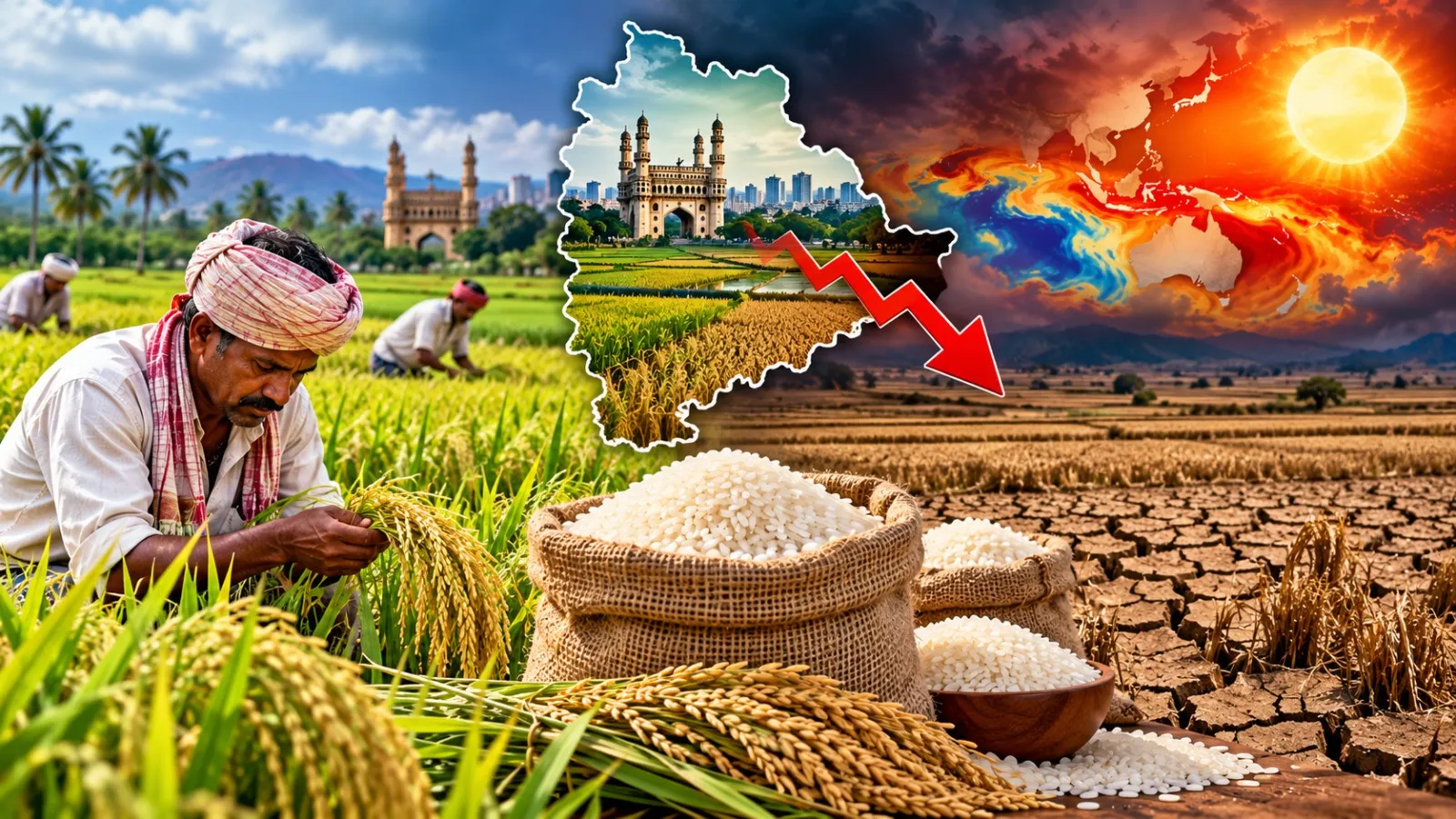
Telangana is expected to remain a rice-surplus state in 2026-27, but the size of the surplus could shrink if water availability weakens, according to an assessment by Professor Jayashankar Telangana Agricultural University (PJTAU). The university estimates total paddy production from the Kharif and Yasangi seasons at 198 lakh metric tonnes (LMT) under a low-water scenario, 209 LMT in the base case and 219 LMT if water availability improves. This could translate into milled rice production of around 133–147 LMT.
Significantly, the state requires nearly 100 LMT of rice annually for consumption, public distribution and seed requirements. It means the state is expected to retain a surplus even under weaker production conditions. However, the Yasangi crop remains a key uncertainty, with irrigation availability between October and March likely to impact acreage and yields. PJTAU has proposed a real-time rice-water dashboard to track reservoir levels, groundwater, irrigation releases, acreage, paddy procurement and market prices. The system could help policymakers manage procurement, stocks and supply more effectively.
Share this article
Article Info
Read Time
3 min read
Published
26 Sept 2026
Author
Megha Bajaj
Category
Rice News