Top Rice News: U.S. Jasmine Push, Bangladesh Price Surge

Top rice news covers major developments in the global aromatic rice market. The U.S. is expanding domestic jasmine rice production to reduce dependence on imports, supported by rising consumer demand and new crop-insurance measures. At the same time, aromatic rice prices have nearly doubled in Bangladesh’s Rajshahi, driven by increased exports, lower production, weather-related yield losses, stockpiling and higher processing costs. These developments underline shifting supply, demand and pricing trends in rice markets worldwide.
U.S. Pushes Domestic Jasmine Rice to Cut Imports

The U.S. rice industry is making efforts to expand domestic jasmine rice production and reduce dependence on imports, particularly from Thailand. Jasmine rice demand is rising rapidly, with North America accounting for about 35% of the global market. Currently, the U.S. imports nearly 1.5 million metric tons of rice annually, including approximately 800,000 tons of Thai jasmine rice.
U.S. farmers planted a record 50,000 acres of jasmine rice in 2026 in all six rice-producing states. USA Rice is promoting domestically grown varieties through retailers, restaurants and advertising campaigns. Walmart has already shifted its store-brand jasmine rice to U.S.-grown varieties, whereas Kroger is making a similar transition. A 2025 promotional campaign generated an 8.9% year-over-year sales increase. For 2027, a new crop-insurance option for aromatic rice is expected to support farmers expanding jasmine acreage. Industry leaders are also developing quality standards and researching improved varieties to boost U.S. competitiveness.
Why have aromatic rice prices doubled in Rajshahi, Bangladesh?
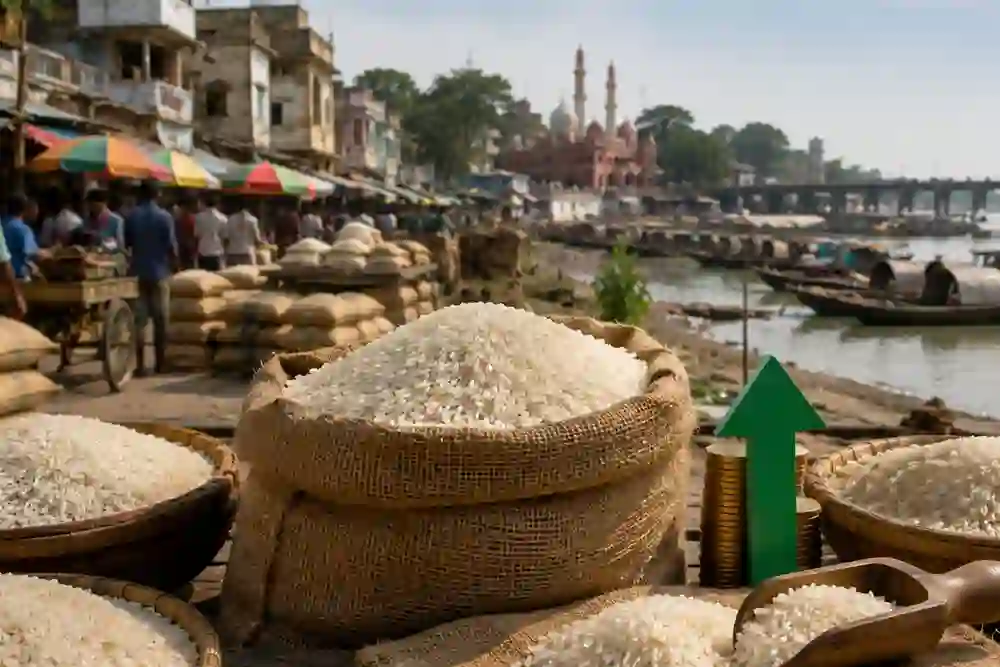
Aromatic rice prices have nearly doubled in Rajshahi over the past six months, putting the traditionally popular variety beyond the reach of many consumers. Notably, Wholesale rice prices have climbed from around Tk100 to Tk180–200 per kilogram, while retail rice prices have also risen sharply.
Moreover, traders largely blame rising exports, while other market participants cite lower production, stockpiling by large millers and higher processing and transportation costs. Moreover, three major companies exported a combined 1,530 tonnes of rice during the 2025–26 fiscal year. Heatwaves and inadequate rainfall in northern Bangladesh also reduced aromatic paddy yields.
In Saheb Bazar, open Chinigura rice now sells for Tk140–145 per kg, compared with Tk115–120 previously. Packaged Chinigura has increased to Tk160–170, while Kalijira has reached about Tk150.
The price surge is affecting households and restaurants alike, with consumers cutting purchases. Traders say demand has weakened, while farmers indicate they may increase aromatic rice cultivation if prices remain high.
Share this article
Article Info
Read Time
2 min read
Published
2 Sept 2026
Author
Megha Bajaj
Category
Rice News