Top Rice News: Japan’s Rice Prices, Indonesia’s New Farming System & U.S. Rice Acreage

Top rice news today highlights Japan’s 2025 Rice Sales to Wholesalers Hit Record Low as Buyers Shift to Cheaper Stockpiled, Imported Rice, Indonesia’s new farming system to lift rice yields to 12.4 tonnes per hectare, and fall of rice acreage to the lowest level since 1972 as cotton planting expands
Japan’s 2025 Rice Sales to Wholesalers Hit Record Low as Buyers Shift to Cheaper Stockpiled, Imported Rice
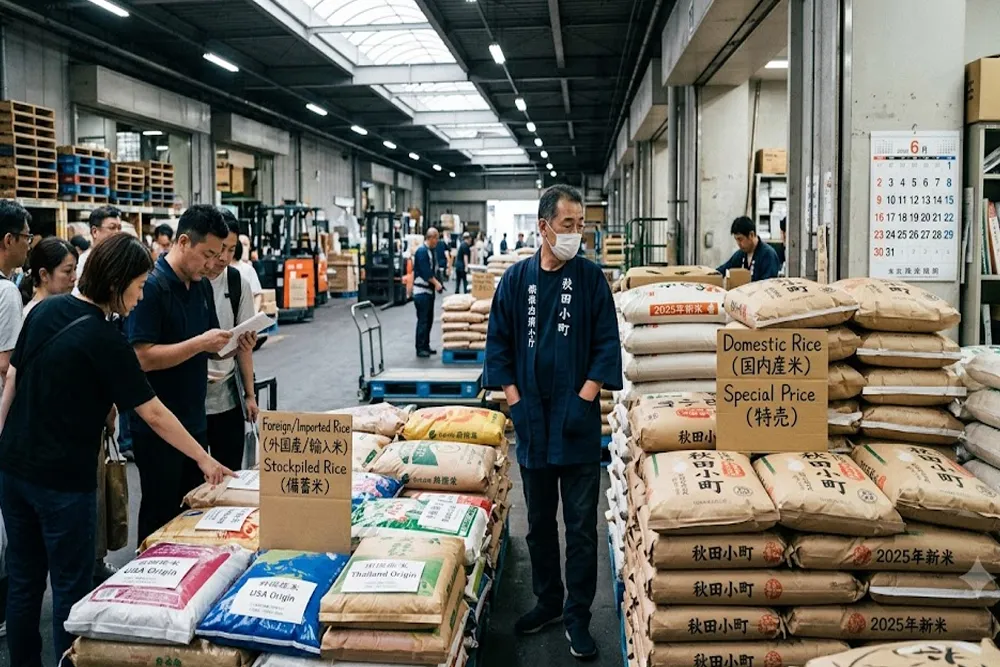
On Tuesday, July 1, Agricultural cooperatives and other groups in Japan that collect rice from farmers sold a record-low 1.32 million tons of the grain from the 2025 harvest to wholesalers as of the end of May, which is down 17 % from a year earlier. The decrease in rice sales through the conventional distribution channel comes as demand has shifted toward cheaper government-released stockpiled rice and imported rice. Notably, it accounted for just under half of the 2025 harvest collected. Moreover, Private-sector rice inventories rose around 51 per cent to 2.23 million tons as of the end of May, reaching a level on par with the record high in 2014. Prices could drop further if wholesalers seek to reduce inventories by discounting rice. According to the ministry, the average retail price of a 5-kilogram bag of rice at nearly 1,000 supermarkets nationwide fell to 3,590 yen in the week ending June 21 after peaking at 4,416 yen in the week from Dec 29, 2025, to Jan 4. The ministry projected in March that private-sector rice inventories would climb to a record high of 2.34 million tons by the end of June. Whereas the latest figure does not include rice held by small wholesalers or farmers, it still far exceeds the appropriate inventory level of 1.8 million to 2.0 million tons.
Indonesia Introduces New Farming System to Lift Rice Yields to 12.4 Tonnes per Hectare
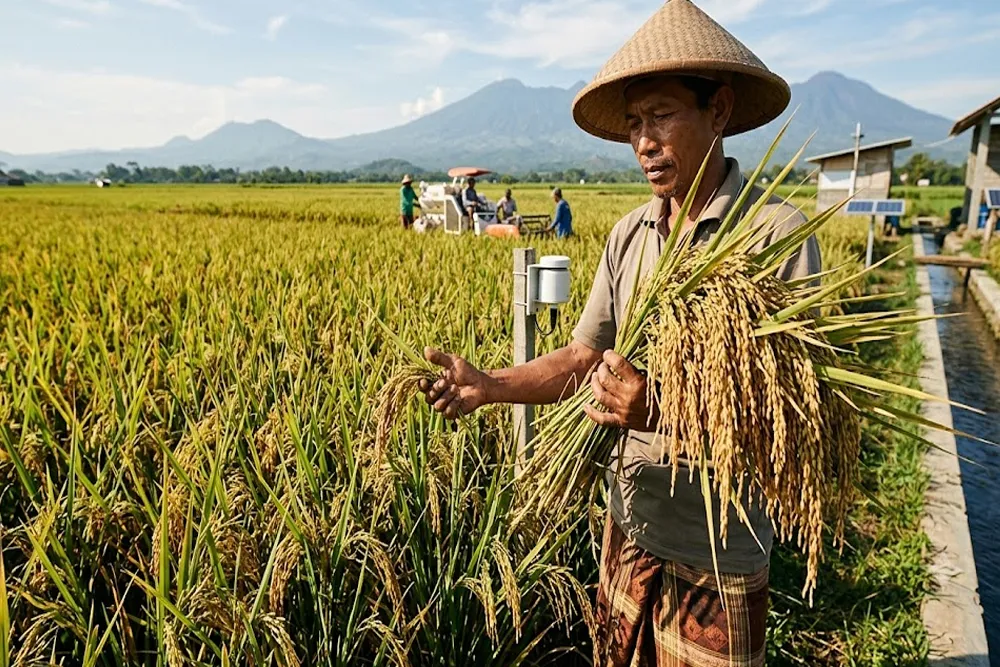
Indonesia’s Minister of Agriculture, Andi Amran Sulaiman, said that the PM-AAS (Modern Agriculture – Advanced Agriculture System) is a modern farming system that has developed in Indonesia. The system is capable of increasing rice yields to 12.4 tonnes per hectare. Thereby boosting the country’s food security. He highlighted that the technology took around two years to develop. Moreover, the system has undergone a series of successful field trials. Furthermore, he said that after nearly two years of research and field trials, I am increasingly confident this method can boost production. Our initial target is 10 tonnes per hectare, but field trials have already climbed to 12.4 tonnes. Notably, the system combines the Indonesian Jajar Legowo rice planting technique, in which rice is planted not in continuous rows but in groups of rows with an empty aisle left between them, with precision farming technology developed in China. The system is based on three key principles. The first one is optimising photosynthesis through special planting patterns of 4:1 (four planted rows, one empty) and 6:1 (six planted rows, one empty); improving crop density through continuous planting; and the application of precision farming technologies, which make more efficient use of water, fertilisers and other resources.
U.S. Rice Acreage Falls to Lowest Level Since 1972 as Cotton Planting Expands
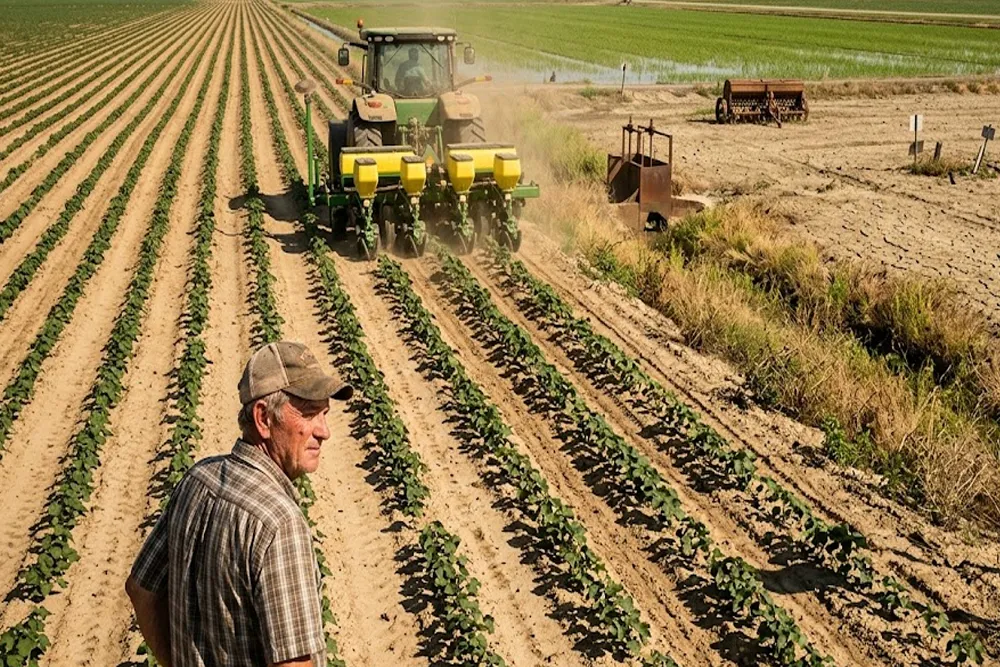
According to the U.S. Department of Agriculture (USDA), a sharp decline has been observed in U.S. rice cultivation for 2026, along with the planted area estimated at 2.02 million acres. In addition, a 28% fall from the previous year and the lowest level since 1972. This decline signals weaker market demand, weather-related production challenges, and changing planting decisions by farmers. On the contrary, U.S. farmers have expanded upland cotton cultivation, with enclosure increasing 6% year-on-yearto 9.7 million acres. The shift indicates that producers are receiving better planting incentives in the cotton market, opting for crops with more favourable economic prospects. Despite the significant reduction in rice enclosures, overall rough rice stocks have continued to increase. From June 1, rice inventories were at 74.8 million hundredweight, which marks a 7% increase in comparison to the same period last year. These contrasting trends in rice and cotton underscore how U.S. farmers are adjusting cropping patterns in response to market conditions, profitability, and weather risks, with implications for future agricultural production and commodity markets.
Share this article
Article Info
Read Time
4 min read
Published
1 Jul 2026
Author
Megha Bajaj
Category
Rice News