Top Rice News: India Exports Drop, Thai Prices Fall & Indonesia Builds 100 Warehouses
Top Rice News today include the news stories related to India’s rice exports, which have fallen 7.5% in FY26 as West Asia tensions hit demand, a drop in Thai prices on weak demand and the allocation of funds by the Indonesian government to build 100 rice warehouses
India’s rice exports fall 7.5% in FY26 as West Asia tensions hit demand
According to the Ministry of Commerce and Industry, recently, India’s rice exports fell 7.5 per cent year-on-year to USD 11.53 billion in FY 2026, along with shipments in March alone declining 15.36 per cent to USD 997.53. Moreover, the decline was largely caused by a drop in exports to key West Asian markets, including Iran, UAE, Saudi Arabia and Oman, where trade flows have been disrupted due to tensions linked to the US-Israel-Iran conflict. Notably, Iran is the largest buyer of Indian Basmati rice, has been at the centre of the disruption. In addition to this, exporters are facing delays in payments, order uncertainties and shipping challenges as importers struggle with financial and logistics constraints. Moreover, Industry feedback suggests that some buyers are unable to honour existing contracts or process payments, adding to exporter concerns. Despite the recent slowdown, India’s rice export base remains strong. In FY2024-25, the country exported 20.1 million tonnes of rice worth USD 12.5 billion to over 172 countries. When it comes to production, India continues to be a leading global producer, with output estimated at nearly 150 million tonnes in 2024-25 from nearly 47 hectares, about 28 per cent of global production. Additionally, Productivity has enhanced over the years, with average yields rising from 2.72 tonnes per hectare in 2014-15 to around 3.2 tonnes per hectare in 2024-25, supported by better seeds, improved farm practice and expanded irrigation.
Thai rice prices fall on weak demand; weaker rupee steadies India rates
Indian rice export prices held steady as a weaker rupee offset higher local paddy prices, whereas Vietnam export prices remained unchanged and Thai rice prices eased on muted demand for the staple grain. Moreover, India’s 5% broken parboiled variety was cited this week at US$344 to $340 per metric tonne, unchanged from last week. In addition, Indian 5% broken white rice was priced at $338 to $344 per tonne this week. Notably, a weaker rupee is helping keep Indian rice competitive against supplies from Thailand and Vietnam. On Thursday, the Indian rupee fell to its lowest in more than three weeks against the US dollar. According to the government’s customs data, Vietnam exported 530,991 tonnes of rice in the first half of this month, raising its total rice shipments in the Jan 1 to April 15 period to 2.81 million tonnes. Besides this, traders noted that the price drop was due to relatively muted international demand, with only some small orders coming from China and the Philippines.
Indonesia allocates $290 million to build 100 rice warehouses
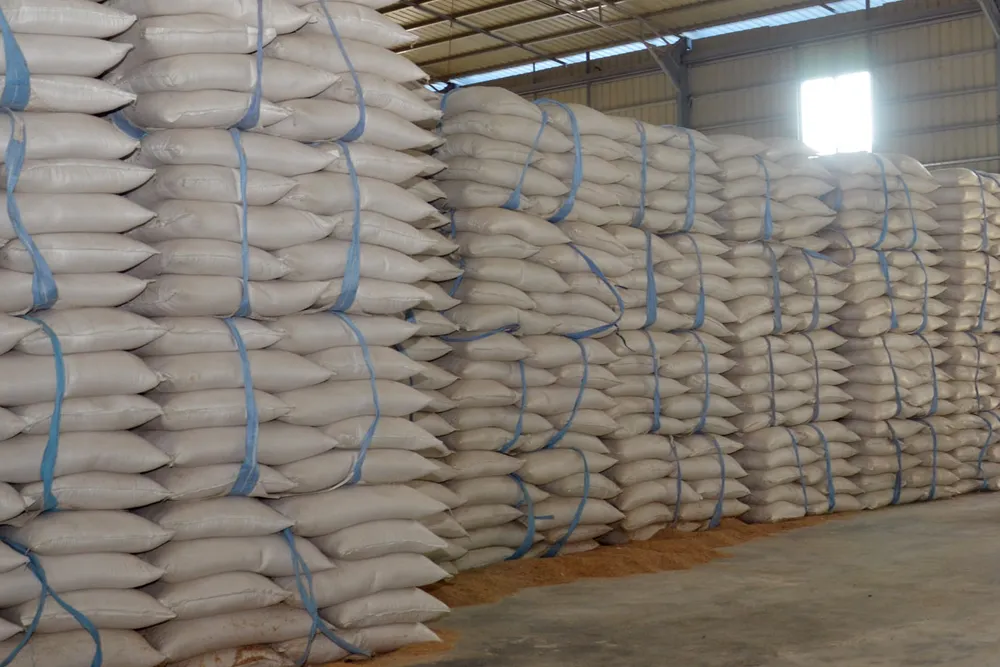
The Indonesian government has approved a $290 million plan to construct 100 new rice warehouses nationwide in order to strengthen the country’s food security system. The project has been assigned to the state logistics agency Bulog, which is responsible for managing national rice reserves. Moreover, officials said the current storage system is under pressure because rice stocks have increased significantly, reaching historic highs in recent years. The new warehouses are expected to add around 900,000 tonnes of storage capacity, helping prevent overcrowding, spoilage, and logistical bottlenecks. Government leaders, including the Coordinating Food Minister, said the initiative is necessary because rising domestic production has outpaced existing storage infrastructure. Without expansion, the government risks difficulties in storing and distributing rice reserves effectively. The project is also aimed at stabilising rice prices and improving the effectiveness of government food programs, since Bulog uses its reserves to control supply during shortages or price spikes. Construction will be carried out in stages across major rice-producing regions, with state-owned contractors handling the development after final regulatory approvals are completed. Overall, the policy reflects Indonesia’s push to strengthen food security, support farmers, and modernise its agricultural storage and distribution system.
Share this article
Article Info
Read Time
4 min read
Published
24 Apr 2026
Author
Megha Bajaj
Category
Rice News