Top Rice News: India, Assam & Japan Rice Market Updates
Top rice news from India, Assam and Japan highlights major developments across the global rice market. Indian rice export prices have reached a one-year high amid rainfall concerns and tightening supplies. In Assam, researchers identify stable, high-yielding varieties suited to flood-prone regions. Meanwhile, Japan faces a severe rice surplus, falling prices and mounting pressure on farmers. These developments underline changing supply, demand, climate and food-security trends shaping global rice markets.
Indian Rice Export Rates Rise To One-Year High. Here’s How?

Indian rice export prices have climbed to their highest level in a year as below-normal monsoon rainfall raises concerns over crop production and tightens supplies. India’s 5% broken parboiled rice was quoted at $369-$375 per tonne this week, up from $366-$371 last week, whereas 5% broken white rice stood at $364-$369 per tonne. The weather outlook is adding to market concerns. India’s August rainfall was 16% below normal, and September is also expected to receive below-average rainfall. Traders warn that continued dry conditions, particularly in southern states, could hurt crop productivity.
Significantly, Rice prices are rising across major Asian exporters. Thailand’s 5% broken rice increased to $483-$485 per tonne, while Vietnam’s prices edged up to $440-$445. Demand from Malaysia, the Philippines and other markets is supporting prices. Vietnam’s August rice exports fell 36.1% year-on-year, while Bangladesh continues to face elevated retail rice prices despite increased imports.
Study Identifies Varieties for Harvests in Assam’s Flood-Prone Regions
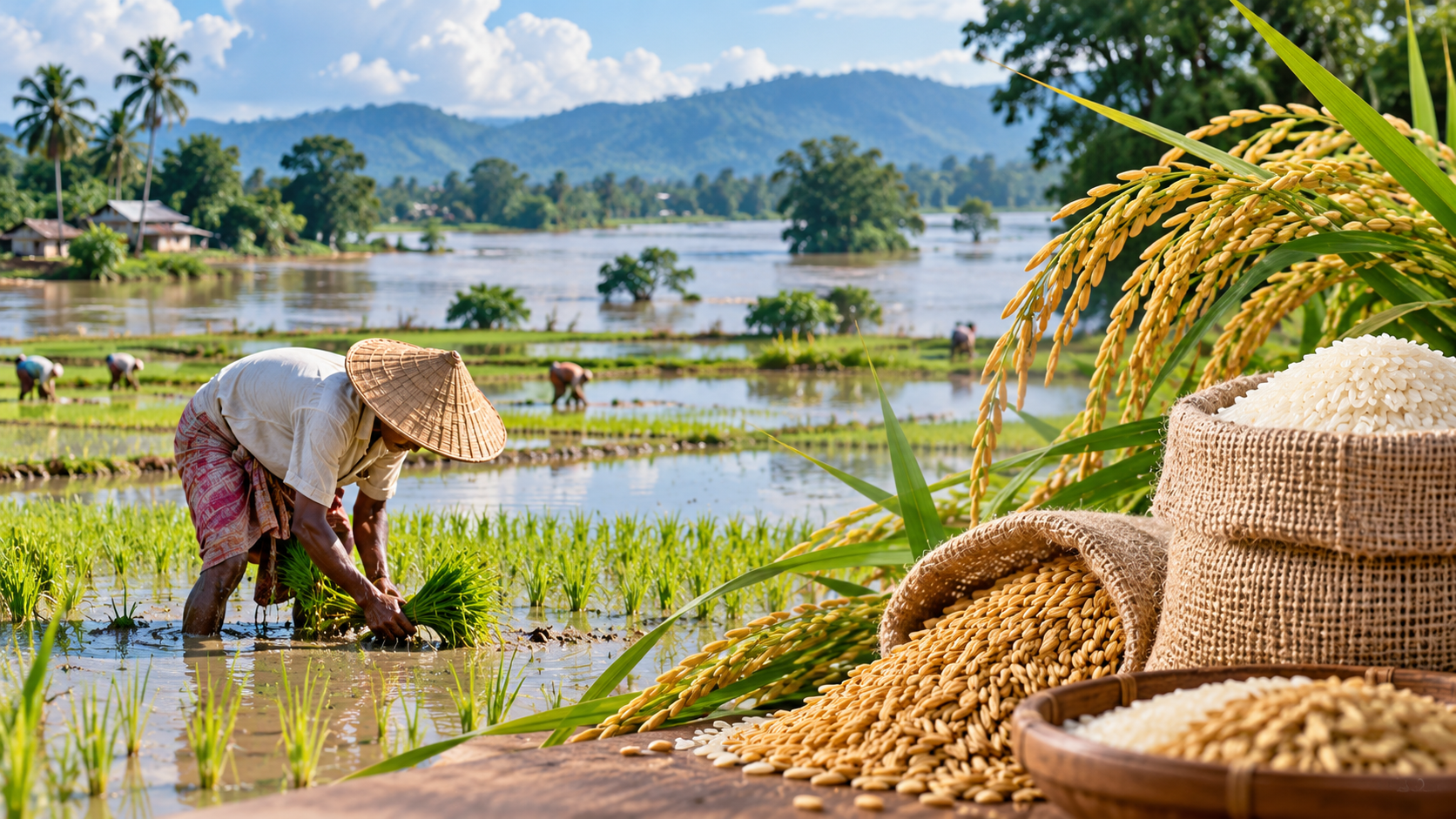
New rice varieties are showing stable and high yields across Assam’s flood-prone agricultural landscapes, offering a potential boost to climate-resilient farming in the state. A multi-year study by researchers at Assam Agricultural University evaluated 31 rice genotypes across 21 environments and seven locations over three growing seasons from 2022 to 2024.
The study found significant differences in how varieties performed across locations and growing conditions. Using advanced statistical methods, researchers identified BRRI Dhan 69 as the most stable variety overall. Dholi, Surma Dhan, Ranjit Sub1 and CR Dhan 801 also combined strong yields with broad adaptability.
Several varieties carry the Sub1 trait, which helps rice plants survive complete submergence for roughly one to two weeks, making them particularly valuable in flood-prone districts.
Researchers also identified Labanya as the highest-yielding genotype overall in one of Assam’s major environmental clusters. The findings suggest that matching rice varieties to local conditions could strengthen food security and help farmers cope with increasingly unpredictable floods and climate variability
Japan Faces Severe Rice Surplus as Unsold Stock and Strong New Harvest Crash Prices
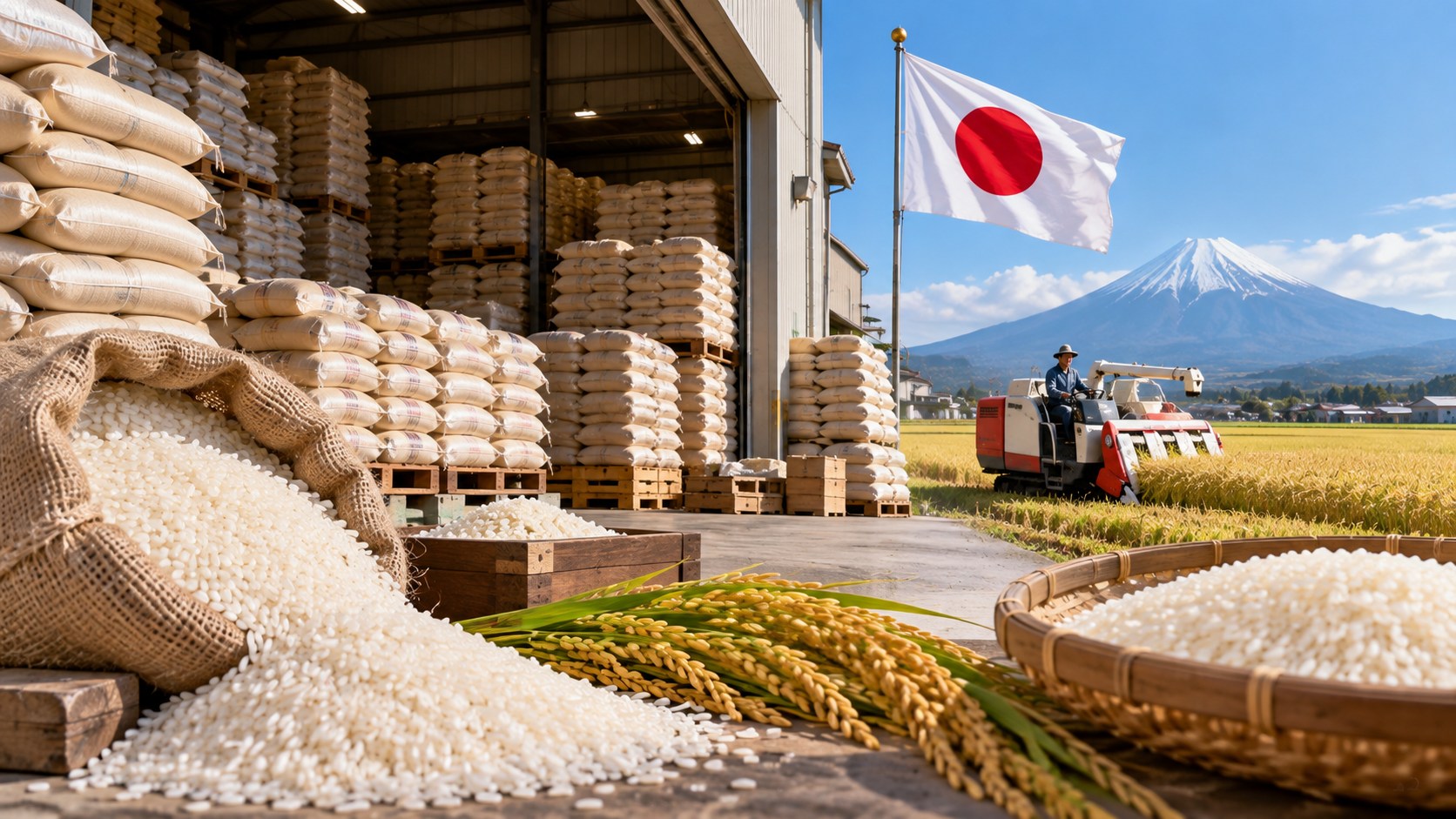
Japan is facing a growing rice surplus as large stocks from last year remain unsold while a strong new harvest reaches the market. In Shiga Prefecture, retailers are struggling with storage space and have been forced to sell older rice at steep discounts. Some rice that previously sold for more than 4,000 yen per five kilograms is now being offered for below 2,000 yen.
Not only this, but farmers are also feeling the pressure as prices for some varieties have fallen by more than half from last year’s levels. Meanwhile, fertilizer, agricultural materials and machinery costs remain high, raising concerns about farm profitability.
Agriculture Minister Suzuki has announced that the government will begin procedures to buy back rice from reserves released last year, aiming to ease the surplus. However, farmers warn that declining rice consumption and another strong harvest could lead to larger private inventories and deeper financial losses.
Share this article
Article Info
Read Time
3 min read
Published
4 Sept 2026
Author
Megha Bajaj
Category
Rice News