Can Tripura’s Rice Become Europe’s Next Favourite?
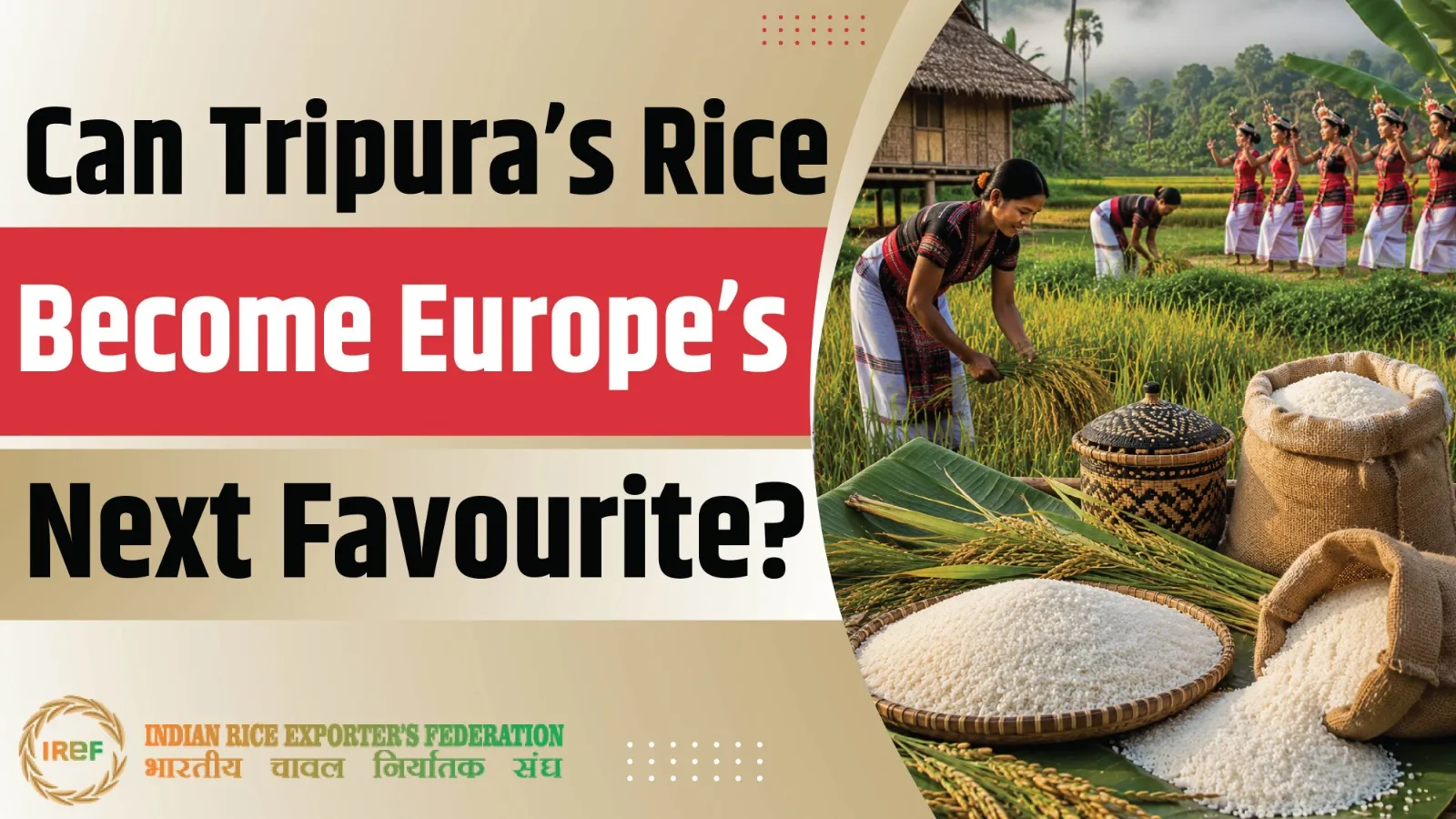
Can a small state in Northeast India make its rice a hit in Europe? And why are European buyers now looking at Tripura for organic rice? In this article, we will unravel how a small state in Northeast India make its rice a hit in Europe by expanding its international presence through his first organic rice exports.
Undoubtedly, India is the world’s largest rice exporter, with Punjab, Haryana and Madhya Pradesh among the major states contributing to rice exports, particularly Basmati rice. But now, the state is beginning to make its presence felt in the international markets by carrying out organic rice exports for the first time.
Tripura’s Organic Rice Exports Include Rice Varieties
At a time when the Northeast is frequently in the news due to the violence in Manipur, Tripura has taken a significant step towards expanding its international presence through agriculture.For the first time, Tripura has exported 18.7 metric tonnes of certified organic aromatic rice to Europe. The shipment includes four varieties: Harinarayan, black rice, sticky rice and Kalikhasa rice.
What’s Tripura’s Biggest Advantage?
The bigger question is: Can this first shipment of organic rice become the beginning of a new export opportunity for Tripura’s farmers? What makes this rice shipment particularly interesting is that these are being positioned as organic and speciality varieties, rather than simply competing in the global market on price and volume. Certified organic and unique rice varieties can potentially access premium international markets, where consumers are willing to pay more for quality, traceability and speciality.
What Did The State Agriculture Minister Say About Tripura?
On Wednesday, The Agriculture and Farmers’ welfare Minister Ratan Lal Nath flagged off the consignment during a Sensitization Programme on the National Programme for Organic Production (NPOP) in Pragna Bhaban in Agartala. Nath described the occasion as a landmark achievement for the state’s farming community and stated that Tripura possesses favourable natural conditions for the expansion of organic cultivation along with fertile land, proper rainfall and rice biodiversity. Not only this, but he also revealed that the state’s farmers have traditionally followed environmentally sustainable agricultural practices including mixed cropping, crop rotation and the use of natural manure. Moreover, these combined common practices are helping local produce to fulfill the demand of international quality requirements.
Share this article
Article Info
Read Time
2 min read
Published
3 Sept 2026
Author
Megha Bajaj
Category
News