Mushkbudji Rice Tale: The Fragrant Rice Of Kashmir Is At Risk
Mushkbudji Rice Tale: The Fragrant Rice Of Kashmir Is At Risk
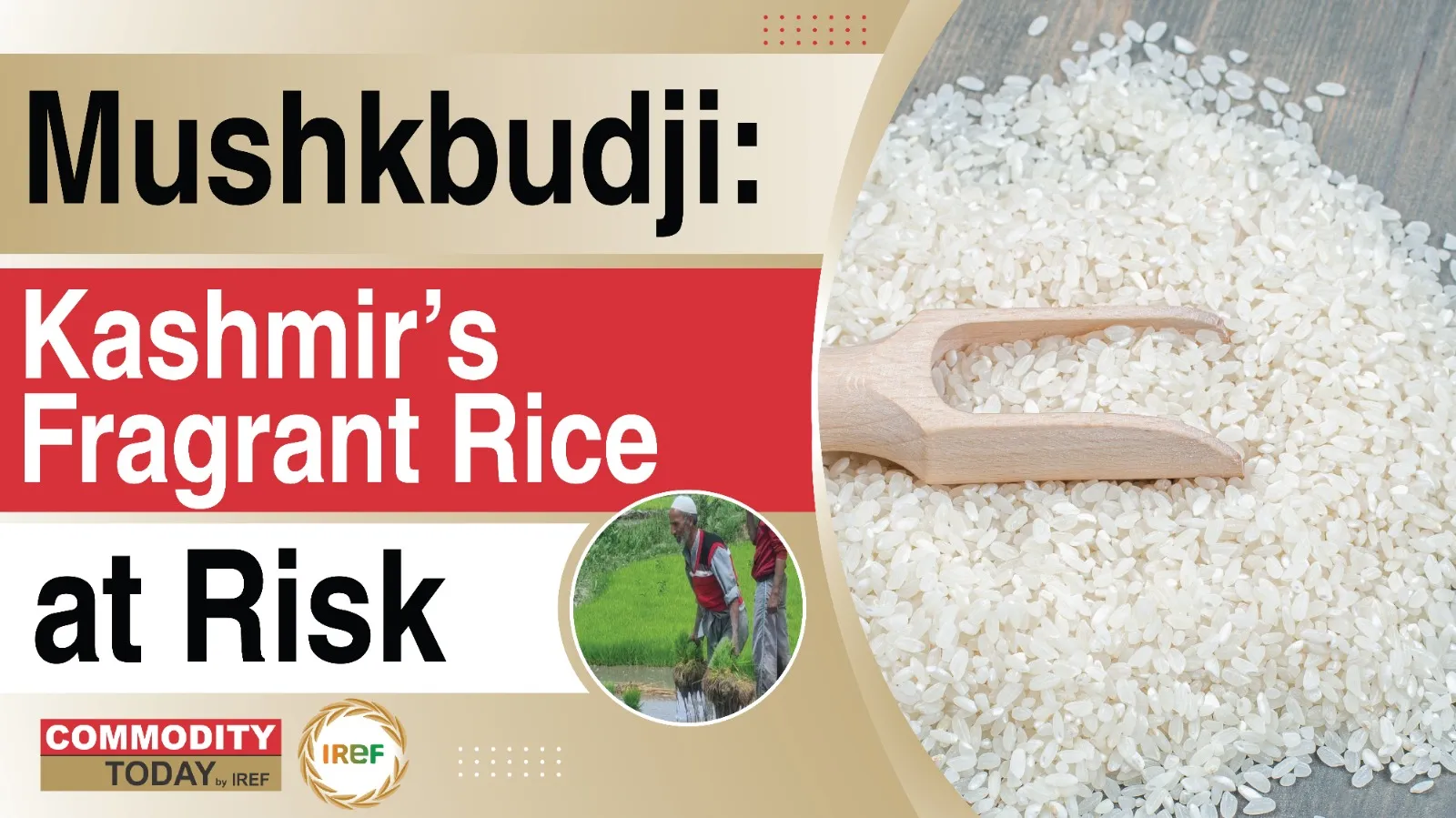
India is not only the world's largest rice exporter but also currently the largest producer of rice. Farmers in different states of India cultivate various varieties of rice, whose taste and aroma are famous worldwide. One such variety is "Mushkbudji rice". This rice is usually grown by farmers in the valleys of Kashmir, and surpasses even Basmati rice in taste. Notably, this is why it is called the 'fragrant gem of Kashmir'. While this rice variety, which was once on the verge of extinction in the valley, provides good profits to farmers, its shrinking cultivation area remains a cause for concern for farmers in the Kashmir valley.
Mushkbudji Rice and Rice Blast Disease
Kashmir's "Mushkbudji" rice sells for 400 to 800 rupees per kilogram in the market. Grown in the high, cold climate of 5,000-7,000 feet, this rice plays a significant role in the dishes prepared in Kashmiri households during weddings, festivals, and special occasions. Its remarkable qualities include quick cooking time, round, pearl-like grains, sweet aroma, and fluffy texture, making it highly popular. However, the situation wasn't always favourable for Mushkbudji rice. This fragrant rice of Kashmir was on the verge of extinction in the 1980s and 90s when its cultivation was affected by Rice blast disease, a fungal infection. Furthermore, changing weather patterns at that time exacerbated the disease in the rice plants, pushing this fragrant variety to the brink of extinction. As a result, farmers began to show less interest in cultivating it, and thus, this fragrant rice of Kashmir was on the verge of disappearing.
However, the efforts of Sher-e-Kashmir University of Agricultural Sciences and Technology have given this rice variety a new lease on life. This fragrant rice of Kashmir is also considered a source of pride for the region. However, the current concern is the shrinking area under cultivation of this particular rice variety. In fact, the cultivation of ‘Mushkbudji’ paddy is now limited to only a few areas in Kashmir. This has also raised fears of the loss of its associated cultural identity. It's not just "Mushkbudji" paddy cultivation that's shrinking; the overall area under cultivation in Kashmir is decreasing, as evidenced by government statistics. According to government data, approximately 34,000 hectares of agricultural land have been lost in Kashmir between 1966 and 2023. The question then arises: what caused this? The answer lies in urban expansion, housing development, roads, bridges, and industrial construction. These factors are leading to a reduction in agricultural land in Kashmir.
Agriculture is the backbone of the Kashmiri economy
Agriculture is the backbone of the Kashmiri economy. Nearly 70 percent of Kashmir's population lives in villages, and farming is their primary source of income. Therefore, the shrinking agricultural land is not good news for the valley's inhabitants. Research from Kashmir University and Cluster University has revealed that 5 percent of arable land was lost in South Kashmir between 1990 and 2017. Interestingly, during the same period, the horticulture sector saw an increase of more than 4 percent. Kashmir Farmers have increasingly shifted towards apple cultivation. They are neglecting other crops due to the challenges associated with them and the lack of better prices, while apples are a profitable crop, and farmers are focusing their efforts on its cultivation.
Kashmiri Farmers are shifting towards Apple Cultivation
Kashmir's climate is highly suitable for horticultural crops, which is another reason why Kashmiri farmers are increasingly shifting towards intensive cultivation of crops like apples and walnuts, as well as off-season vegetables. However, ‘Mushkbudji’ renowned for its aroma and taste, is currently facing a decline in cultivated area. Irrigation problems are also cited as a reason, as irrigation here is largely dependent on rainfall. In this situation, farmers are avoiding taking risks and are turning to horticultural crops. Experts say that since there is good market demand for this rice, efforts should be made to increase its cultivation area so that this rice variety, which is part of Kashmir's cultural heritage, reaches future generations and also increases farmers' income. Encouraging farmers to cultivate this rice variety, which at one time even surpassed Basmati in taste, and further increasing their interest in its cultivation, seems to be the need of the hour to promote the cultivation of ‘Mushk Budji’ rice.
Share this article
Article Info
Read Time
4 min read
Published
8 Jan 2026
Author
Megha Bajaj
Category
News