How the Middle East Conflict Disrupted Thailand’s Rice Exports?
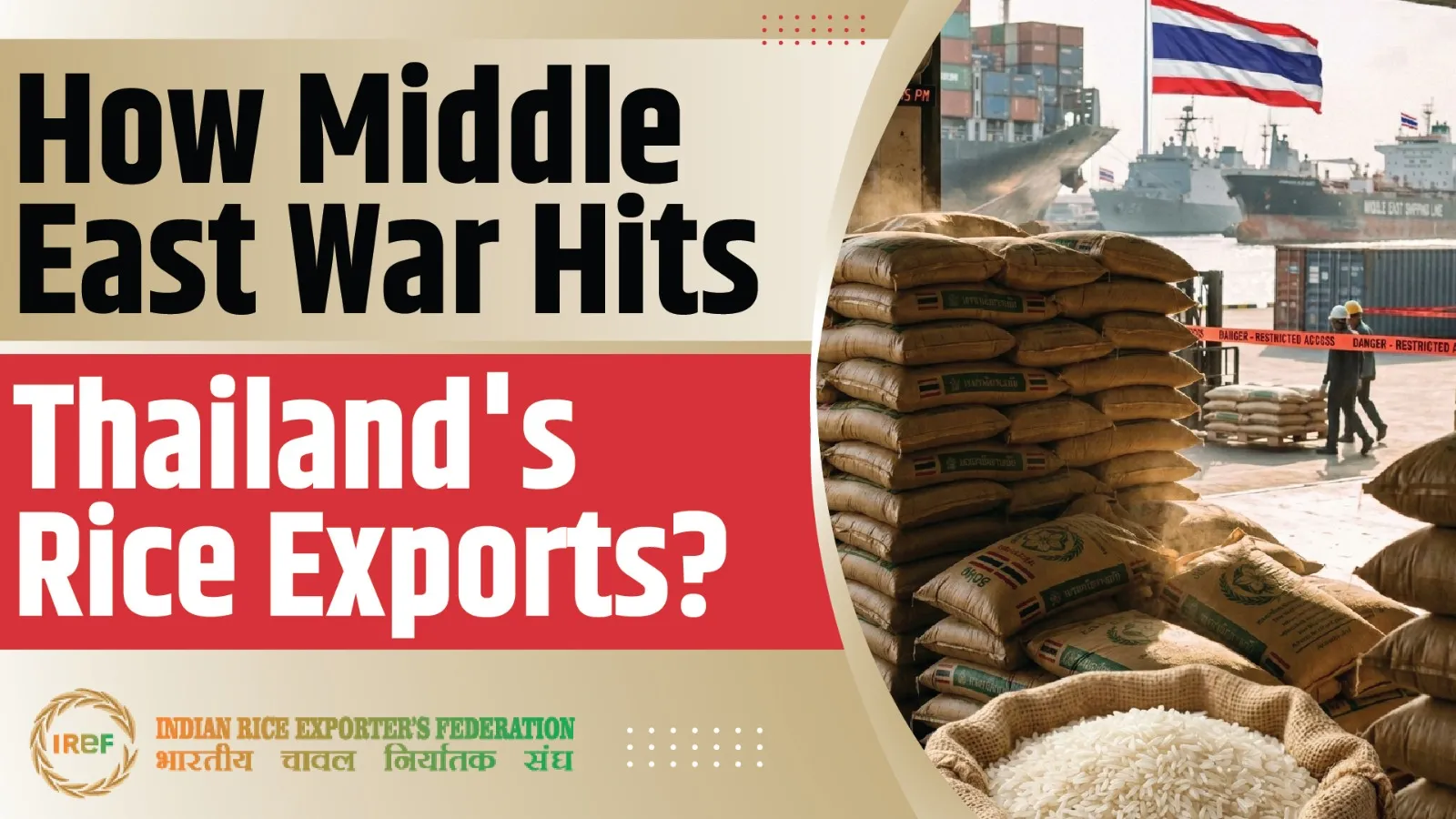
Thailand’s rice exports are facing massive pressure due to the Middle East conflict which disrupts major trade routes. Not only this, but it also halts shipments to the markets. According to exporters, the Iran-related war has severely affected trade flows, such as to Iraq and other countries. It results in the loss of nearly 200,000 tonnes of rice shipments in just three months.
Chookiat Ophaswongse, honorary president of the Thai Rice Exporters Association, has said that Thailand’s rice trade performance has been observed to be stable in most global markets during the first four months of 2026. But rice exports to the Middle East were completely suspended due to the conflict, which has affected overall volumes. The country exported around 2.2 million tonnes of rice during this period, but it has fallen short of expectations. If current trends continue, total rice exports from Thailand in 2026 may reach only 6.6 million tonnes. Notably, It is below the projected target of 7 million tonnes.
Iraq loss affected Thai Rice Industry
A significant factor behind the reduction is the loss of market. Notably, Iraq has historically been Thailand’s largest buyer in the region. Thailand exports at least 80,000–90,000 tonnes of rice per month to Iraq, which accounts for around 1 million tonnes under normal conditions But, since the conflict escalated in the Middle East, shipments to Iraq have completely halted. Moreover, in one case, a cargo vessel carrying Thai rice had to unload its shipment and return to shore due to restricted movement and unsafe shipping conditions. This disruption underscores how the Middle East conflict is directly affecting global rice supply chains. Over the past three months alone, Thailand has lost nearly 200,000 tonnes in Middle East rice exports, creating a significant gap in demand that exporters are struggling to fill.
Asian Demand Supports Rice Exports
Interestingly, Asian markets such as Malaysia and the Philippines have helped in stabilising Thailand’s export volumes. Demand from these countries has increased sharply, particularly as Malaysia has expanded its rice reserve requirement from three months to nine months. This has boosted procurement needs.
This shift has offered some relief to Thailand’s rice export industry. At the same time, rising logistics costs remain a challenge. In addition, Freight charges and insurance premiums have increased by around 20% due to higher global oil prices. This has added more pressure on exporters.
A balance due to Government-to-Government Deals
Apart from market disruptions, the rice-exporting nation continues to pursue government-to-government (G2G) rice agreements, particularly with China. According to officials, the country has already delivered an initial 40,000-tonne shipment to China in early 2026 under existing agreements. Moreover, negotiations are still in progress for an additional shipment of 50,000–60,000 tonnes. The process is currently awaiting Cabinet approval due to government transition procedures. The Thai government’s existing memorandum of understanding covers 280,000 tonnes. It plans to expand it to a total of 500,000 tonnes. Thai authorities believe these deals will help in balancing the country's rice export market amid ongoing global uncertainty.
What about Global Rice Market ?
According to experts, the situation signals how geopolitical tensions can frame global commodity flows. While Thailand remains a leading exporter, the disruption in Middle Eastern demand underscores the vulnerability of international rice trade networks. Henceforth, Exporters will closely monitor both geopolitical developments and shifting demand in Asian markets to maintain balance in global rice supply.
Share this article
Article Info
Read Time
3 min read
Published
7 May 2026
Author
Megha Bajaj
Category
News