Indonesia Halts Sugar, Corn & Rice Imports in 2026: Implications for Indian Rice Exporters and Global Market
Indonesia Halts Sugar, Corn & Rice Imports in 2026: Implications for Indian Rice Exporters and Global Market
By Megha Bajaj
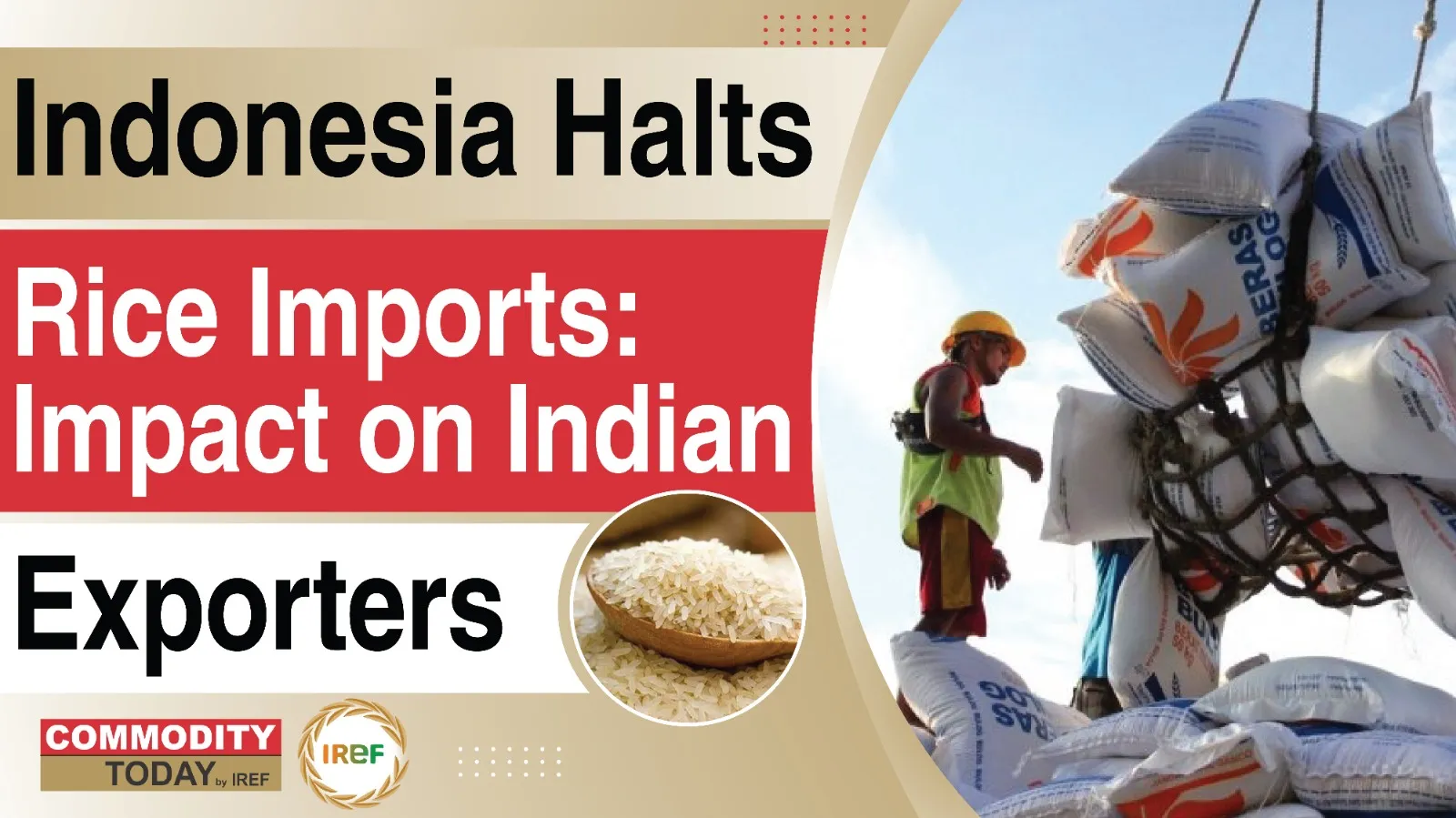
Indonesia has decided to halt rice imports from ASEAN countries in the initial phase of 2026. This recent move represents a significant shift in the Asian rice market. Not only this, but it sends a significant signal to Indian rice exporters, especially at a time when the country is witnessing declining rice exports from Vietnam, a record surge in Indian rice exports, and intensifying global competition.
Complete ban on Rice imports, sugar and corn by Indonesian Government
This decision is linked to the analysis of Indonesia's self-sufficiency policies and export plans. The background to this news story is that the Indonesian government, under President Prabowo Subianto, has imposed a complete ban on the rice imports, table sugar, and feed corn for 2026. This ban applies to both domestic consumption and industrial use. The significant reason for this decision is the record domestic rice production in 2025. Indonesia's rice production reached approximately 34.71 million metric tons in 2025 whereas national consumption was nearly 31 million tons, resulting in a surplus of 3 to 4 million tons. The government did not do rice imports in 2025. At the beginning of 2026, government stocks, including those held by Bulog, reached approximately 12.5 million tons, including a record level of 3.25 million tons in government reserves. The government states that this policy is aimed at ensuring food security, protecting farmers' incomes, and mitigating geopolitical risks, such as tensions with neighboring countries. However, there is a paradox. Despite the surplus, domestic rice prices are continuously rising. The price of harvested dry grain (GKP) has increased to 6,500 rupiah per kilogram, up from around 5,000 rupiah previously. Meanwhile, medium-quality rice is selling for over 15,000 rupiah per kilogram in the retail market. This is attributed to increased government procurement prices, changes in quality standards, and imbalances in the distribution system.
Implicit Impact on Indian rice exporters in Non- Basmati Segment
If we talk about its implications, this situation is considered positive for Indonesian farmers. The surplus and strong domestic demand are expected to lead to better prices for farmers, increasing their income. Millers and processors will benefit from the increased domestic supply, although rising prices could also increase their costs. New opportunities are opening up for exporters, as the government plans to export 1 million tons of rice in 2026. However, there could be an implicit impact on Indian rice exporters, particularly those in the non-basmati segment. Indonesia previously did rice imports from India, Vietnam, and Thailand. In 2023, Indonesia imported 246,000 tons of rice from India. At present, the imports have halted, leading to MSME exporters losing the market. However, the impact on India's total rice exports which stood at 21.55 million tons in 2025, is expected to be limited, as Indonesian imports represent a small portion of the global market. Nevertheless, global rice prices could fall further. In terms of trade implications, the risk is already low global rice prices could come under further pressure. This could affect the profit margins of Indian rice exporters, especially amidst competition from countries like Pakistan, Thailand, and Vietnam. But there are also opportunities.
Indonesia's self-reliance policy is commendable
Rising prices in Indonesia could increase demand in neighboring Asian countries and Africa, where India already has a strong presence. Furthermore, the commencement of Indonesian exports will increase global supply. However, as the world's largest rice exporter, India can capitalize on this situation. The suggestion states that Indian exporters should focus on market diversification, fully utilize the benefits of the FTA with the European Union, secure new contracts in the Middle East and Africa, increase investment in value-added products like fortified rice, and utilize hedging tools. No doubt, Indonesia's self-reliance policy is commendable. It demonstrates that strong domestic production and government support can eliminate import dependence. However, the rise in domestic prices despite the surplus is an acute challenge, highlighting shortcomings in the distribution and price control systems. Now, this could serve as a wake-up call for India since the country is one of the world's largest rice producers and exporters. But by focusing more on warehousing, supply chain management, and sustainability, the country can handle such situations efficiently. The government should explore new markets through diplomatic channels and increase agricultural export incentives in the budget. Overall, this news is bringing new dynamics to the Asian rice market. Whereas competition will intensify, India appears to be well-positioned. Apparently, this analysis states that how self-reliant policies are reshaping the direction of global trade.
https://youtu.be/CG4YrsA-0ncShare this article
Article Info
Read Time
4 min read
Published
15 Jan 2026
Author
Megha Bajaj
Category
News