Top Rice News: Telangana CM urges, Cancellation of Import Licences and Nigeria’s Rice Tariff
Top rice news today includes Telangana CM’s urge to procure 30 lakh metric tonnes of parboiled rice, cancellation of import licences of 3 Indian rice exporters and Nigeria’s rice Tariff boost Benin trade routes.
Telangana CM Urges Centre To Procure 30 Lakh Metric Tonnes of Parboiled Rice
On Friday, April 17, Telangana Chief Minister A Revanth Reddy urged the Centre to procure 30 lakh Metric tonnes of boiled rice from Telangana during the rabi season. For this, he called the Union Minister for Food and Public Distribution, Pralhad Joshi. Not only this, but the Minister also provided the Union Minister with statistical data on the supply of Custom milling rice (CMR) over the past six rabi seasons and information on boiled rice. Moreover, the leaders highlighted that the paddy harvested in the rabi season is suitable for milling boiled rice. Notably, the meeting took place at Pralhad Joshi’s residence in Delhi. During the discussions, this minister highlighted that the Ministry of Food and Public Distribution officials had recommended increasing the supply of boiled rice in response to growing national demand. In addition, he informed Joshi that Telangana expects to produce 90 Lakh metric tonnes of paddy during the current rabi season, which is suitable for milling into parboiled rice. Telangana is prepared to supply 30 lakh metric tonnes of parboiled rice with 5 per cent of broken rice content and 5 lakh metric tonnes of raw rice with 10 per cent of broken rice content from the Yasangi harvest. They also appealed to Pralhad Joshi to resume the distribution of Fortified Rice Kernels (FRK) under government welfare schemes in India without delay. The fortified rice had been distributed through schools, hostels and ICDS centres to prevent anaemia and nutritional deficiencies among children, but the scheme was recently stopped.
China Cancels Import Licences Of 3 Indian Rice Exporters, Terms Produce GMO
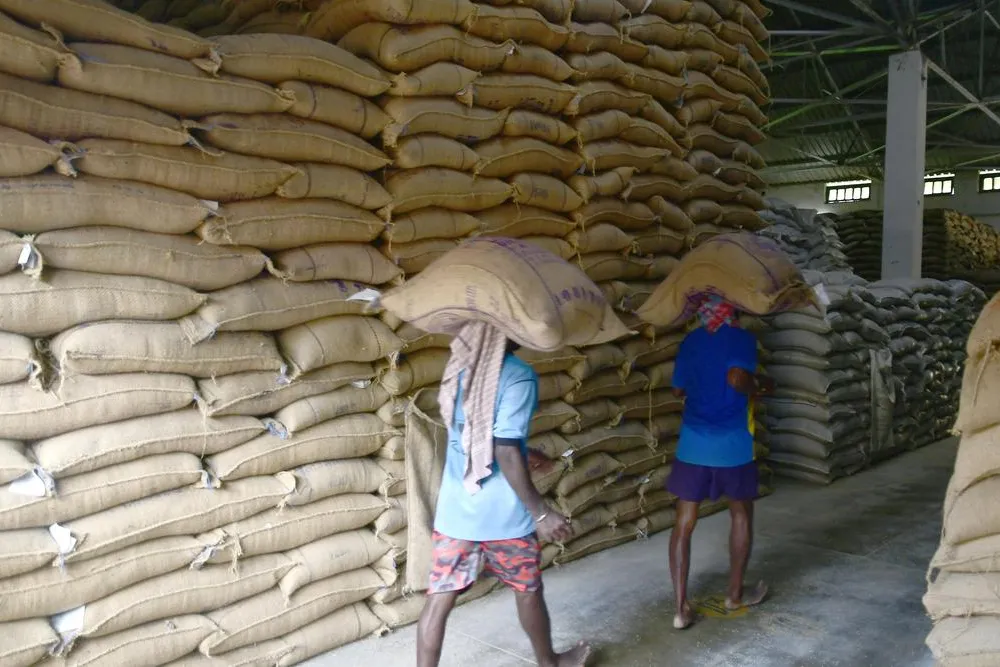
According to sources, China has cancelled the import licenses of three Indian rice exporters, effective April 17. The Indian Embassy in China communicated the matter to APEDA (Agricultural and Processed Food Products Export Development Authority) India’s official agricultural export promotion body, which later informed the affected companies about a month after rejecting consignments from three Indian rice exporters due to traces of genetically modified organisms (GMOs). Moreover, the companies involved are NM FoodImpex Pvt. Ltd., Shriram Food Industry Ltd, and Sponge Enterprises Pvt Ltd. In addition, Industry sources stated that the government may take reciprocal steps if China continues with the suspension, as the ground on which the decision was taken was not legally valid. Moreover, the affected companies have reportedly approached the Commerce Minister Piyush Goyal as well as APEDA to take up the matter with the Chinese on a priority basis, the sources said. Sources added that the effective date of the Chinese customs department’s new order was determined based on the timing of the initial consignment rejections. The affected companies had taken up the matter with India’s agri export promotion body APEDA as well as the Indian Council of Agricultural Research (ICAR). Industry sources said that China grows GM rice, and in 2006, the European Union had flagged the issue of GM contamination in Chinese rice.
Nigeria’s Rice Tariff Cuts Raise Price Risks And Boost Benin Trade Routes
Recently, the Nigerian government's reduction in rice import tariffs to 47.5% could impact prices in local markets and the trans-border rice trade between Nigeria and Cotonou. The Nigerian government announced broad revisions to import tariffs in various sectors in a 2026 fiscal policy document. The import duty on rice in bulk or quantities over 5 kilograms was reduced to 47.5% from 70%, whereas the tariff on broken rice was reduced to 30% from 70%. Moreover, the Tariffs on other products were also adjusted, with raw cane sugar and beet sugar in powder form both saw a reduction to 57.5% from 70%. In addition, the Cotonou rice market will be watching this new tariff because that could mean importers will prefer to import directly to Nigeria rather than use the Cotonou route," a Cotonou-based trader said. Additionally, the trader said that with the new official rate of 47.5%, imports into Benin will be cheaper, but that if importers incorrectly declare it as broken rice, importing into Nigeria will be cheaper. Meanwhile, a Delhi-based importer expressed scepticism about the effect of lower duties on import volumes, saying that import volumes to Nigeria would depend on the availability of foreign exchange.
Share this article
Article Info
Read Time
4 min read
Published
18 Apr 2026
Author
Megha Bajaj
Category
Rice News