Top Rice News: Foodgrain Stocks, B2B deal & AI-driven Basmati Paddy
Top Rice News Today outlines a rise in India’s foodgrain stocks to nearly 3 times the buffer norm, a B2B deal of China-Myanmar, which is about to boost rice exports and the launch of the first AI-based Basmati paddy survey across 4 million hectares.
India’s Foodgrain Stocks Rise to Nearly 3 Times Buffer Norm
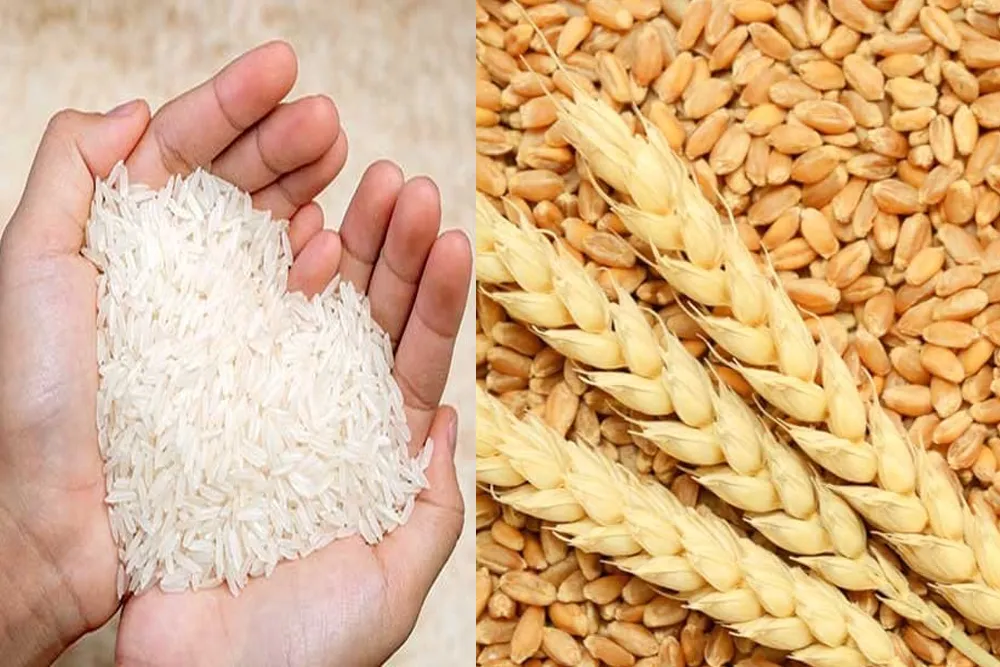
According to the official data, as of April 1, India's wheat and rice stock kept in Food Corporation of India (FCI) godowns rose to 604.02 lakh tonnes, nearly three times the mandatory buffer requirement of 210.40 lakh tonnes. Interestingly, Rice stocks stood at 386.10 lakh tonnes, well above the buffer norm of 135.80 lakh tonnes, whereas wheat reserves stood at 217.92 lakh tonnes against the required 74.60 lakh tonnes. Furthermore, Buffer norms are revised quarterly, and the current figures apply from April 1, with the next revision due on July 1. The government maintains wheat and rice buffer stocks to ensure adequate supply for beneficiaries of the Public Distribution System (PDS) and other food welfare schemes. Wheat and rice procurement from the 2026 rabi season is still in progress. Nearly 97 per cent of the wheat sown area of 334.17 lakh hectare has been harvested, along with the completion of pulse harvesting. Additionally, Paddy harvesting is at 59.32 per cent in Tamil Nadu, Kerala, Tripura, Andhra Pradesh and Telangana. Wheat was trading at ₹2,530 per quintal, 2.13 per cent below the MSP of ₹2,585 per quintal. Paddy prices drop around 3.17 per cent to ₹2,294 per quintal from a year earlier. Besides this, Maize prices reduced to 23.71 per cent to ₹1,831 per quintal, against the MSP of ₹2,400.
China-Myanmar B2B Deal Set to Boost Rice Exports
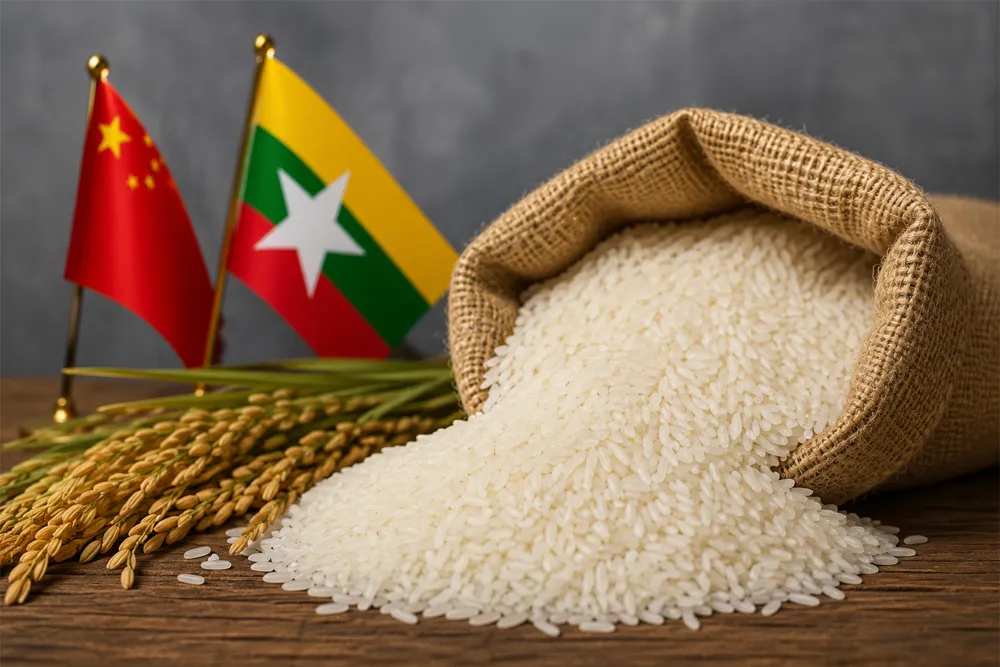
According to Myanmar’s Commercial Attaché in Kunming, China. Myanmar and China will soon establish a Business-to-Business (B2B) pact to boost rice exports. Guokee Bio-Tech Company Limited from Yunnan Province, China, in cooperation with the Department of Agriculture and the Department of Agricultural Research, has been implementing trials to enhance agricultural seeds, including rice, corn and secure pedigree seeds. Moreover, Guokee Bio-Tech Company indicated willingness to sign a B2B Memorandum of Understanding (MOU) with a rice-exporting company from Myanmar. They will offer seeds and persuade farmers to grow them. Furthermore, the rice milling process will be conducted in Myanmar. Subsequently, Guokee Bio-Tech Company will import the rice to Myanmar. Notably, officials from the Yunnan Provincial Department of Commerce in China stated that China has adopted a new Export to China policy to encourage imports and to meet domestic consumption. Currently, that company is conducting a trial run for four varieties of lowland paddy seeds (Yar 8, UPLRi, ZKMUR-5, and M20) in Nay Pyi Taw. These rice varieties are already registered with the General Administration of Customs of China (GACC).
India Launches First AI-Based Basmati Paddy Survey Across 4 Million Hectares
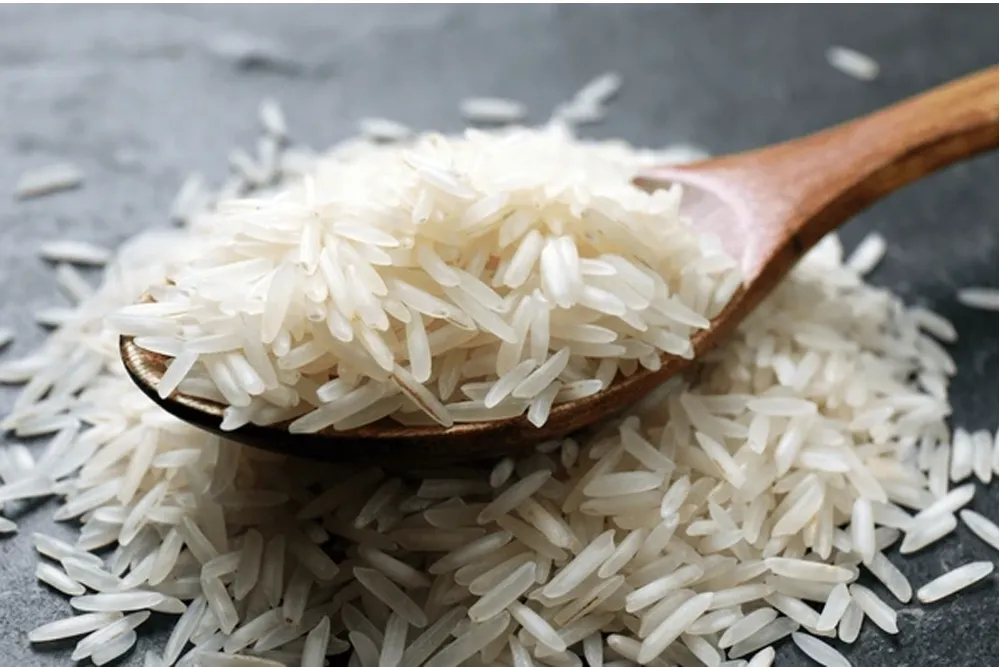
India has launched its first AI-driven Basmati Paddy Survey for 2026–28 to improve crop monitoring and make export planning for premium basmati rice more efficient. The idea is to bring precision agriculture into one of the country’s key export crops. The survey will cover nearly 4 million hectares across major basmati-growing regions. It will gather data from over 1.5 lakh ground points and involve more than 5 lakh farmers. Using AI and data analytics, it aims to improve crop estimates, identify varieties more accurately, and support better yield forecasting and advisory services. Officials say the system should make basmati production more transparent and help with quicker, more informed decisions. It may also strengthen India’s response to global demand by improving how exports are planned and managed. That said, the scale of the project has raised some questions around land coverage and data accuracy. There are also concerns about how such a large survey will be implemented on the ground. Even so, the government believes it will modernise basmati farming and eventually help improve farmer incomes through better market alignment. India is one of the largest producers and exporters of basmati rice globally, and this initiative is seen as a major step toward integrating technology with traditional farming systems. The AI-based survey is expected to set a benchmark for future digital agriculture projects in the country, especially in high-value crop segments.
Share this article
Article Info
Read Time
4 min read
Published
7 May 2026
Author
Megha Bajaj
Category
Rice News