Top Rice News: Vietnam’s Production & Exports, Indian Non-Basmati Exports
Top rice news today covers Vietnam strengthening sustainable rice production and shifting towards higher-value exports to improve global competitiveness. Explore how green farming practices across the Mekong Delta aim to address climate risks and meet international standards. Meanwhile, India’s non-Basmati rice exports rise 6.7 per cent to 8.84 million tonnes, driven by strong global demand, despite rising domestic rice inflation and changing export policies.
Vietnam Urged to Make Green Rice Production a Necessity. Here’s Why?
As per experts, Vietnam must escalate its efforts towards high-quality, low-emission rice production to boost export competitiveness. Not only this, but it has been done in order to meet international standards and improve farmers’ incomes.
Moreover, Industry leaders highlighted growing demand for sustainable rice in markets such as the European Union, Japan and Australia. However, rice exporters face strict quality controls, pesticide-residue limits and certification requirements. In addition, limited access to green financing remains a major obstacle. Under Vietnam’s one-million-hectare project, more than 420,000 hectares in the Mekong Delta have adopted sustainable farming practices. These include reducing seed use, chemical fertilisers and irrigation water. Experts also warned of worsening climate risks, including drought and saltwater intrusion. They called for stronger investment, improved traceability, technology adoption, and sustainable supply chains to secure Vietnam’s position in global rice markets.
Vietnam Shifts Rice Exports Towards Higher Quality and Value
Vietnam is repositioning its rice export industry towards higher-value products amid growing structural, financial and climate-related challenges. According to a report by the Institute of Strategy and Policy for Agriculture and Environment, rice exports recorded average annual growth of 4.3 per cent between 2018 and 2025.
However, export earnings reached US$3.1 billion in the first nine months of 2026, down 12.3 per cent year-on-year. The rice industry is witnessing a shift towards fragrant and glutinous rice, with regular white rice’s export share reducing from 58 per cent in 2025 to 44.84 per cent during the period. Experts identified weak branding, fragmented production, limited processing capacity, inadequate credit and inefficient logistics as major obstacles. Flooding, saltwater intrusion and El Niño further threaten production.
They suggested stronger farmer-enterprise partnerships, improved traceability, modernised logistics, deeper processing and better market promotion to enhance competitiveness and increase export value.
India’s Non-Basmati Rice Exports Rise 6.7% to 8.84 Million Tonnes
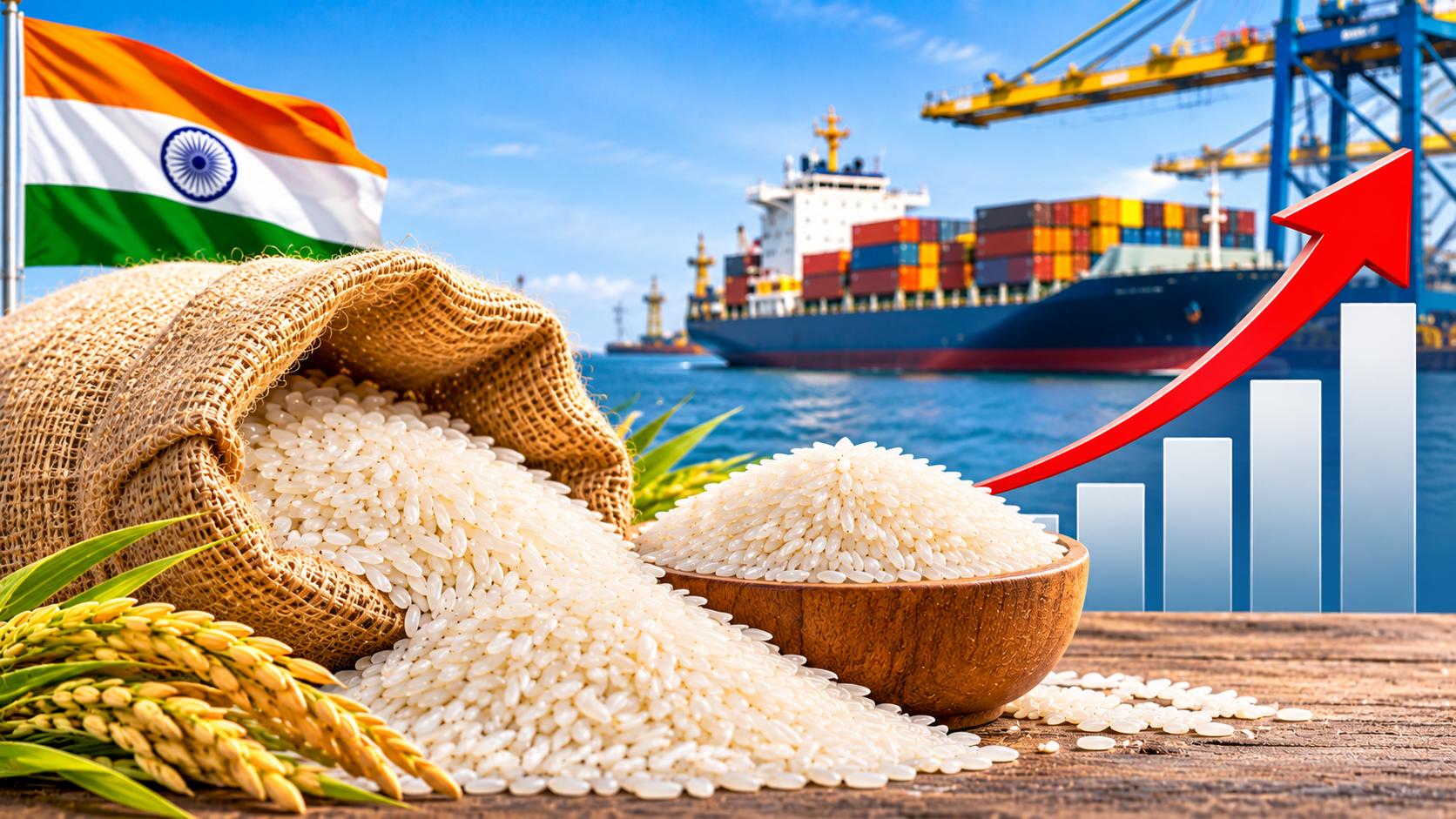
India’s non-Basmati rice exports increased 6.7 per cent to 8.84 million tonnes during April–October 2026-27. This could be compared with 8.28 million tonnes in the corresponding period last year. It is driven by strong international demand and competitive pricing. White rice exports registered an 18.3 per cent increase to 2.82 million tonnes, whereas broken rice shipments surged 73.5 per cent to 0.98 million tonnes. However, parboiled rice exports reduced 4.6 per cent to 4.9 million tonnes, indicating changing demand patterns across rice varieties. Despite the export growth, the industry faces challenges from fluctuating export policies and rising domestic prices. Moreover, retail rice inflation reached 12.51 per cent, raising concerns about balancing overseas demand with domestic affordability. Notably, experts emphasised the importance of competitive pricing and strategic export management to sustain India's position in global rice markets.
Share this article
Article Info
Read Time
3 min read
Published
26 Nov 2026
Author
Megha Bajaj
Category
Rice News