Top Rice News: Rice ATM Initiative, SK’s Rice to Namibia And Chinese Expert Boosts Nigerian Rice

Today’s Top Rice News stories include Odisha’s expansion of Rice ATM Initiative, South Korea’s 5,000 Tonnes of Rice to Namibia, and Nigerian rice production to be boosted by Chinese Experts
Odisha Expands ‘Rice ATM’ Initiative to Four More Districts After Successful Pilot

According to the latest updates, to boost the Public Distribution System (PDS) and improve access to subsidised food grains for beneficiaries, the Odisha government plans to expand its innovative rice ATM initiative to four more districts. Food supplies and consumer welfare minister Krushna Chandra Patra informed the State Assembly about the move in a written reply to a question raised by Goutam Buddha Das, MLA from Bhogarai. The minister stated that automated rice dispensing machines will soon be installed in the districts of Jharsuguda, Nabarangpur, Keonjhar, and Dhenkanal. Interestingly, the initiative follows the successful pilot project rolled out earlier in the Mancheswar area of Bhubaneswar, which aims to make ration distribution more efficient, transparent, and user-friendly. Since July 2024, the Mancheswar rice ATM has been widely used by beneficiaries. According to Official data, nearly 20,217 people have withdrawn rice from the machine, and around 3,805 quintals of subsidised rice have been distributed through the automated system during this period. The government believes that expanding the rice ATM network will help reduce waiting time at ration shops, streamline distribution and ensure greater transparency in the delivery of food grains under the PDS. It is noteworthy that India’s first rice ATM was inaugurated in Mancheswar on August 8 last year as a pilot project by Minister Patra. The machine was installed at a government warehouse to test the feasibility of automated ration distribution.
South Korea Sends 5,000 Tonnes of Rice to Namibia to Aid Drought Recovery

South Korea sends 4, 896 metric tons of rice worth USD 1.7 million to Nambia through the United Nations World Food Programme (WFP)’s on demand service. Interestingly, this food assistance is intended to support communities recovering from the severe 2024-2025 drought, one of the worst in Nambia’s history, affecting 1.4 million people across all 14 regions of the country. Moreover, the rice is expected to assist nearly 300,000 people between April and December 2026, offering support as many vulnerable households as continue to rebuild their livelihoods. However, Namibia has witnessed improved rainfall, many communities are still facing depleted food stocks, rising food prices, loss of livelihoods, and soil degradation. Not only this, but flooding in some areas has also disrupted planting activities, creating further uncertainty in the context of upcoming harvests. In addition, Namibia’s office of the Prime Minister, through its disaster risk management structures, will oversee the nationwide distribution of the rice through regional councils to ensure that vulnerable households in all regions benefit from the assistance.
Chinese Expert Boosts Nigeria Rice Production with Hybrid Technology
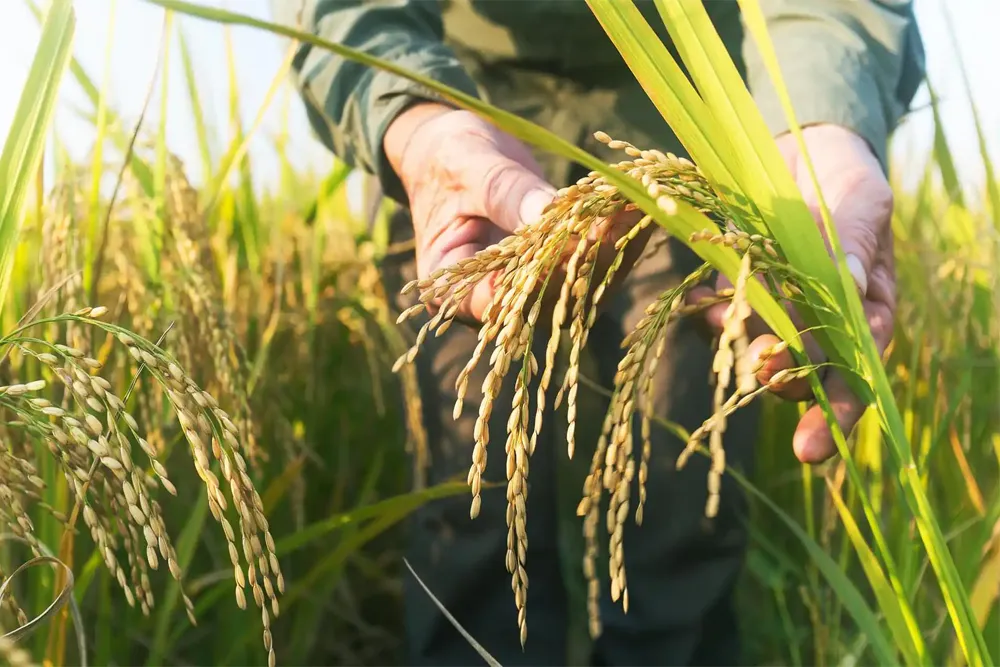
A Chinese agricultural technician, Yang Xiugang, is transforming rice farming in Nigeria by introducing advanced hybrid rice technology. Originally from Guizhou Province in China, Yang has spent years helping farmers improve crop yields and adopt modern agricultural practices.Currently based in Jigawa State since 2021, Yang faced major challenges due to Nigeria’s unique climate conditions, where temperatures can rise to 39°C during the day and drop sharply at night. To overcome this, he conducted extensive field research, studying local factors like temperature, humidity, and crop cycles. His efforts have led to remarkable results. By selecting and developing high-yield rice varieties suited to local soil and weather, Yang helped increase rice production from around 200 kilograms per mu in 2021 to nearly 700 kilograms per mu by 2025. These improved crops are more resistant to disease and harsh weather.
Beyond production, Yang has focused on farmer training and knowledge sharing. He has trained 12 local farmers, including Muhammad Usman, who now uses modern techniques like pest control and seedling management. This has helped farmers boost productivity and reduce costs. The impact goes beyond farming. In some regions, the adoption of hybrid rice has improved food security and even changed local diets. Looking ahead, Yang plans to expand hybrid rice cultivation to 20,000 hectares in Nigeria, strengthening China-Africa agricultural cooperation and promoting sustainable farming.
Share this article
Article Info
Read Time
1 min read
Published
19 Mar 2026
Author
Megha Bajaj
Category
Rice News