US India Trade Agreement Explained: Tariff Reduction to 18%, Market Access, Geopolitical Significance and Future Ties

US India Trade Agreement Explained: Tariff Reduction to 18%, Market Access, Geopolitical Significance and Future Ties
By Megha Bajaj
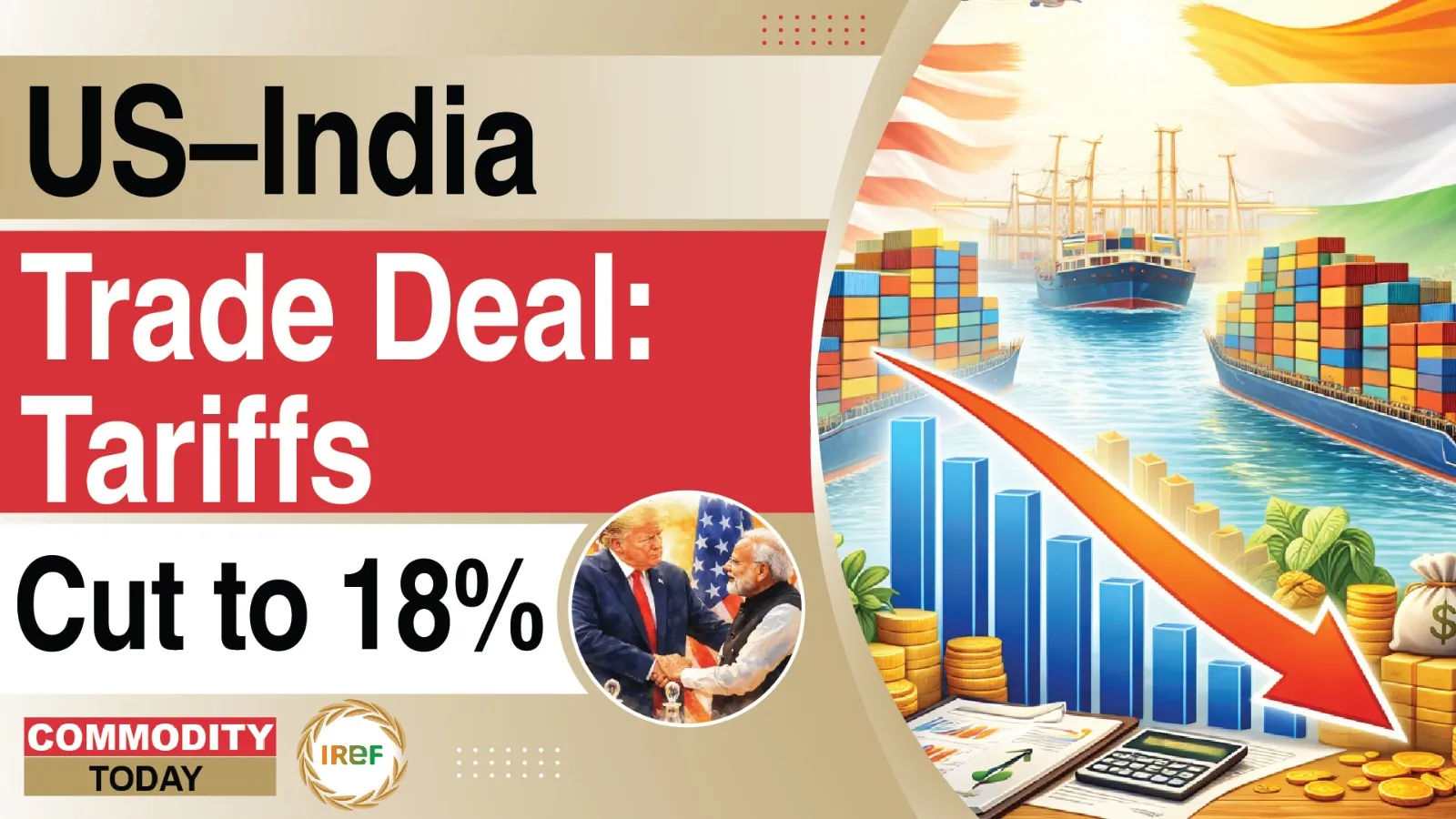
India and the United States finally reached a much-anticipated trade agreementas PM Modi and President Donald Trump announced the deal on Monday evening, followed by trade negotiations which stretched almost a year. Notably, the prelude of the trade agreementwas given by the US ambassador to India, Sergio Gor, just hours ahead.
Key highlights from the Modi–Trump phone call related to trade agreement
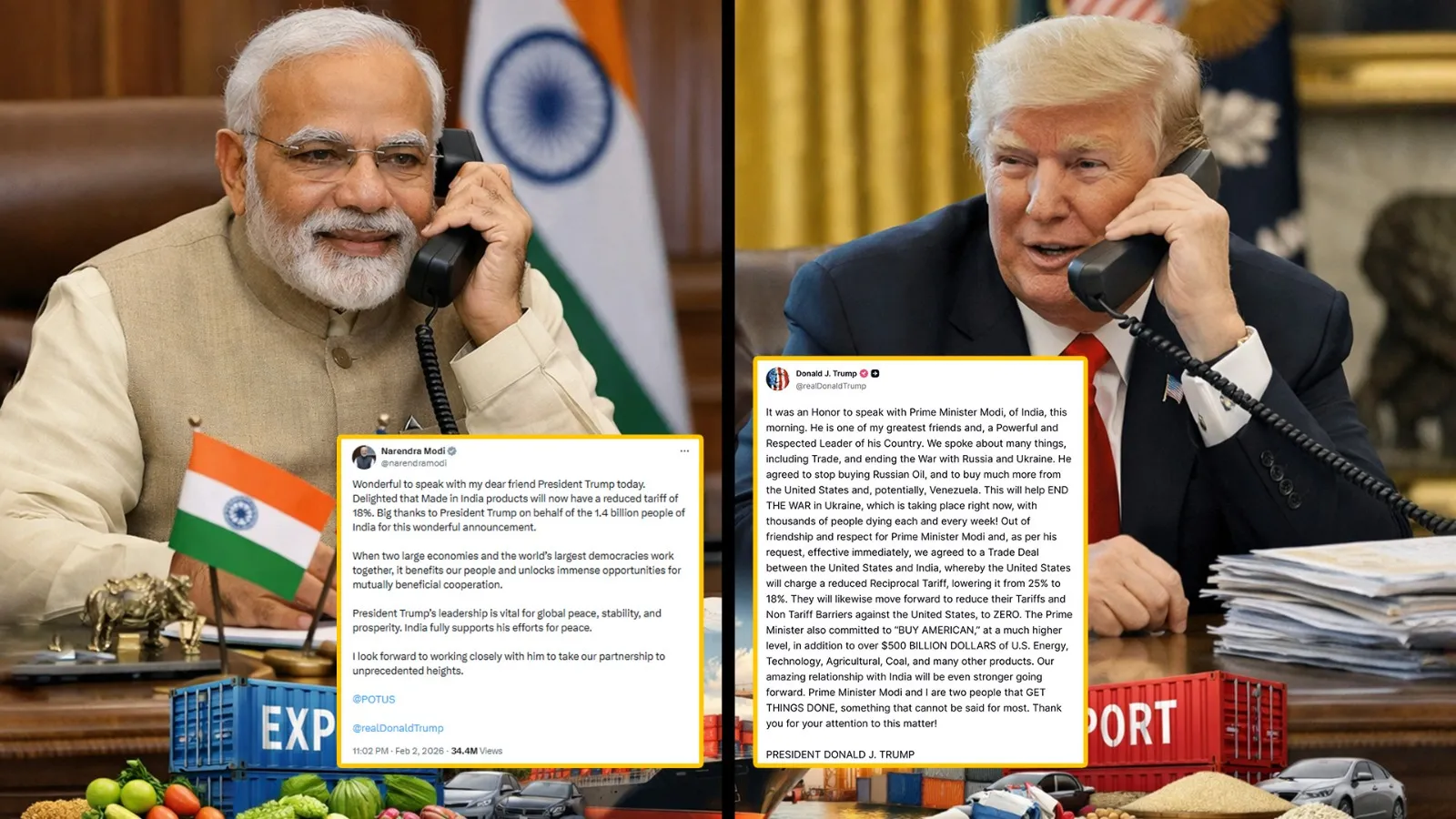
Interestingly, after months of uncertainty and rising trade pressure, the long-pending US India trade dealwas done on Monday night with a direct announcement by US President Donald Trump, followed by a call with Prime Minister Narendra Modi. Instead of leaving the details to official statements, Trump chose to spell out the trade agreement himself, concluding it as a result of personal diplomacy and immediate action.
Taking to Truth Social, Trump wrote: “it was an honour to speak with Prime Minister Modi of India this morning. He is one of my greatest friends and a powerful and respected leader of his country. Out of friendship and respect for Prime Minister Modi and, as per his request, effective immediately, we agreed to a trade deal between the United States and India, whereby the United States will charge a reduced reciprocaltariff, lowering it from 25% to 18%.
Shortly after Trump’s announcement, PM Modi took to X and stated: Wonderful to speak with my dear friend President Trump today. Delighted that made-in-India products will now have a reduced tariffof 18 per cent. Big thanks to President Trump on behalf of the 1.4 billion people of India for this wonderful announcement. When two large economies and the world’s largest democracies work together, it benefits our people and unlocks immense opportunities for mutually beneficial cooperation”. President Trump’s leadership is vital for global peace, stability and prosperity. India fully supports his efforts for peace,” the prime minister said, adding: “I look forward to working closely with him to take our partnership to unprecedented heights”.
In addition, Union Minister Ashwini Vaishnav responded to the development. He took to X and stated that the US and India are the world’s largest democracies. Both countries are natural allies. Together, India and the US have huge potential to work for peace and development. The US and India have complementary strengths. Both countries can co-create technologies and co-develop solutions that will benefit the world. The trade dealbetween the US and India will lead to a brighter future for both countries.
Tariff reductions and market access changes
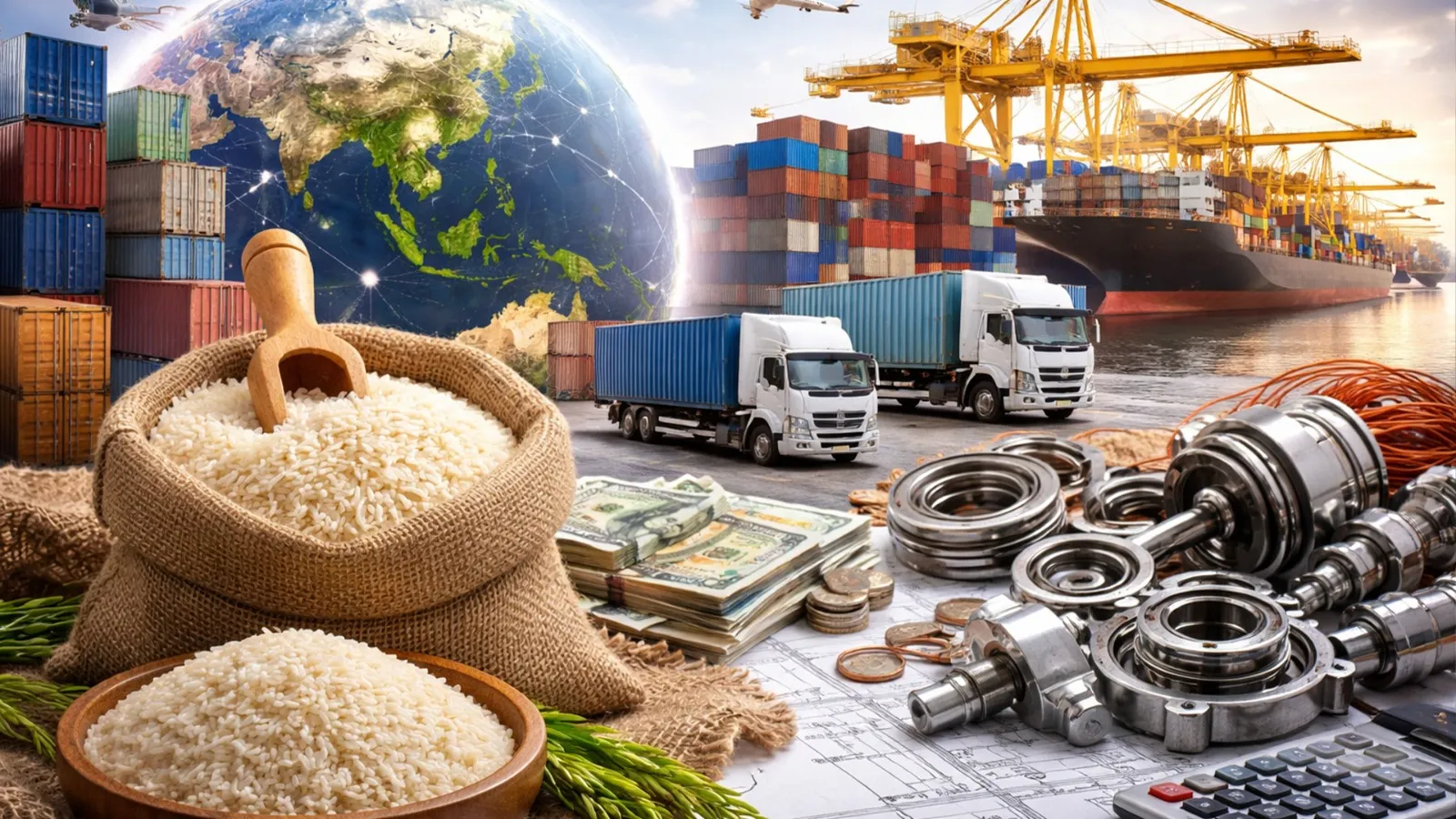
Undoubtedly, the US and India have reached a new trade understanding in which the us sharply cut tariffs on Indian imports, bringing them down from levels as high as about 50% to around 18%. This significant reduction is intended to revitalise bilateral trade and make Indian goods more competitive in the US market.
Notably, lower tariffs enhance market access for Indian exporters by reducing the cost disadvantage they faced in the US. Interestingly, sectors such as textiles, apparel, gems and jewellery, seafood, basmati rice, engineering goods, and auto components are expected to benefit as their products become more price-competitive relative to rivals from other countries.
The tariff cut is also seen as a boost to export competitiveness and investor sentiment, encouraging stronger order flows and integrating Indian suppliers more deeply into global value chains. Notably, exporters could see higher volume growth, better pricing and expanded market share in key segments, particularly among labour-intensive and manufacturing sectors.
Geopolitical significance of the agreement
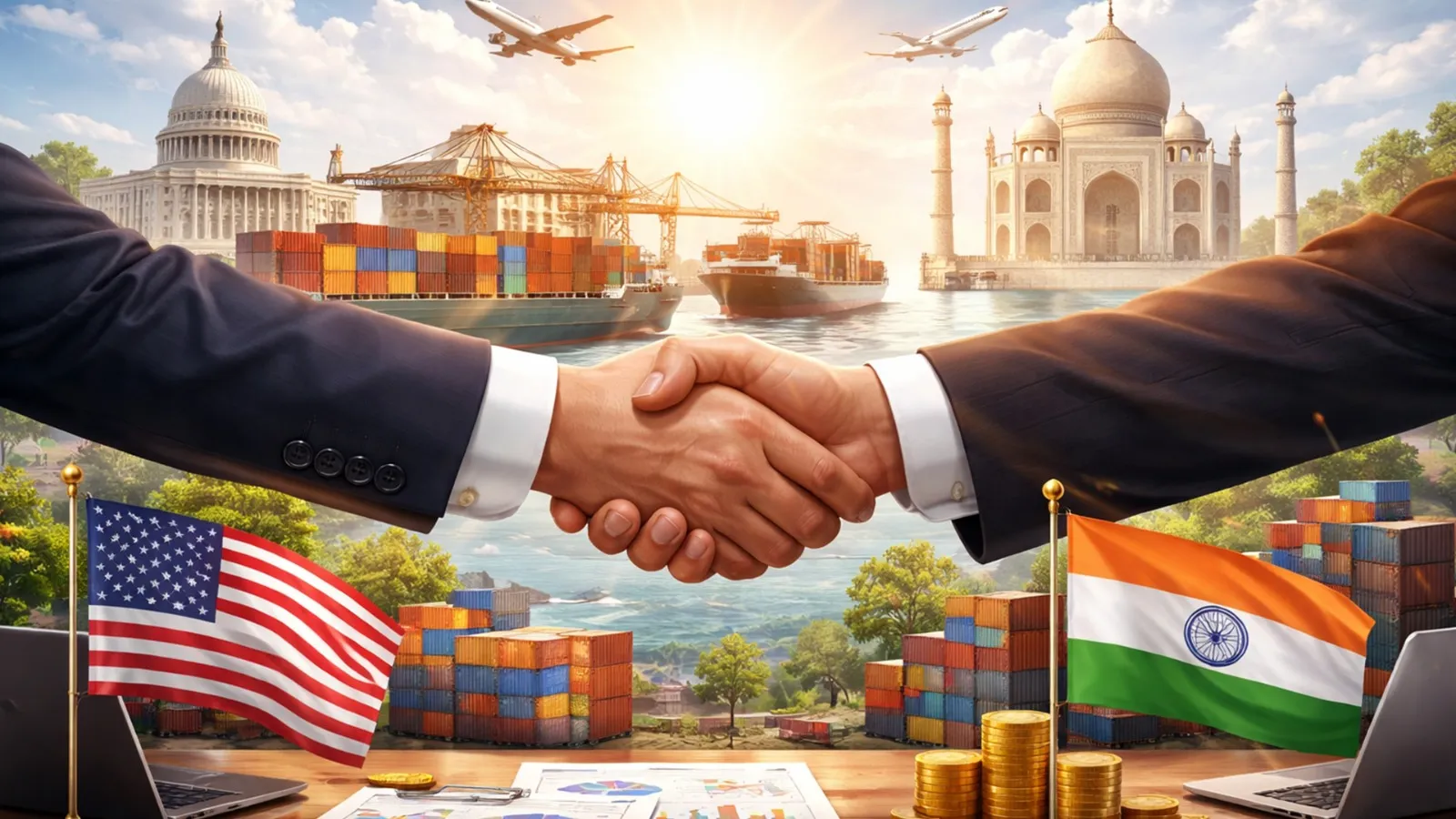
The US India agreement symbolises a move beyond pure economics toward deeper strategic alignment between two major democracies. By this move, both nations are reinforcing their partnership amid growing global competition.Furthermore, the deal signals mutual trust and convergence on geopolitical priorities beyond trade. It shows that economic agreements can reinforce diplomatic bonds, opening avenues for cooperation in areas such as technology, critical minerals, defence equipment and even alignments in global forums. While strengthening ties with us, India remains cautious about managing other strategic relationships. This trade deal highlights India’s multi-alignment foreign policy, where economic and geopolitical interests are balanced across multiple blocs.
Industry and business reactions
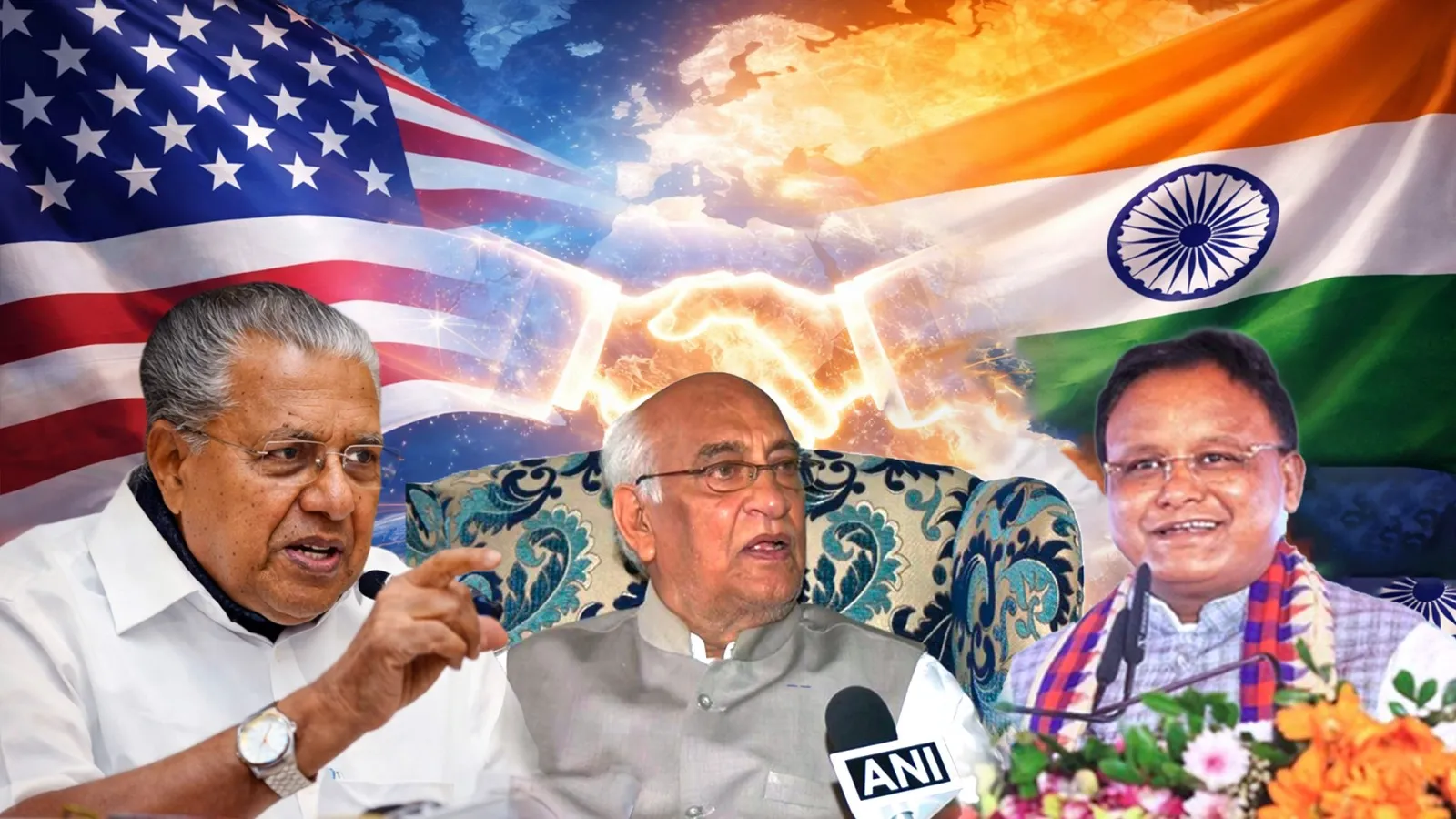
Former Indian diplomat Vidya Bhushan Soni stated that the recent India US trade deal reflected mutual acceptance of each other’s positions and marked the end of prolonged uncertainty surrounding trade negotiations. Whereas, Kerala CM Pinarayi Vijayan says India-US deal will push the country into an unequal and subordinate position. Moreover, terming the recent India-US trade deal a people-focused diplomacy, Odisha Chief Minister Mohan Charan Majhi on Tuesday applauded the agreement, which was marked by a significant reduction in reciprocal tariffs, asserting that Odisha will immensely benefit from the trade deal.
Notably, the centre has projected the deal as a landmark, whereas the opposition has argued on issues like transparency, national interests and the impact on farmers and domestic industries, along with questions on why the United States was making announcements about the deal rather than India.
What this deal means for future US–India relations
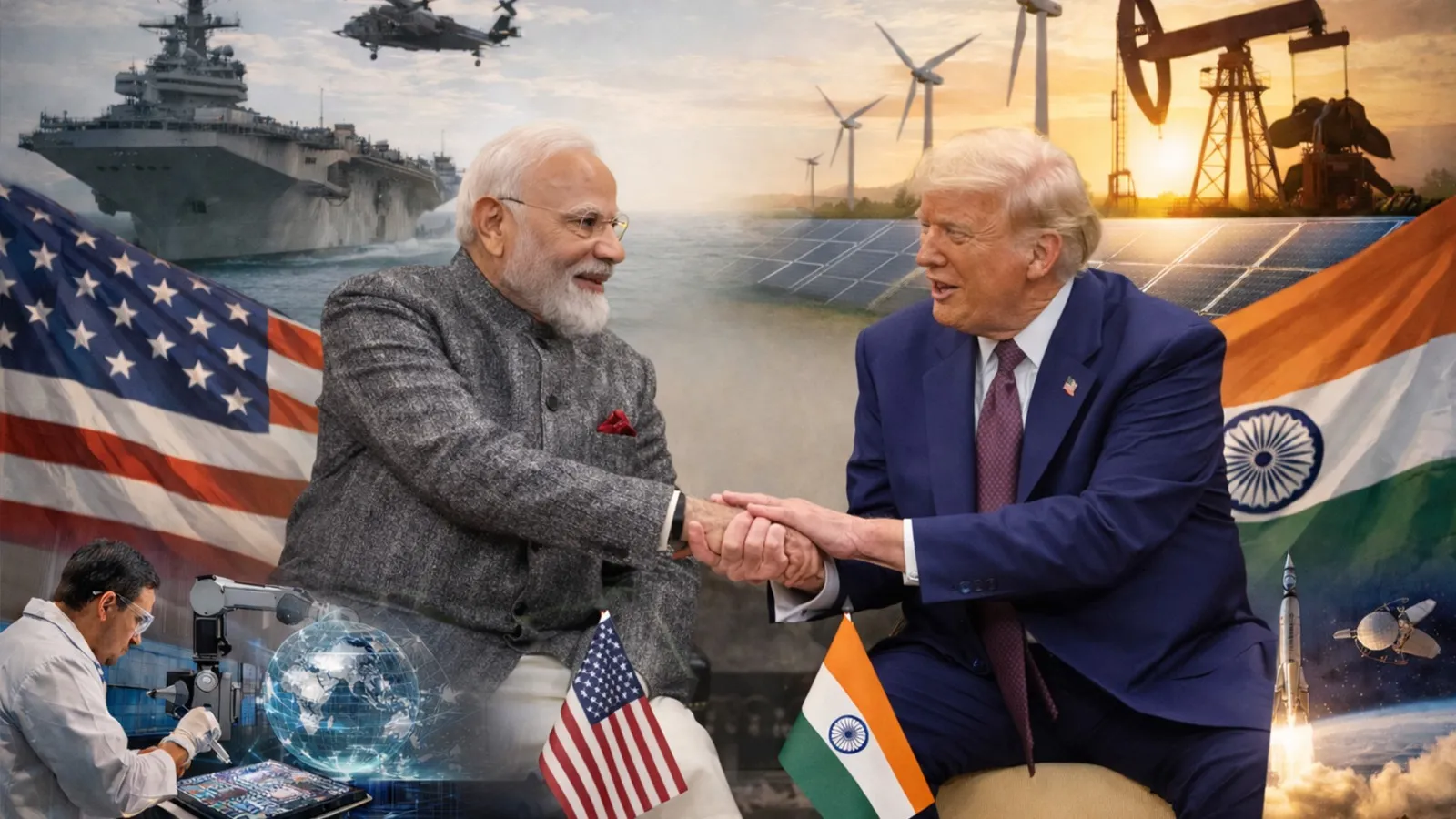
The trade deal isn’t just about tariffs; it signals a deeper strategic and economic alignment between Washington and New Delhi. Leaders from both countries have framed the agreement as a foundation for stronger long-term cooperation, reinforcing trust and commitment at the highest diplomatic levels. This could broaden engagement beyond trade into areas like technology, defence and energy cooperation.
Additionally, by reducing tariffuncertainty, including slashing us tariffs on indian goods to around 18%, the deal provides greater predictability for businesses and investors. This stability can help anchor bilateral economic cooperation and make future negotiations on sensitive issues smoother, fostering a more stable framework for trade relations.
Share this article
Article Info
Read Time
5 min read
Published
6 Feb 2026
Author
Megha Bajaj
Category
News