Union Budget 2026 Leaves Export Sector Wanting More, Rice Industry Sees Missed Opportunities: Dev Garg, VP, IREF

Union Budget 2026 Leaves Export Sector Wanting More, Rice Industry Sees Missed Opportunities: Dev Garg, VP, IREF
By Megha Bajaj
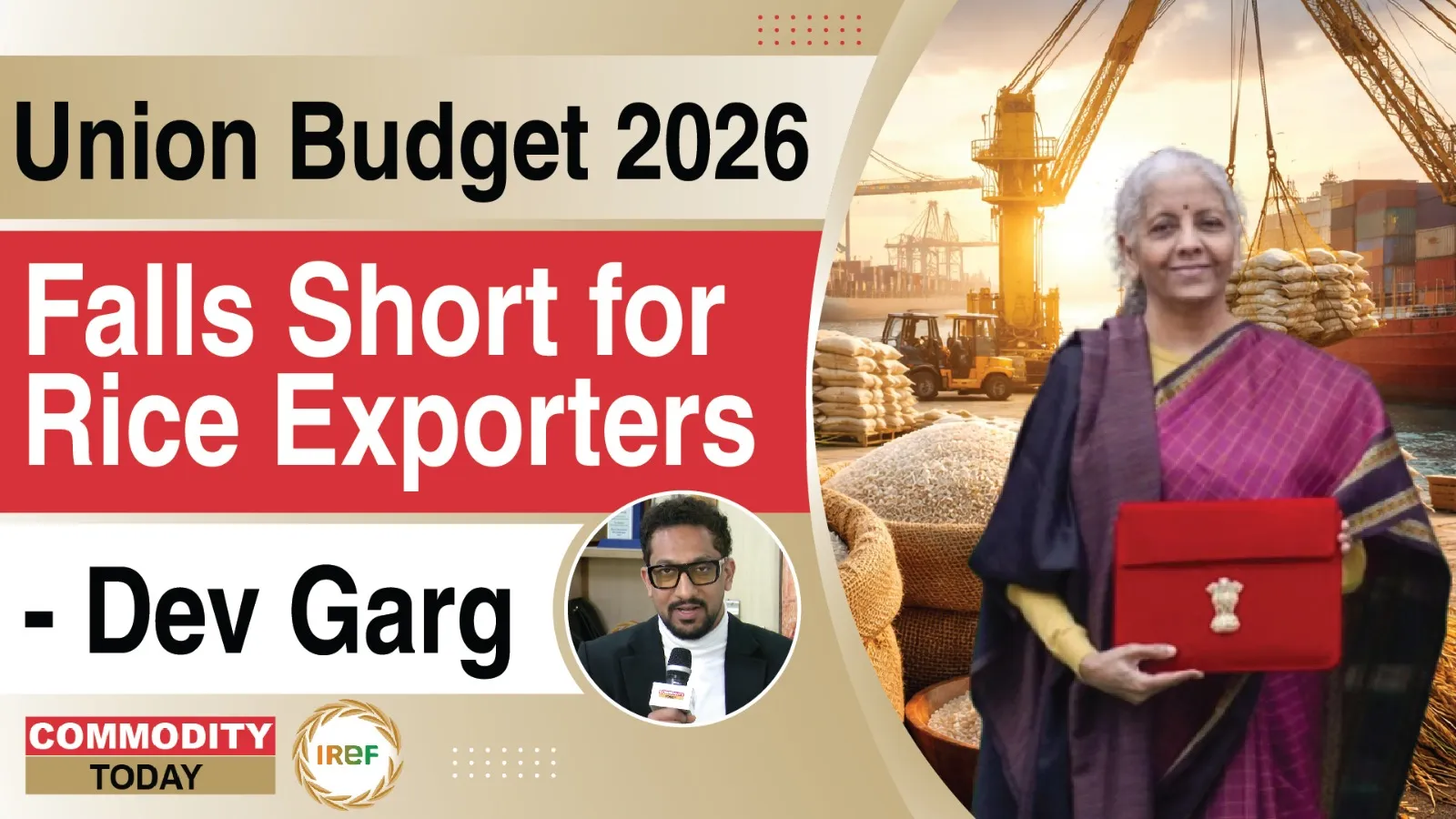
Responding to the Union Budget 2026, Dev Garg, Vice President of the Indian Rice Exporters Federation (IREF), described the budget as ‘bittersweet’, stating that while it introduced some useful frameworks, it fell short of the export sector’s high expectations, particularly for the strategically important rice industry.
Union Budget introduced certain indirect benefits & policy frameworks
Dev Garg emphasised that rice is not just an agricultural commodity but a national strategic asset. “India exports rice to nearly 172 countries, and many nations depend heavily on Indian supplies. This gives India both economic strength and diplomatic leverage,” he said. Against the backdrop of a challenging global trade environment and increasing pressure from powerful economies, he noted that stakeholders had hoped for stronger, direct measures to elevate the rice sector’s global competitiveness.
While acknowledging that the budget introduced certain indirect benefits and policy frameworks, Garg said these did not fully meet industry expectations. “Some frameworks have been announced which can be leveraged in the future, but the rice sector needed clearer and more immediate support,” he added.
One positive development highlighted by Garg was the government’s decision to mandate all central procurement agencies to source through MSMEs via the Trades portal. He highlighted that this would significantly benefit MSMEs involved in the rice supply chain by ensuring timely payments and access to low-cost financing, thereby strengthening smaller players in the sector.
Not only this, but Garg also welcomed the announcement of a dedicated freight corridor connecting Surat to Kandla port. He pointed out that Kandla handles nearly 30 to 40% of India’s export volume, and improved connectivity would reduce logistics costs and enhance the competitiveness of food exports, including rice, especially from North India.
On the promotion of coastal agricultural products such as coconut, cocoa, and cashew, Garg expressed cautious optimism. While the new framework focuses on high-value varieties and youth participation, he noted that rice, particularly high-value Basmati, non-Basmati, and GI-tagged varieties, does not yet appear to be included. “We plan to work closely with the government to ensure these rice varieties are brought under the framework and mainstreamed in global markets,” he said.
Commenting on the newly announced India Expansion Framework, Garg said its integration of AgriStack AI and ICAR could help improve productivity and traceability, especially for exotic crop varieties that currently suffer from scalability issues despite strong export demand.
However, Garg expressed concern over declining foreign investment flows. He noted that significant FFI and FII outflows, combined with rupee depreciation against major global currencies, have negatively impacted investor confidence. He also referred to suggestions made by the SBI Chairman regarding long-term deposit taxation, saying such reforms could help stabilise capital flows. In conclusion, Garg said that while the budget did not fully address critical export and investment concerns, there is still room for progress. “The intent is visible, and the process is ongoing. We hope the gaps left in this budget will be addressed in the next cycle,” he said, reaffirming IREF’s commitment to working with the government on strengthening strategic sectors like rice and high-value agricultural exports.
Share this article
Article Info
Read Time
3 min read
Published
2 Feb 2026
Author
Megha Bajaj
Category
News