UK-India Free Trade Agreement Retains Tariffs on Poultry and Eggs
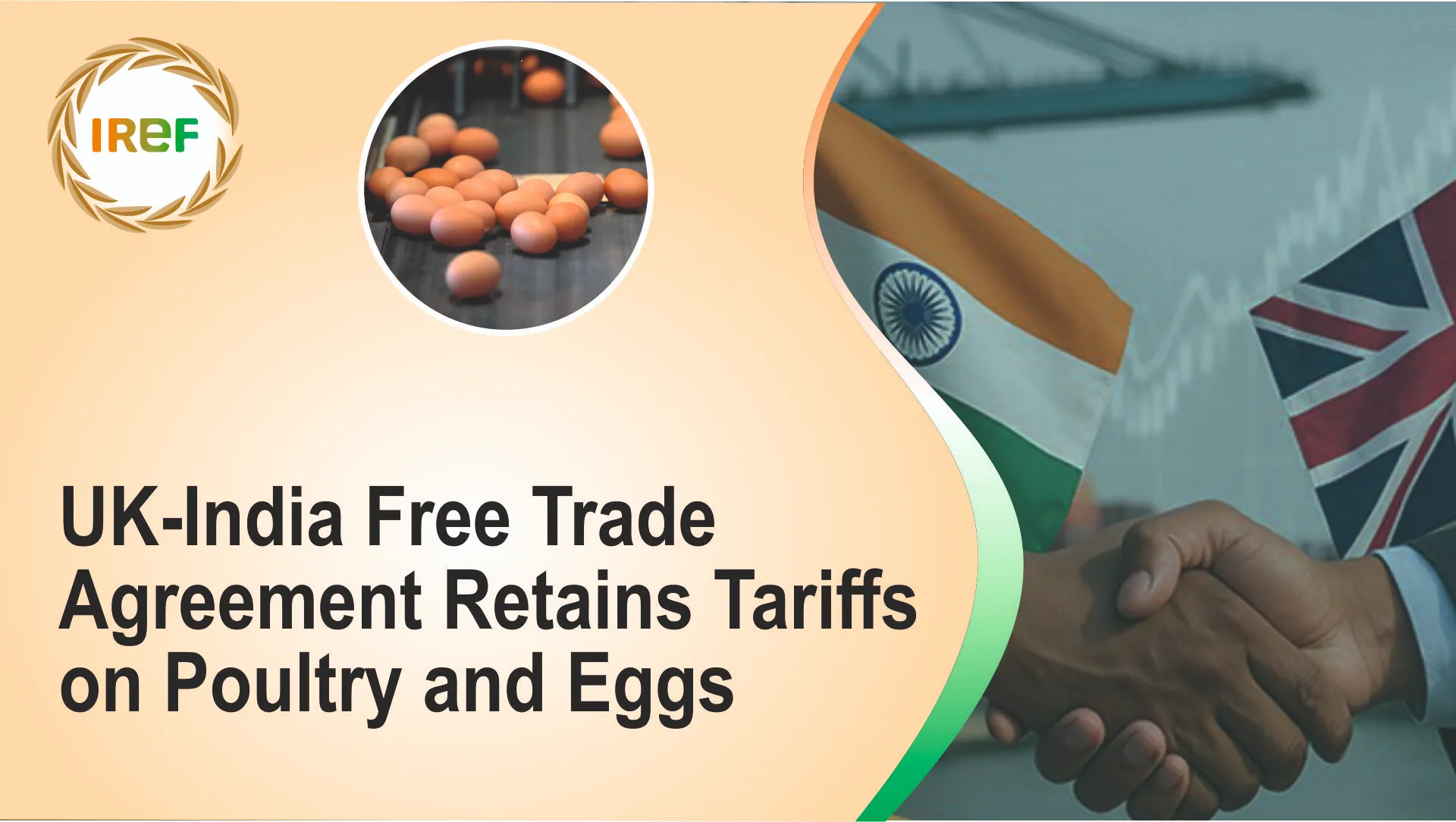
Recently signed UK-India Free Trade Agreement (FTA) is regarded as one of the most ambitious post-Brexit trade deals, has retained tariffs on poultry and egg imports, a commendable move aimed at protecting the interests of British farmers and maintaining high animal welfare standards. The Free Trade Agreement (FTA) between India and the UK is aimed at reducing trade barriers and to boost the economic growth of both the nations. UK however has maintained tariffs on chicken, egg products, sugar, and pork from India to protect UK poultry and pig farmers from competition with lower-priced imports, especially those with potentially lower animal welfare standards.
Though it doesn’t sound good, but India has lower animal welfare standards than in the UK, allowing barren battery cages for laying hens – a farming practice that has been banned in the UK since 2012. But the deal includes the Indian government halving tariff reductions on whisky and gin – from 150% to 75% – before reducing them further to 40% by year 10. It also covers tariffs on salmon, chocolate, biscuits, and lamb.
The UK Sets it Own Standards
The UK-India Free Trade Agreement (FTA) is one of the most ambitious agreement post-Brexit trade deals aimed at boosting the economy of the nations involved in the deal. Despite the deal has eased the trade deal between the nations British govt. has set its own standards.
- While the deal liberalizes tariffs on a wide range of goods and services—such as whisky, lamb, and digital services—it notably excludes reductions on chicken, eggs, pork, and sugar.
- This decision follows intense lobbying from the UK’s National Farmers’ Union (NFU), which expressed concerns about competition from Indian imports produced under lower welfare standards.
- India still permits barren battery cages for laying hens, a practice banned in the UK since 2012.
This move was appreciated by farmers in British, expressing their gratitude to the British govt. for considering the concerns of farmers in the UK. As per the data obtained from credible media sources The broader FTA is expected to boost bilateral trade by £25.5 billion annually and increase UK GDP by £4.8 billion in the long term.
Share this article
Article Info
Read Time
2 min read
Published
12 Aug 2025
Author
Megha Bajaj
Category
News