Top Rice News: Centre Halts Fortified Rice, SK To Supply Rice & Rice Exports Prices Flat
Centre Halts Fortified Rice Distribution Amid Shelf Life Concerns
According to reports, the Centre has decided to temporarily halt the distribution of fortified rice under its welfare schemes following findings from a study at the Indian Institute of Technology, Kharagpur. Moreover, the study revealed concerns regarding the lower shelf life and stability of fortified rice grains. Earlier, the government provided fortified rice kernels (FRK) to millions of beneficiaries to battle malnutrition under the Pradhan Mantri Garib Kalyan Anna Yojana (PMGKAY) and related programs. In an official statement, the Centre announced that it reviewed the implementation of rice fortification under PMGKAY and other welfare schemes. Apparently, the decision to stop the rice fortification process until an effective nutrient-delivery mechanism for beneficiaries is identified came later.
The fortification of rice and its distribution were first piloted under the Public Distribution System (PDS) in 2019 for three years. Later, the initiative was scaled up in 2022 and was introduced under all related schemes by March 2024. The government commissioned IIT Kharagpur to evaluate the shelf life of Fortified Rice Kernels (FRK) and Fortified Rice (FR) under actual storage conditions across several agro-climatic zones in the country. In the reports, it had been discovered that factors including moisture content, storage conditions, temperature, relative humidity, and packaging material affected the stability and shelf life of FRK and FR significantly.
South Korea’s Agri Ministry To Supply 100,000 Tons Of Rice For Price Stabilisation
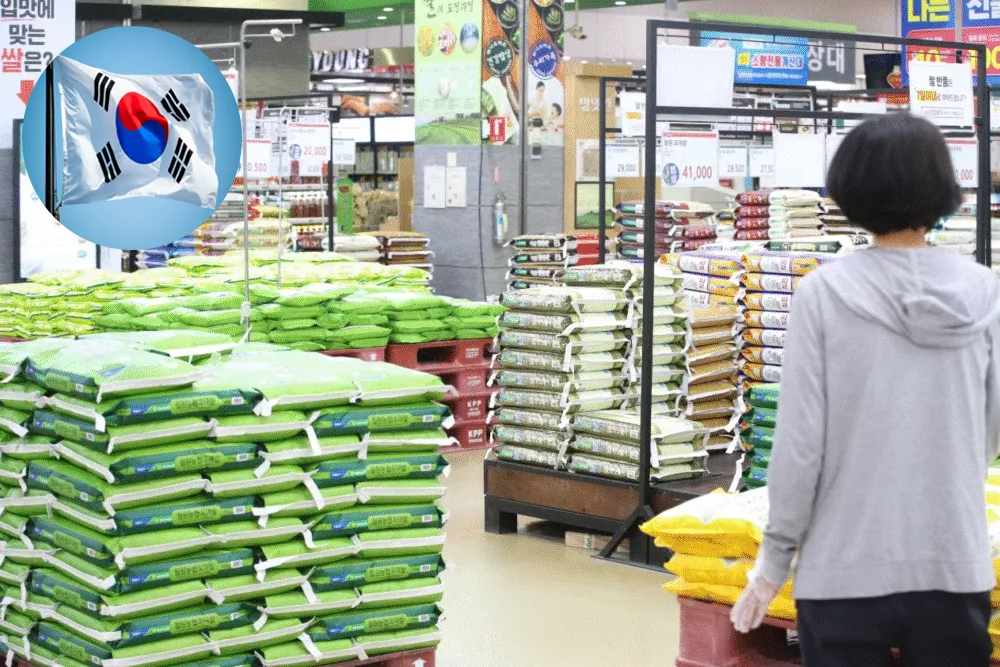
On Friday, the South Korean Agriculture Ministry stated that it will supply 100,000 tons of rice from its reserves of the staple grain in helping to stabilise and balance rising prices triggered by a supply shortage. Notably, the decision emerged as the average retail price of a 20-kilogram bag of rice climbed to 63, 000 won as of Wednesday, an increase of over 15 per cent from a year earlier, as per government data. Moreover, the Ministry of Agriculture, Food, and Rural Affairs mentioned that the combined rice inventory held by agricultural cooperatives and rice processing complexes currently stands about 110,000 tons lower than that of the previous year. The ministry cited that it plans to decide whether to supply additional rice from its reserves after monitoring the market situation following the release of the initial 100,000 tons.
Asia Rice Export Prices Remain Flat Amid Weak Demand and Ample Supply
India’s 5 per cent broken parboiled rice variety was quoted at USD350 to USD356 per metric ton, unchanged from last week. Indian 5percent broken white rice was priced between USD347 and USD352 per ton this week. A Kolkata-based rice dealer said that there is not much activity in the market. Demand remains weak as buyers are placing orders cautiously. Interestingly, the traders stated that Vietnam’s 5 per cent broken rice was offered at USD360 to USD365 per ton, unchanged from two weeks ago. Moreover, a Ho Chi Minh City-based trader stated that Trading activity is resuming after the holiday, but we are seeing headwinds ahead, with strong global supplies and a major buyer, the Philippines, is cutting its purchases. He noted that the Philippines will likely cut monthly imports to 150,000 tons starting in March from 400,000 tons previously. Preliminary shipping data projected nearly 200,000 tons of rice loaded at ports in southern Vietnam from February 1 to 23, with most of it heading to the Philippines, Africa and South Korea. Furthermore, Thailand’s 5 per cent broken rice was quoted at USD385 per ton, in a similar range of USD383 to USD385 quoted last week. Apparently, traders mentioned that demand remains subdued, with no significant deals reported for Thai rice. Particularly, a Bangkok-based trader cited that buyers from the Philippines have shifted to Vietnamese rice due to its competitive pricing. In addition, the trader also said that the supply situation was largely unchanged, as the market waits to assess the outcome of the new crop. He added that several expect overall yields to be lower this year amid forecasts of dry conditions.
Share this article
Article Info
Read Time
1 min read
Published
27 Feb 2026
Author
Megha Bajaj
Category
News