Who’s Threatening India’s Rice Production? Heatwaves & El Niño?
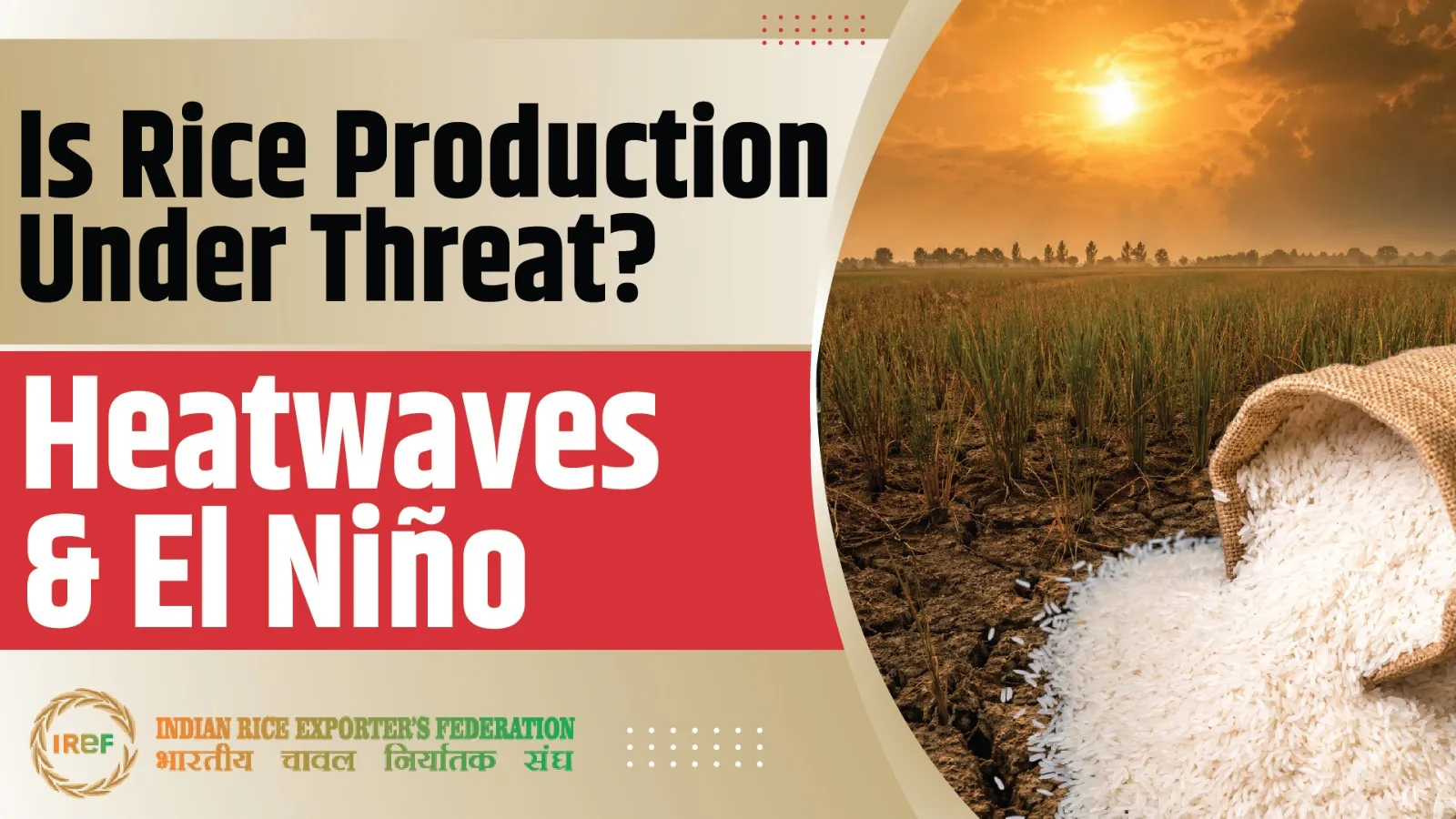
Rice is the staple food of India since the country’s 70% of the caloric intake comes from rice. Notably, the summer season offers up to 80 % of the annual rainfall, which contributes massively to rice production. Currently, a report by the Food and Agriculture Organisation and the World Meteorological Organisation has warned that heatwaves would become a major threat to Indian agriculture workers and rice production, along with labour productivity in major regions like the Indo-Gangetic plains, projected to drop sharply under high-emissions scenarios. Released on Wednesday, the report with the title “Extreme Heat and Agriculture” stated that average growing season physical work capacity could drop below 40% by the end of the century under a high-emission scenario. Moreover, the report is important as India prepares for a below-normal monsoon year and other impacts of El Niño, which is expected to establish around July.
Examples of Extreme heat events apart from rice production in India
Notably, the report has also cited examples from the extreme heat events of 2022 in India, underlining how the abnormal rise in maximum and minimum temperatures during this year affected crops, fruits, vegetables and livestock and poultry in over one third of states, including Punjab, Haryana, Rajasthan, Jammu and Kashmir, Himachal Pradesh and Uttar Pradesh.
What is El Niño? And how could it threaten rice production?
The term El Niño deals with a climate pattern identified by the warming of surface waters in the central /eastern equatorial Pacific ocean which weakens trade winds and causes global weather shifts. It poses a significant challenge to rice production in India as it could become a cause behind droughts, reduced rainfall, and high temperatures. Apparently, this climate pattern disrupts the monsoon, leading to lower yields, increased pest attacks, and potential shortages that drive prices high. Moreover, major producers like India face risks to the monsoon-dependent Kharif crop, stimulating the contingency planning for drought-tolerant seeds and adjusted planting times.
What does the WHO say about Heatwaves?
According to the WHO, heatwaves are prolonged periods of abnormally hot weather, lasting from several days to months, when both daytime and nighttime temperatures exceed typical regional averages. Moreover, the report noted that the frequency, intensity and duration of extreme heat events globally have sharply increased over the past half century, and the risks to agrifood systems and ecosystems are set to soar in the future. WMO secretary-general Celeste Saulo asserted: "Extreme heat is increasingly defining the conditions under which agrifood systems operate."
She further added: "More than simply an isolated climatic hazard, it acts as a compounding risk factor that magnifies existing weaknesses across agricultural systems. Early warnings and climate services such as seasonal outlooks are vital to help us adapt to the new reality." Apart from the impact on crops, the report also mentioned how the extreme heat impacts livestock species, fisheries, dairy animals and poultry products. Highlighting the impacts, the report also noted that the need for innovation and the implementation of adaptation measures, such as selective breeding and crop choices adjusted to the new climate reality, adjusting planting windows and altering management practices that can shelter crops and agricultural activities from the impacts of extreme heat. Early warning systems are a particularly significant tool in helping farmers in their efforts to respond to extreme heat.
Share this article
Article Info
Read Time
3 min read
Published
23 Apr 2026
Author
Megha Bajaj
Category
News