Philippines Rice Imports Expected to Fall in 2025 Amid Strong Harvests
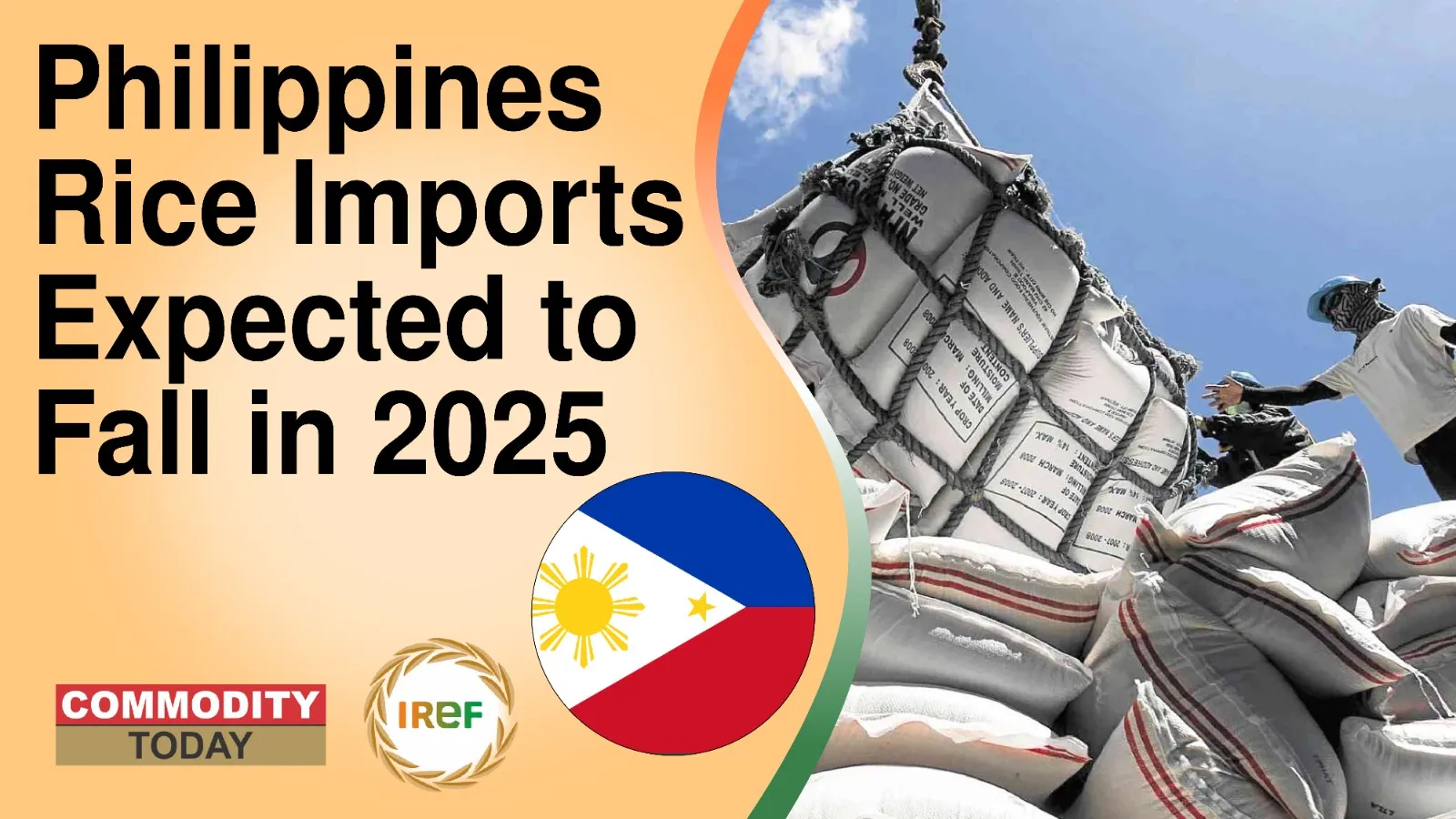
The Philippines Department of Agriculture said that the Philippines has observed lower rice imports since better harvests boost local supply. According to the Agriculture Secretary Francisco Tiu Laurel Jr., the full-year rice imports could vary between 3.6 million and 3.8 million metric tons (MT) for 2025. Now, this is lower than the 4.8 million MT rice imports recorded in 2024. The Projection takes into account a record-high harvest of 20.3 million MT this year. It is marginally less than the earlier forecast of 20.4 million MT because of flooding and other weather-related disturbances.
Rice Import Forecast is slightly higher than estimate of 3.5 million MT
https://iref.net/news/philippines-rice-imports-expected-to-fall-in-2025/Notably, the Philippines recorded its highest palay production at 20.6 million MT in 2023. The Agriculture Secretary Tiu Laurel stated his optimism about achieving the highest palay or unmilled rice harvest as more farmlands have been irrigated. The agency’s rice import forecast is slightly higher than the estimate of 3.5 million Metric tonnes by the Bureau of Plant Industry (BPI), largely because of 4 4-month import ban imposed in September, which is similar to the US Department of Agriculture-Foreign Agricultural Service’s 2025 forecast of 3.5 million MT for marketing year 2024 to 2025. Now, the rice import restriction which is extended until end-December, has been carried out to safeguard farmers from declining prices prompted by the influx of cheaper foreign grain. Not only this, but it was also meant to sustain market stability and safeguard consumer welfare.
Agency intends to control the volume of rice imports
The importation resumes in January, the agency intends to control the volume of rice imports entering the Archipelago while ensuring fair palay prices for farmers. Tiu Laurel Jr told reporters that the importation continues throughout the year. Now, it’s just a quantity, depending on the harvest season. Before harvest, the quantity should be small so that our palay can compete. The agriculture chief stated tariffs would be raised to 20 per cent from 15 per cent, as agreed upon by economic managers under a flexible tariff system that would take effect by Jan 1, 2026.
Share this article
Article Info
Read Time
2 min read
Published
17 Dec 2025
Author
Megha Bajaj
Category
News