Pakistan Rice Exports Take a Hit After India Strikes Back
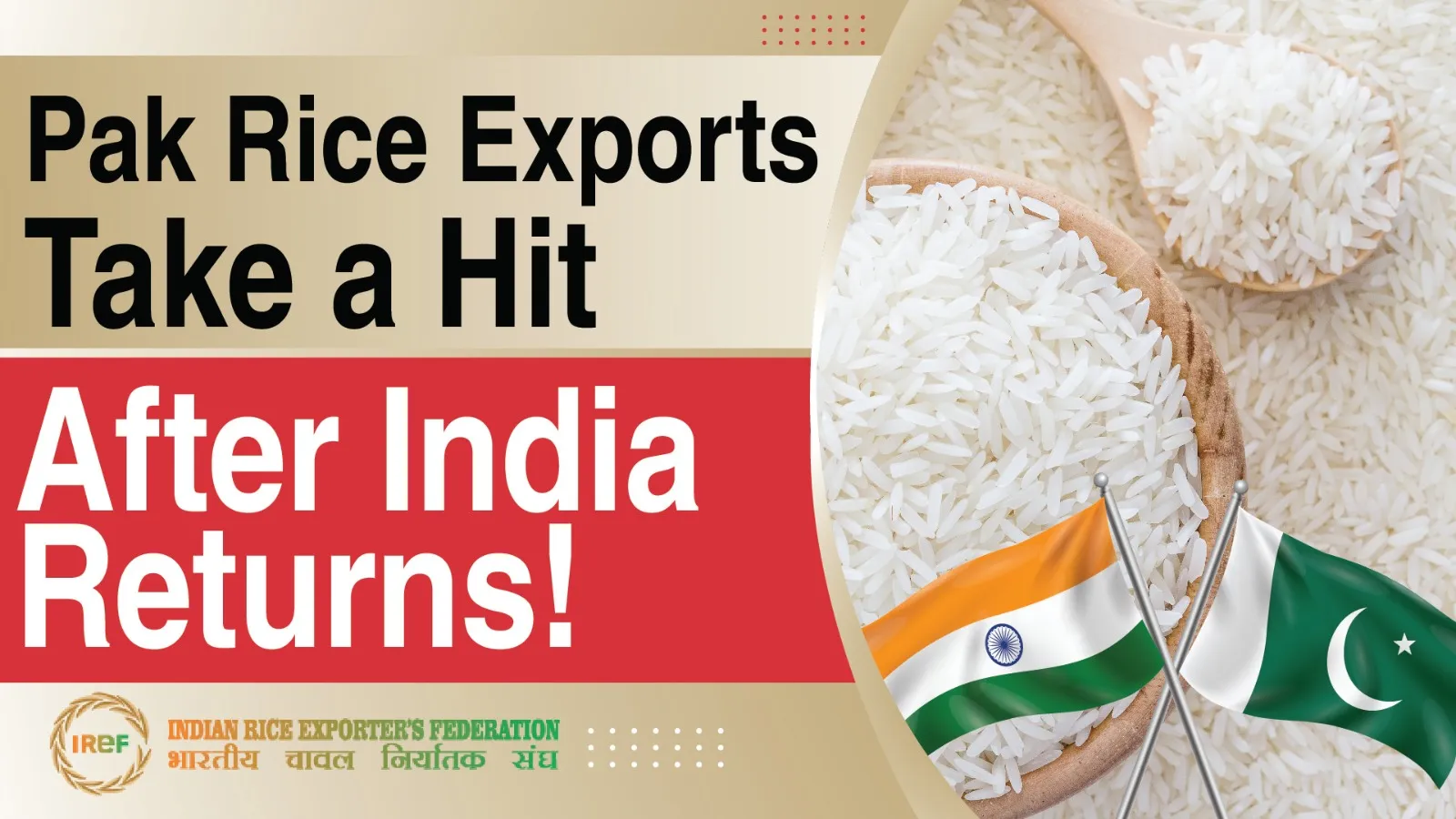
Undoubtedly, Pakistan has maintained its position in the list of top five largest rice exporters, followed by India and Thailand. In past couple of days, the nation had surpassed Vietnam, which holds its position at number four. However, as per recent updates, Pakistan's rice exports sector has witnessed a major blow since the country’s rice exports plummeted to 40.5 per cent to $1.31 billion in the first seven months of the financial year. Moreover, the official data stated on Tuesday, as India's restoration the global market shrinked Islamabad's market share and pricing power.
Pakistan’s Basmati Rice Exports reduced nearly 6 %
Furthermore, Pakistan Bureau of Statistics (PBS), non-Basmati rice exports has fallen 50.8 percent to $827.8 million, with volumes falling to 2.0 million tons from 3.15 million tons a year ago. Basmati rice exports declined 6.62 percent to $477.7 million, with volumes easing to 436.484 tons from 487,278 tons.
Interestingly, the Ministry of National Food Security informed parliamentary committee in two separate meetings in December and January that India's re-entry into the global rice market was a significant factor behind the decline, saying increased Indian supplies had made Pakistani rice less competitive.
India benefits From Free Trade Agreements
Notably, According to officials that India benefits from free trade agreements and provides significant support to its rice sector, leading to retain additional pressure on Pakistani rice exporters.
Responding to this, the Ministry of Commerce issued a notification under the Drawback of Local Taxes and Levies for Rice Order, 2026 last month, allowing a rebate of 9 percent of the free-on-board (FOB) value for Basmati exports rice priced above $750 per metric ton.
Particularly, on January 23, the government announced a measure that aims to ease liquidity pressures on rice exporters and enhance competitiveness. Whereas PBS data for July-January projects a 40.5 percent decline, figures from the Federal Board of Revenue (FBR) for July-December show an even steeper 47 percent drop to $973 million from $1.82 billion in the same period last year, signalling a deficit of over $800 million. According to Industry representatives, they are now focusing on market diversification to counter the slowdown.
Malik Faisal Jahangir, chairman of the Pakistan Rice Exporters Association said: “Currently Basmati rice is mainly exported to Middle East and EU. Non-Basmati rice is exported to Philippines, Indonesia, Malaysia and African countries”. He added: "For the new markets for our non-basmati rice exports, we are looking to increase our volumes to China, Philippines, Indonesia and Bangladesh”.
Share this article
Article Info
Read Time
3 min read
Published
24 Feb 2026
Author
Megha Bajaj
Category
News