Exports to US fall: Marine, auto, jewellery find new destinations
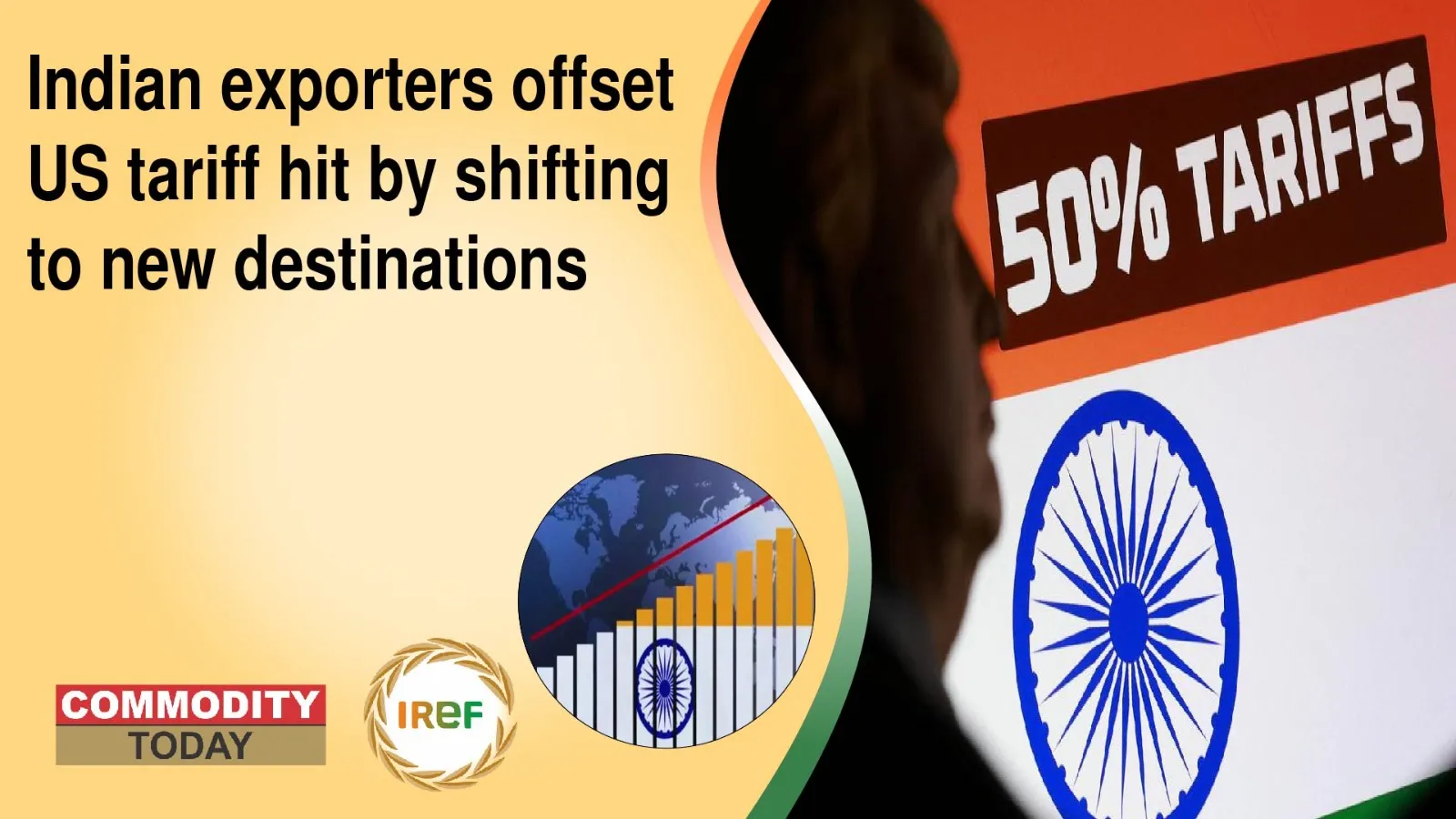
Several product categories like shrimps, gems and jewellery have managed to find new destinations since the harsh 50% US tariffs effective from August 27 begin to weigh on India trade. Notably, categories like shrimps, gems and jewellery, auto components and electric machinery have shifted their market strategy towards Asian and European markets after the US Tariffs that left a hard impact on India exports. Analysis of the data released by the Commerce and Industry Ministry showed that jewellery export and gems export to the US plummeted 76 per cent in September compared with last year, the total gems and jewellery exports, however registered only a marginal 1.5 per cent dip. The gems and jewellery export diversification during this period increased, with the UAE registering 79% jump, whereas Hong Kong 11% and Belgium 8%.
Auto Components too Finds New Destinations
A similar patter was visible in auto components, where 12% exports decline was registered in September, but shipments to Germany, the UAE, and Thailand, helped total auto component exports grow 8 per cent. In this context, the Indian Rice Exporters Federation (IREF) also published a news that goes like india is now exporting cars to europe and japan. Marine export despite of US tariffs grew 25 per cent in September and 11 per cent in October, largely due to higher exports to China (up almost 60 per cent), Japan (37 per cent), Thailand (about 70 per cent) and the European Union. This gives a clear hint that India’s export diversification and its trade linkages with other countries apart from the US market, could help somewhat mitigate the blow if a trade deal with Washington DC does not fructify soon. However, low-margin, labour-intensive product segments such as cotton garments, sports goods, carpets, and leather footwear, which face stiff competition from China and the Association of Southeast Asian Nations (Asean) countries, are struggling to diversify their shipments, indicating that the long-term impact of US tariffs could be uneven, hitting small units operating across the country more.
Several Categories Still Looking for Broader Market Strategy
Though some product categories have survived the US tariff blow, there are still some categories waiting for broader market strategy and improved sector performance. The US tariffs which hit global markets on a large scale have left sectors like sports goods still looking for a better market than the US. Sports goods, with 40 per cent exports go to the US, have not yet found alternate markets, and hence higher tariffs have dragged down overall exports 6 per cent in October. Cotton garment sector is also struggling with its export diversification efforts and looking for new destinations.
Read More News:
- Exports to US fall: Marine, auto, jewellery find new destinations
- India Canada Trade Deal Could Guarantee Long-Term Pulse Purchases
- India sets historic record with 357 million tonnes of foodgrain production in 2025
- PM Modi Promotes GI Tagged Products As Part Of Vocal For Local Campaign
- India’s Cumin Exports Face Sharp Decline As China, Bangladesh Demand Weakens
- India, US Ink First Military Contract after Tariffs Frictions
- Stubble Burning Surges in Madhya Pradesh, Rajasthan and UP, but Drops Sharply in Punjab
- India Secures Second Position In Global Tea Exports: Govt. Unveils 1,000 Crore Support For Tea Workers
- After A 15-Year Halt, Karnataka Approves Policy To Resume Iron Ore Exports From Non-Major Ports
- Indian Onion Exports Slow Down As Bangladesh Turns Self-Sufficient
Share this article
Article Info
Read Time
3 min read
Published
1 Dec 2025
Author
Megha Bajaj
Category
News