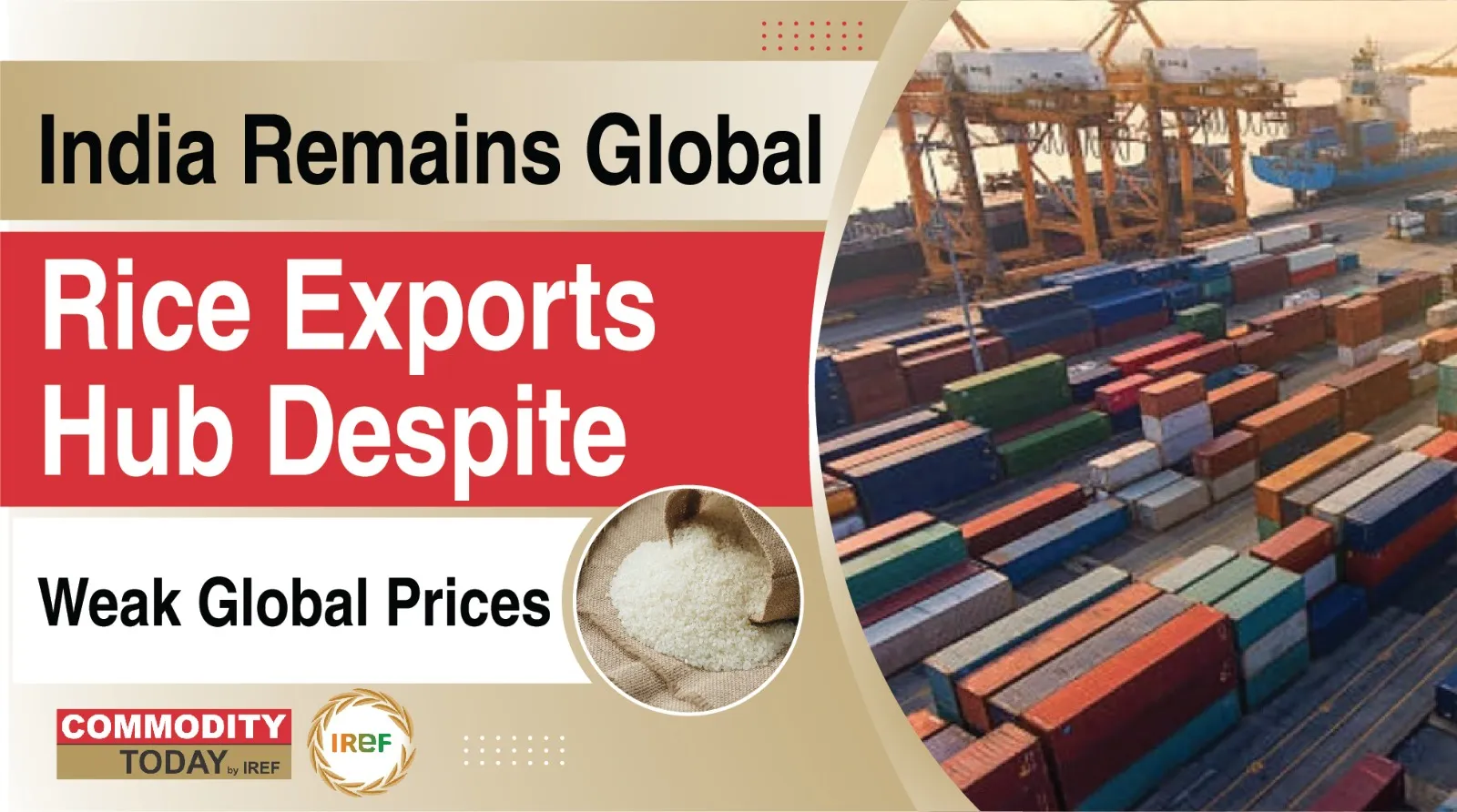
India Remains Global Rice Exports Hub Despite Weak Global Prices
India Remains Global Rice Exports Hub Despite Weak Global Prices
By Megha Bajaj
India is the world's largest rice exporter. Notably, India surpassed China to become the world's largest rice producer. Currently, reports have emerged regarding India's rice exports this week, which began on January 12th. According to market reports, freight sentiment for Indian rice exports remained mixed this week, though consistent buying interest from West Africa and select Middle Eastern destinations provided support.
Shipments To Africa Continued To Dominate India’s Rice Exports Flow
However, it is reported that container-side issues, cautious liner pricing, and destination payment risks prevented further increases in rates. According to the report, shipments to Africa continued to dominate India's rice export flow. Significant quantities of rice were exported to Guinea and the Ivory Coast, and these countries have emerged as major rice export destinations for India. Thus, Africa and the Middle East remain the key demand centres for Indian rice. Additionally, it is reported that bulk shipments of rice from Kakinada port to African countries are still at the same pace. Interestingly, this bulk shipment from this port to African countries has been supported by stable parcel formation and regular purchasing programs.
Nonetheless, reports indicate that the increase in spot freight has been halted, and this is attributed to buyers resisting higher offers amidst competitive CIF negotiations and ample availability of Supramax tonnage in the Indian Ocean. When it comes to the container side, shipments from Mundra and JNPT to the Middle East and East Africa witnessed range-bound freight levels, allowing liner operators to maintain disciplined pricing. Notably, Rice exporters are reportedly facing space management issues, and selective blank sailings, and port-specific congestion have been encountered on routes to Africa. At the same time, another report, citing a source, indicates that the market is under pressure, with limited cargo availability. It also states that the market remained largely quiet across all regions during the Makar Sankranti/Pongal holidays, with limited activity contributing to an overall weak sentiment.
Furthermore, it is reported that the Indian government's relaxation of export restrictions has led to improved cargo availability and increased shipment volumes, further strengthening Indian rice exports. In addition, according to reports, payment risks and currency fluctuations have also impacted sentiment, Moreover, uncertainty surrounding trade with Iran amidst geopolitical tensions and payment challenges has increased caution regarding shipments to the Middle East, leading exporters to prioritize existing buyers and adopt a more selective approach despite consistent domestic demand. Notably, reports indicate that bunker fuel prices have remained relatively stable, helping to reduce overall voyage costs for both bulk and container operators. However, global rice prices are currently under pressure. Discussions among global rice exporting countries, traders, and experts are underway. The year 2025 witnessed fluctuations in global rice prices, with varying reactions to price movements. Now, in 2026, global rice prices continue to be under pressure, and according to one report, this situation is likely to persist throughout the year. Indeed, trade and industry officials expect global rice prices to remain under pressure until 2026. Furthermore, there is good news that the Philippines, one of the world's major rice importing countries, has resumed rice imports indicating a positivity for India. Following this decision by the Philippines, APEDA has resumed registration for non-basmati rice exports to the Philippines and Senegal. Meanwhile, Indonesia has decided to maintain its ban on rice imports even in 2026, stating that it has sufficient rice stocks to meet its consumption needs.
Share this article
Article Info
Read Time
3 min read
Published
17 Jan 2026
Author
Megha Bajaj
Category
News