India Becomes World’s Largest Rice Producer: Record Output, Surplus Rice, Opportunities and Challenges
India Becomes World’s Largest Rice Producer: Record Output, Surplus Rice, Opportunities and Challenges
By Megha Bajaj
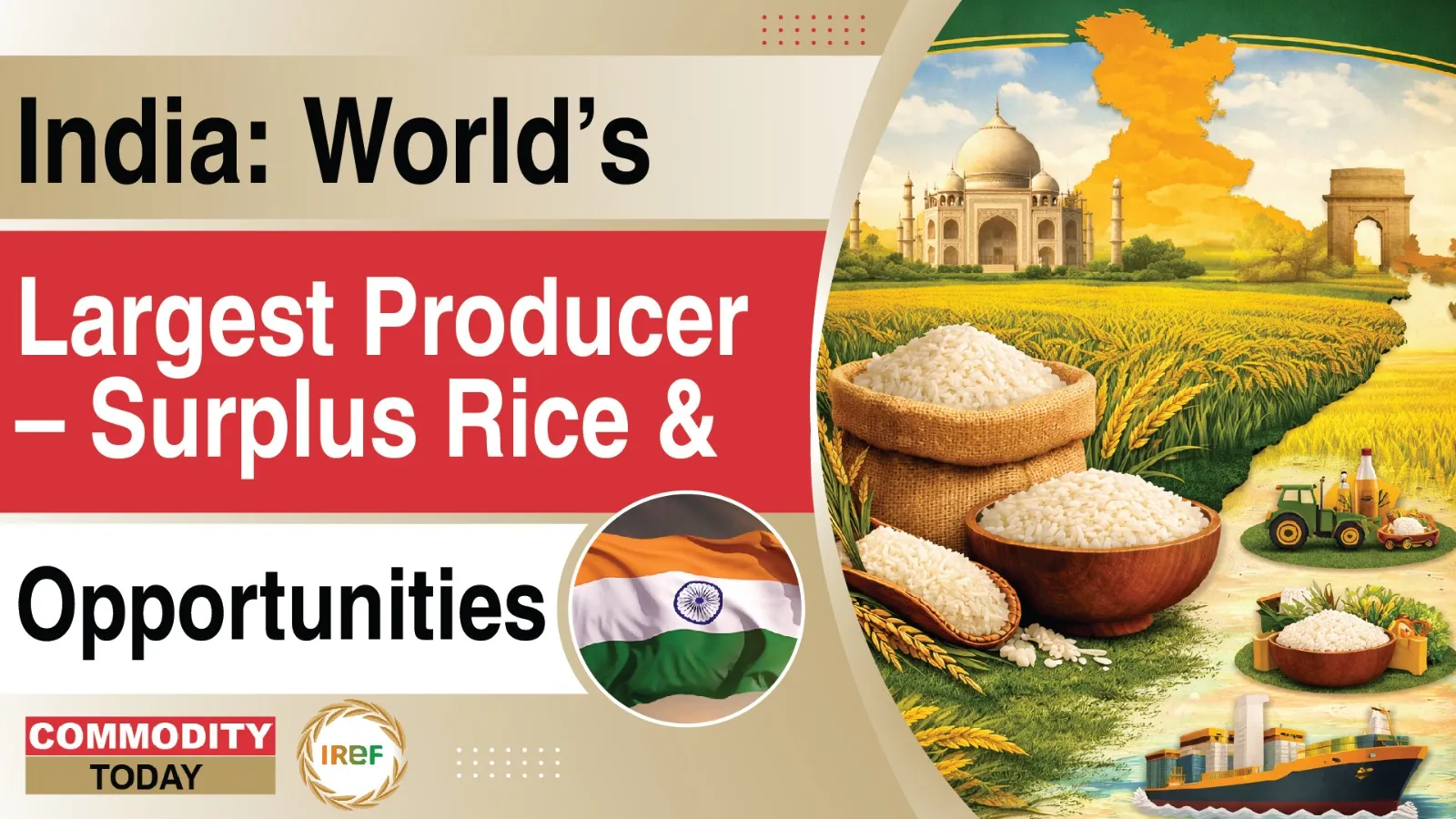
India has now become the world's largest rice producer. According to the latest USDA report for the 2025-26 season, production is estimated to reach a record 152 million tons, even higher than the last year, surpassing China (145-146 million tons) and also shows the significance of surplus rice and we now account for approximately 28% of global production. Here is the list of the top 5 world’s largest rice-producing countries: India – 152 million tons, China – 145 million tons, Bangladesh – 36-37 million tons, Indonesia – 34 million tons, Vietnam – 26-27 million tons, indicating that our production is four to five times more than the countries ranked from third to fifth.
Surplus Rice Advantage – the benefit of food security
Evidence of this surplus is visible in the Food Corporation of India’s stock (FCI). In January 2026, the total grain stock (including rice and wheat) is around 58-63 million tons, with rice alone (including paddy) reaching 63.06 million tons. According to buffer norms, only 7-8 million tons are needed in January; however, we have 8-9 times more. Interestingly, this surplus rice has several strong advantages, such as the prominent benefit of food security. Under the NFSA, more than 800 million people receive subsidized rice. With such a large stock, the government does not need to be concerned about droughts, floods, or any other crisis – sufficient reserves are available.
Furthermore, the second important advantage is stability in farmers' income. Massive procurement at Minimum Support Price (MSP) allows farmers in states like Punjab, Haryana, Chhattisgarh, and Odisha to sell their crops at assured prices. This strengthens their economic condition, reduces debt, and allows them to invest in better inputs.
The third one is the benefits from exports. India controls 40-45% of the global rice market. Our rice is the most competitive – $347-360 per ton Free on Board (FOB), which is lower than Thailand ($370-400) and Vietnam ($360-390). Exports reached 21.55 million tons in 2025, a 19.4% surge from 18.05 million tons in 2024, close to the record 22.3 million tons in 2022. Non-basmati rice increased by 25% to 15.15 million tons, and basmati rice by 8% to a record 6.4 million tons. The estimate for 2025-26 is 22-25 million tons. Demand has increased in new markets such as Africa (Benin, Cameroon), Bangladesh, Iran, the UAE, and the UK. Thailand's exports decreased due to the strong baht, and Vietnam saw an 11% decline – giving India a larger market share. This resulted in billions of dollars in foreign exchange earnings (approximately $12-13 billion), strengthened the rupee, and enabled India to help various poor countries by offering affordable rice during the global food crisis.
Taking a glance at opportunities, first, the focus is on value-added products such as organic, fortified rice, and processed rice (flakes, puffed rice, crackers). AI sorting and packaging will fetch premium prices. Whereas, Second – ethanol blending. A record 5.2 million tons of rice were diverted from FCI for ethanol production in 2025, supporting the E20 target. This provides surplus management, biofuel production, and a new market for farmers. Next one, third one is expansion into new markets, such as fortified rice in 21-26 countries (BRICS, Africa, US, Japan). Additionally, Fourth – leadership in the global crisis, where we can become a major provider of food security.
Challenges are serious
However, the challenges are also serious. The first challenge is storage problems. Such a large stock is expensive; millions of tons are wasted due to moisture, rats, and insects, putting a burden on the government exchequer. Secondly, there is pressure on prices in the domestic market, and the decline in open market prices is causing dissatisfaction among farmers. Thirdly, there are environmental threats. Groundwater levels are rapidly declining in Punjab and Haryana (from 30 feet to 200 feet); one kilogram of rice requires 3000-4000 litres of water, and exports result in virtual water exports. There is also methane emission (27-30 times more potent than CO₂ in causing global warming), with rice cultivation contributing 10-12% of human-induced methane. However, solutions also exist, like Alternate Wetting and Drying (AWD), which can decrease methane by 40-70% and save 25-40% of water. Other solutions include Direct Seeded Rice (DSR) and drip irrigation. Pilot projects have shown success, and there is also the potential for additional income through carbon credits.
Crop diversification is essential, shifting to less water-intensive crops like millets and pulses, but farmers are reluctant to switch due to higher Minimum Support Price (MSP) and subsidies on rice and wheat. Policy uncertainty (past restrictions) and competition (from Pakistan, Thailand, and Vietnam) are also challenges.
The surplus of rice contributes to food security, farmer income, foreign exchange, and global contribution. However, if not managed properly, it can lead to groundwater depletion, environmental damage, and waste. With balanced policies, smart farming, and diversification, we can transform this into an opportunity, strengthen the economy, and enhance India's reputation on a global scale.
Share this article
Article Info
Read Time
5 min read
Published
30 Jan 2026
Author
Megha Bajaj
Category
News