How India Targets $1.3 Trillion Goods Exports by 2035 With Manufacturing-Led Growth Strategy
How India Targets $1.3 Trillion Goods Exports by 2035 With Manufacturing-Led Growth Strategy

By Megha Bajaj
According to a Reuters report, India is preparing to triple its goods exports to $1.3 trillion by 2035. India's goods exports are between approximately $450 and $500 billion today. In the last few years, the country has focused on the PLI scheme, Make in India, and infrastructure, but the new strategy has an even deeper focus.
Goal is to increase the good exports to $1.3 trillion by 2035
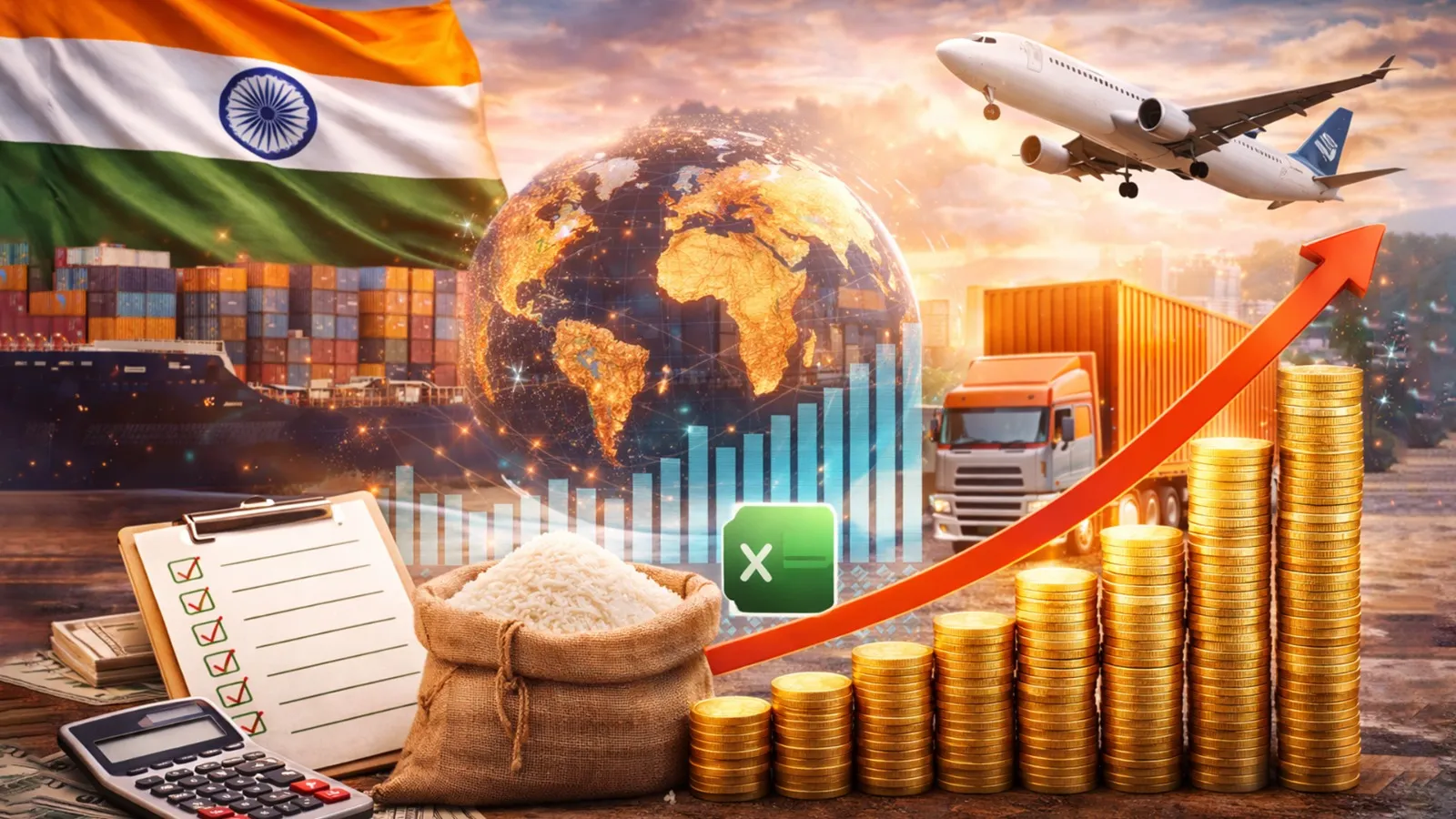
The goal is to increase the good exports to $1.3 trillion by 2035 which is more than a threefold increase. Now, this is a complete strategy to make India one of the world's largest manufacturing and export powers and the significant fact is that the government will not rely heavily on large subsidy packages or direct cash transfers this time. Instead, the entire emphasis is on structural reforms. This means boosting manufacturing, simplifying regulations, reducing bureaucracy, and increasing global competitiveness. To conclude this, a total of 15 key sectors have been focused. Some of the important ones are: Semiconductors, the future of chips and electronics, Metals – basic materials like steel, aluminium, and copper, Energy storage – products related to batteries, solar energy, and EVs, Labour-intensive industries – sectors like textiles, leather, footwear, and jewellery where India has a strong advantage. These sectors have been chosen since India has low costs, skilled labour is available, and global demand is expected to grow rapidly in the next 10 years.
A National Manufacturing Mission is being created to implement this strategy. Under this, a national manufacturing mission, the central and state governments will work together. Below given some key steps that the government will take:
Step 1: Simplifying regulations – making it easier to transport goods from one state to another.
Step 2: Expediting land acquisition.
Step 3: Reforming labour laws – so factories can operate more easily.
Step 4: Reducing tax and permit processes.
Step 5: Increasing competition among states – the states that provide better facilities will attract more investment.
Goal is clear- to make India a manufacturing hub
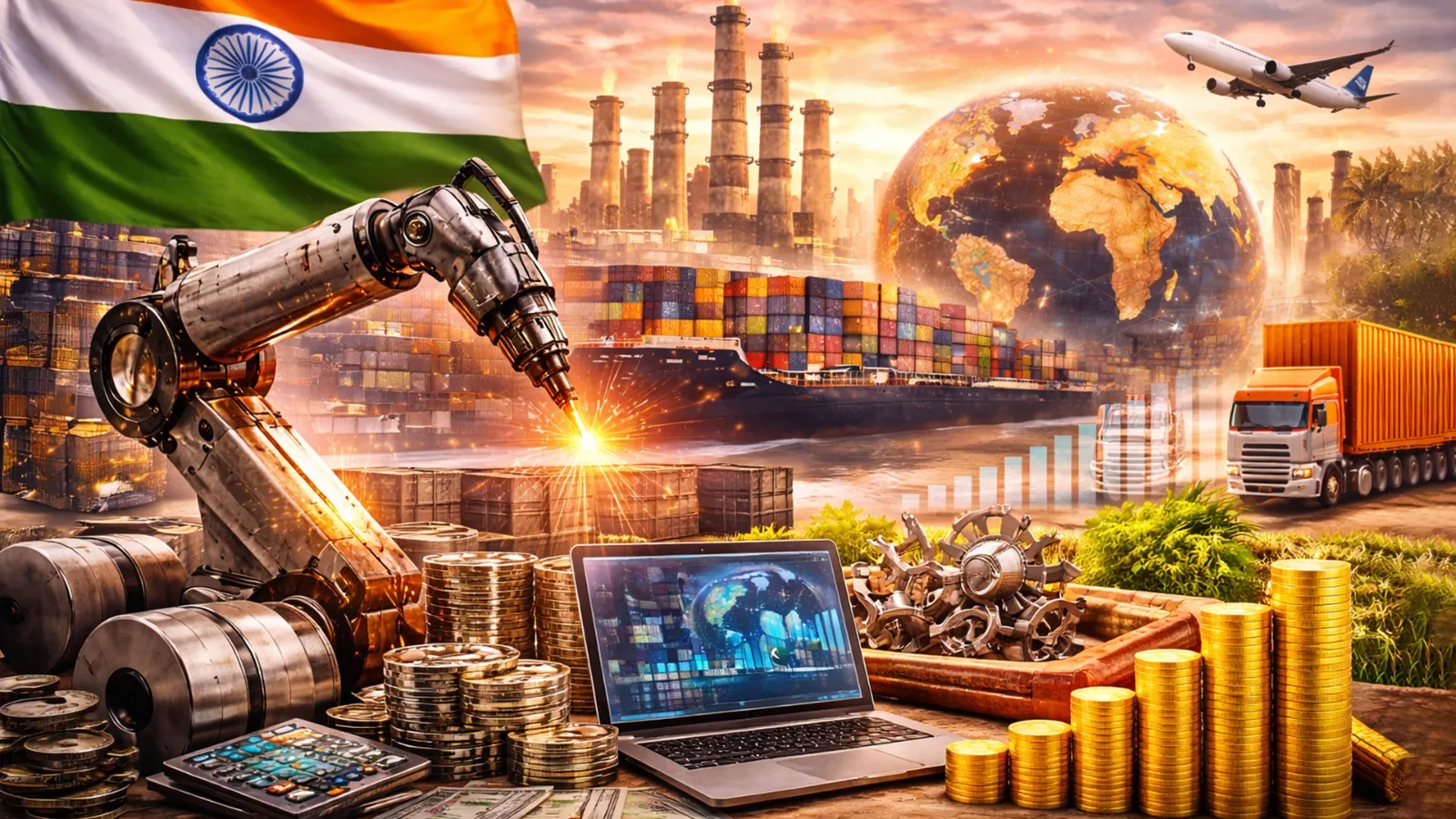
The goal is clear, which is to make India a manufacturing hub so that companies shifting from China come to India. In its aftermath, the exports will increase, employment will rise, foreign exchange will surge, and the economy will boost. If this goal is accomplished, India's GDP growth will receive a huge boost, and growth of more than 7-8% will become easier. Consequently, millions of new jobs will be created, especially in the manufacturing, logistics, and service sectors. Foreign exchange reserves will become even stronger, decreasing dependence on imports. Apparently, India's share in the global supply chain will increase. In addition, small and medium-sized industries will also benefit – export promotion will open up new markets.
However, there are some challenges, such as a global trade war underway, US-China tensions, and protectionism in Europe. There is no denying the fact that India's infrastructure is still weak. Hence, ports, roads, power, and logistics need improvement. There is a skill gap; a trained workforce is needed on such a large scale. Delays in land acquisition, labour laws, and environmental clearances can occur. What the country requires actually, is full cooperation from the states, which is crucial; each state has different rules. Undoubtedly, all of these may make the goal difficult to achieve. Lastly, the focus was more on subsidy packages; now it's on structural reforms since subsidies don't bring long-term growth. The major task is related to the implementation. If the central and state governments work together, regulations are simplified, and investment flows into the sectors, then India can become a significant player in global manufacturing. It can be said that India no longer wants to rely solely on services or agriculture. The country is preparing to reach new heights through manufacturing and exports.
Share this article
Article Info
Read Time
4 min read
Published
27 Jan 2026
Author
Megha Bajaj
Category
News