How Can Farmers Earn Extra Income Through Carbon Credit In Punjab And Haryana
How Can Farmers Earn Extra Income Through Carbon Credit In Punjab And Haryana

By Megha Bajaj
What is Carbon Credit?
While performing activities on the farm that reduce the amount of carbon dioxide (CO₂) or methane gas released into the air, we receive a type of certificate that is called a carbon credit. Generally, Carbon dioxide (CO₂) and methane gas are emitted in large quantities from rice fields.
Notably, one credit = approximately 1 ton of CO₂ reduction.
These credits are purchased by large companies such as airlines, factories that cannot reduce their own pollution, but they buy these credits to state that “Our balance is fine." Moreover, a positive fact amid all this, the farmer receives 75% of the money, with the rest going to the company and the verification process.
Carbon Credit in Punjab and Haryana
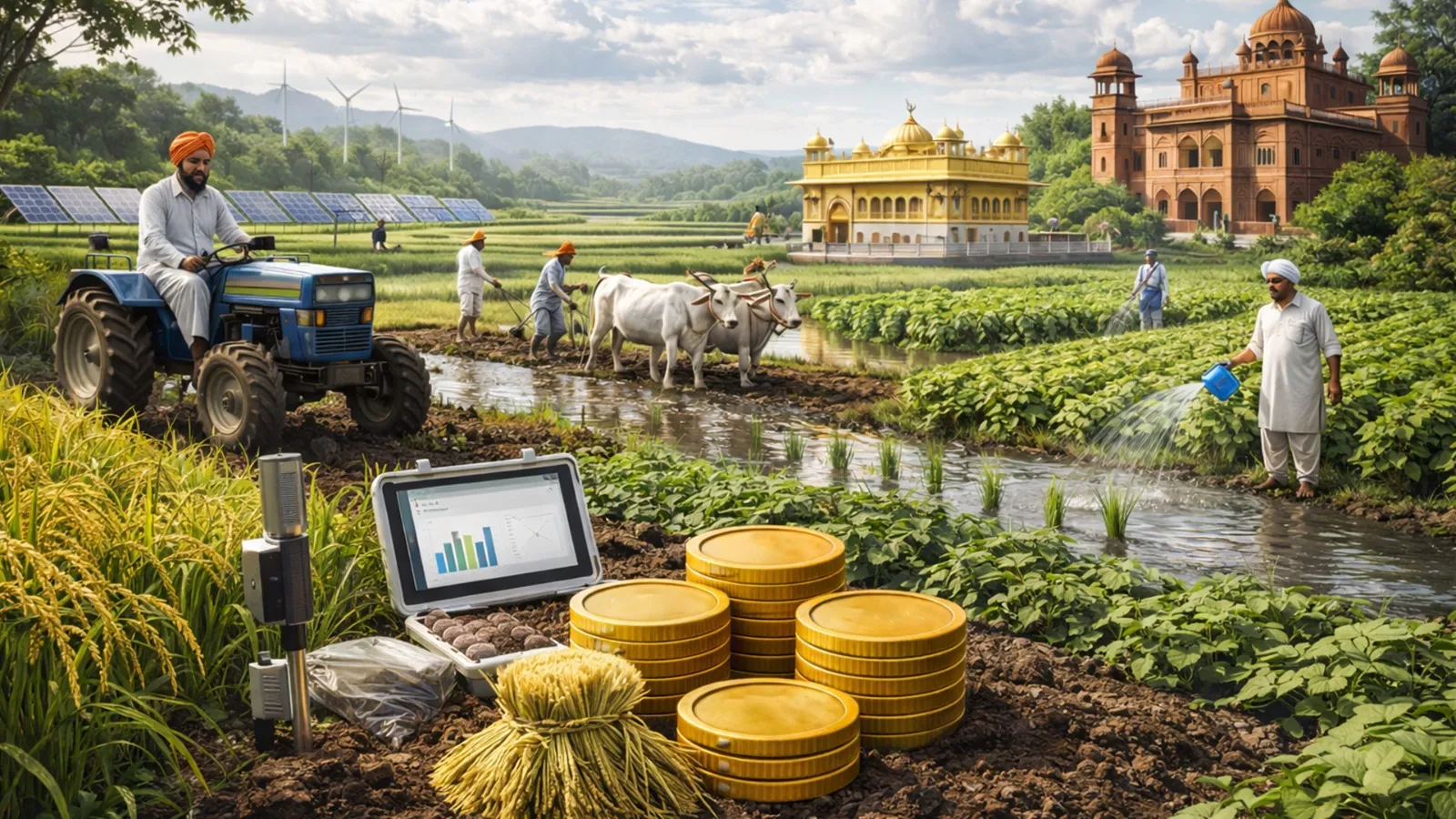
Notably, according to the announcement that came in January 2026, Grow Indigo's first major project, Aadi Project (VCS 2590), has been approved by Verra, the world's largest carbon standard. Under this project, approximately 30,000 acres of farmland in Punjab and Haryana have already been covered, issuing 50,000 carbon credits from these farms. Interestingly, this is the first large-scale, high-quality issuance of soil carbon credits in India, especially for small farmers. The company has an ambitious goal to generate 1 million carbon credits annually by 2027 and expand the program to millions of acres.
Farmers are adopting new methods
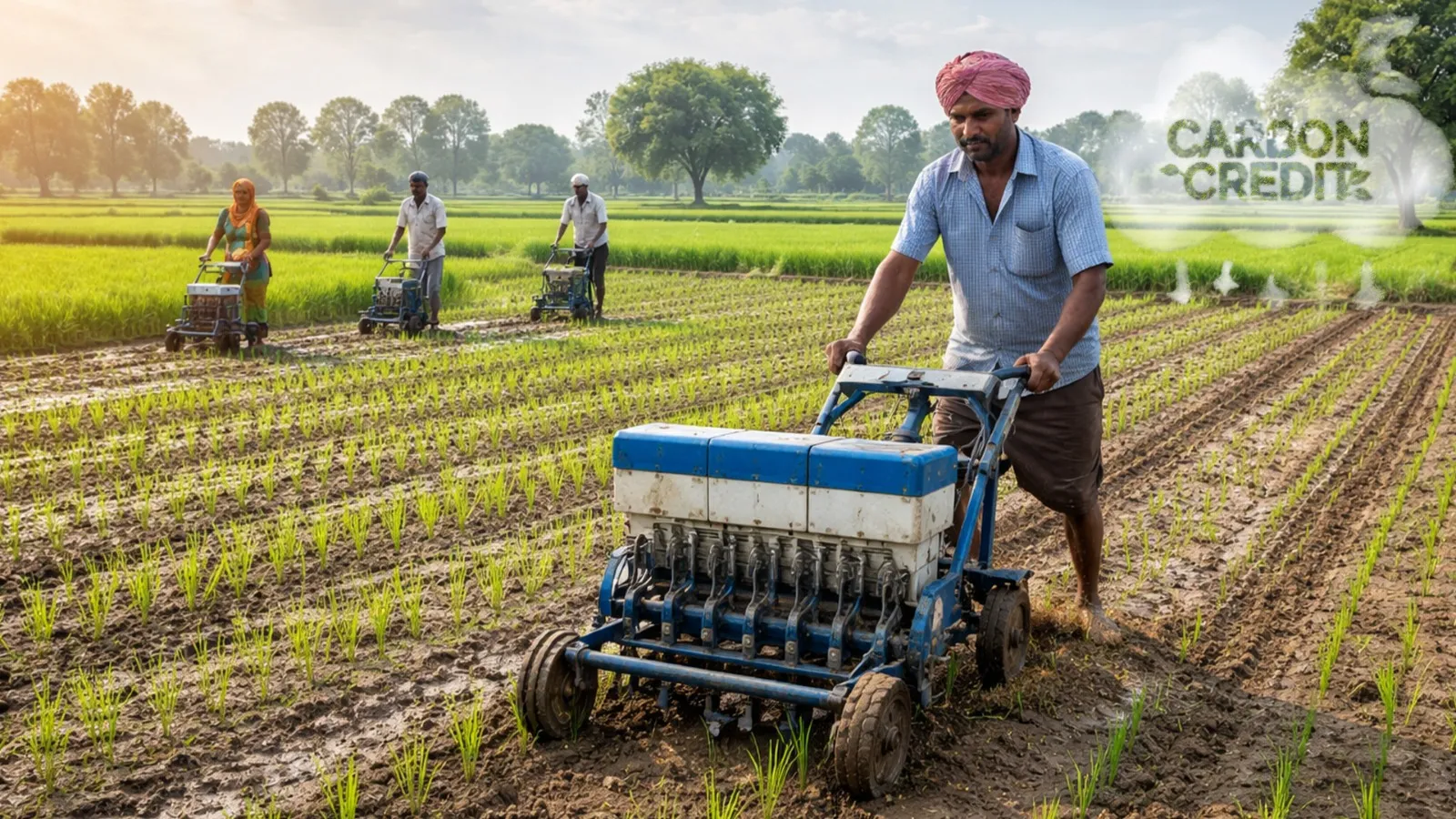
These new methods include Direct Seeding of Rice (DSR), which means sowing seeds directly in the field, without using a nursery and transplanting, saving up to 30% of water and significantly reducing methane gas emissions. Low tillage or zero tillage, avoiding frequent ploughing of the field, allows carbon to remain in the soil for longer. In addition, the second method relates to not burning crop residue (stubble) but incorporating it into the soil.
Whereas the third method deals with using fertilisers and water efficiently. All of these methods not only protect the environment, but also make the soil more fertile. Furthermore, Water is saved, and the groundwater level does not drop.Crop yields remain good
And, above all, approximately 1 carbon credit is earned per acre, which means extra income for the farmer. Even if the price of carbon credits remains around ₹3,000-4,000, the farmer can earn an extra ₹2,000-3,000 per acre annually from their 75% share. Now, this cannot be considered a small amount, especially when farming costs are rising.
Benefits of the program for Farmers
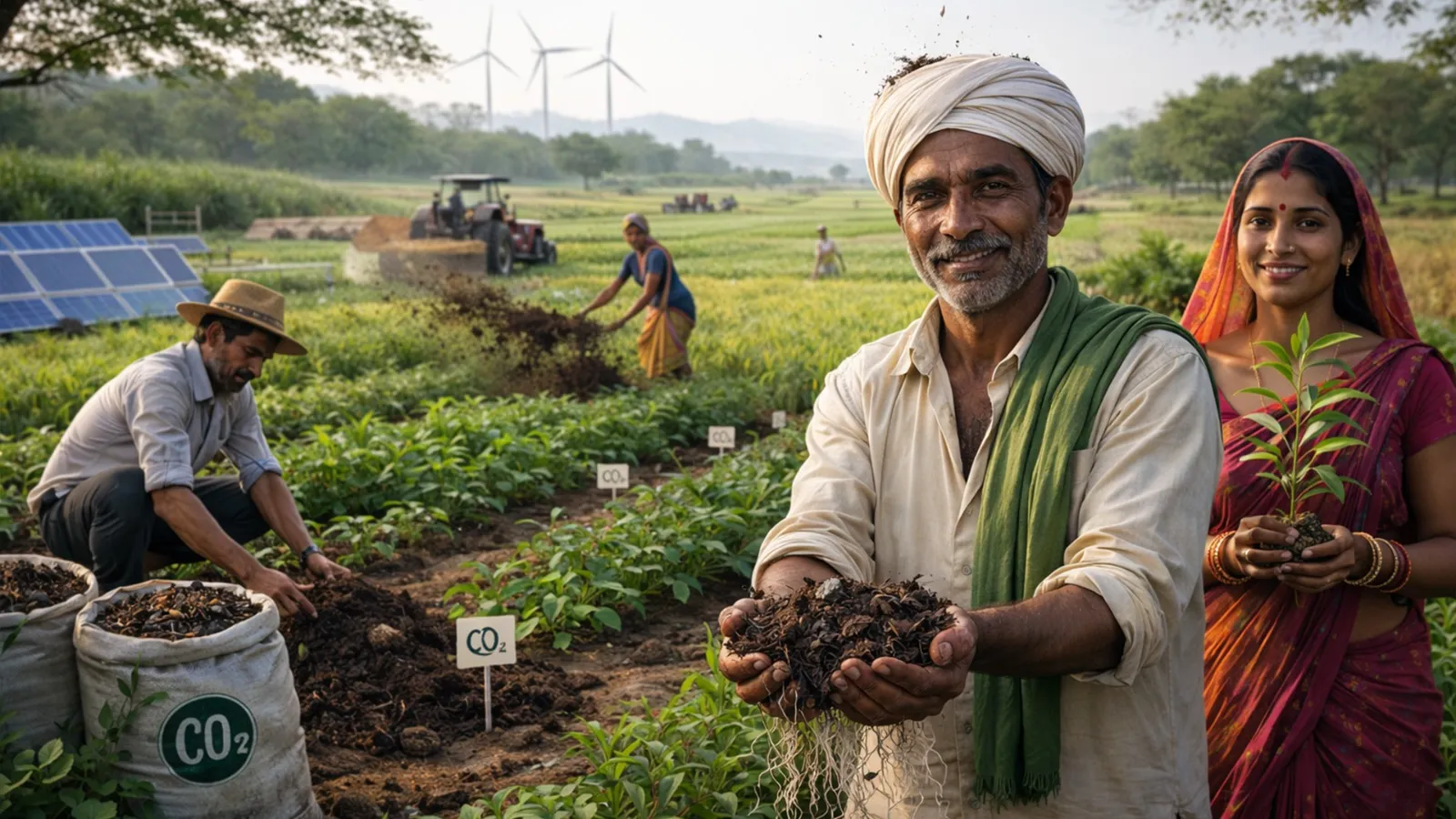
Interestingly, farmers are now not only growing grains, but also growing carbon like another crop. This will contribute significantly to India's net-zero target by 2070. Apparently, it can also reduce the problem of smog. Small farmers also benefit, as the company works by grouping small farms together. Not only this, but there are also challenges. When it comes to learning a new method, it requires more effort initially. Grow Indigo sends people for training and support, but will that be sufficient? The price of credits fluctuates in the market. Not all farms are covered yet; it's expanding gradually. Nevertheless, the issuance of the first major credit in January 2026 shows that this dream has transformed into reality. This written piece shows that farming can now be not just hard work, but also a smart and environmentally friendly way to earn money.
Share this article
Article Info
Read Time
3 min read
Published
19 Jan 2026
Author
Megha Bajaj
Category
News