Ginger Bag Farming Cultivates Substantial Income For Bangladeshi Farmers
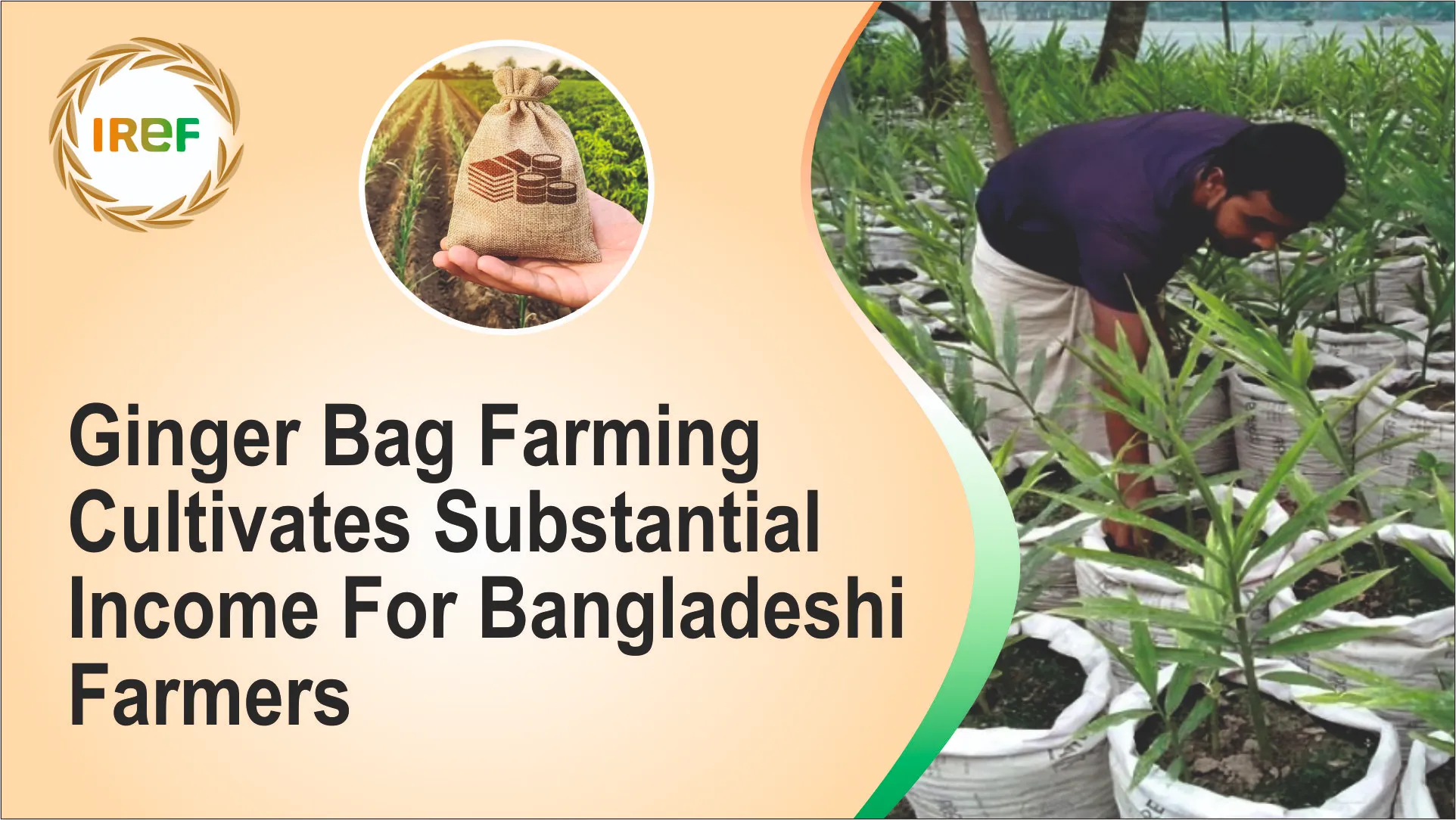
Ginger Bag Farming is becoming popular in Rajshahi, the city of Bangladesh. Not only this, but it has also been found to cultivate substantial income for the farmers. The method includes low-cost farming, high returns, and effective use of fallow land in the shaded mango orchards.
Ginger Bag Farming entails planting ginger rhizomes in sacks filled with soil and organic manure, like dung or mustard oil cake. The sacks are placed in shaded or unused spaces under trees, in orchards, or around homesteads, minimising land waste and exposure to natural disasters such as floods and disease outbreaks. The method of Ginger Bag Farming has been extensively used by Ziaul Haque, 45, of Hujripara village in Paba Upazila, who has emerged as a pioneer of this method. Not only this, he planted ginger in 20,000 sacks across unused orchard and homestead lands this year. He anticipated a harvest of 18,000 kg of ginger and profits of Tk 20 to 25 lakh, stating the benefits such as low production costs and high market prices.
Notably, this method of Ginger Bag Farming has made cultivation easy as it requires less labour, minimises waterlogging risks, and allows the use of unproductive shaded land. Particularly, the success of Ginger Bag Farming has inspired several unemployed youths to adopt this farming method. Monzurul Huda, former Director of the Department of Agricultural Extension (DAE), noted that sack farming permits farmers to diversify crops, maximise land use, and engender high returns. He focused on with rising ginger prices as ginger bag farming is becoming more lucrative.
Moreover, as per sources, two farmers from Biraldah started small-scale sack cultivation three years ago and they planted ginger in 3,000 sacks on 1.5 bighas of orchard land at a cost of Tk 80,000, now anticipating a return of Tk 5 lakh, this year. Explaining the method, one farmer said sacks are filled with soil and organic manure, ginger rhizomes are planted in Chaitra and Baishakh, and the crop is prepared over a duration of six months.
According to Umme Salma, Deputy Director of DAE, this practice will significantly contribute to meeting national ginger demand.
Share this article
Article Info
Read Time
2 min read
Published
28 Jul 2025
Author
Megha Bajaj
Category
News