Expert Warns That China’s Rare Earth Monopoly Intimidates Global Climate Transition
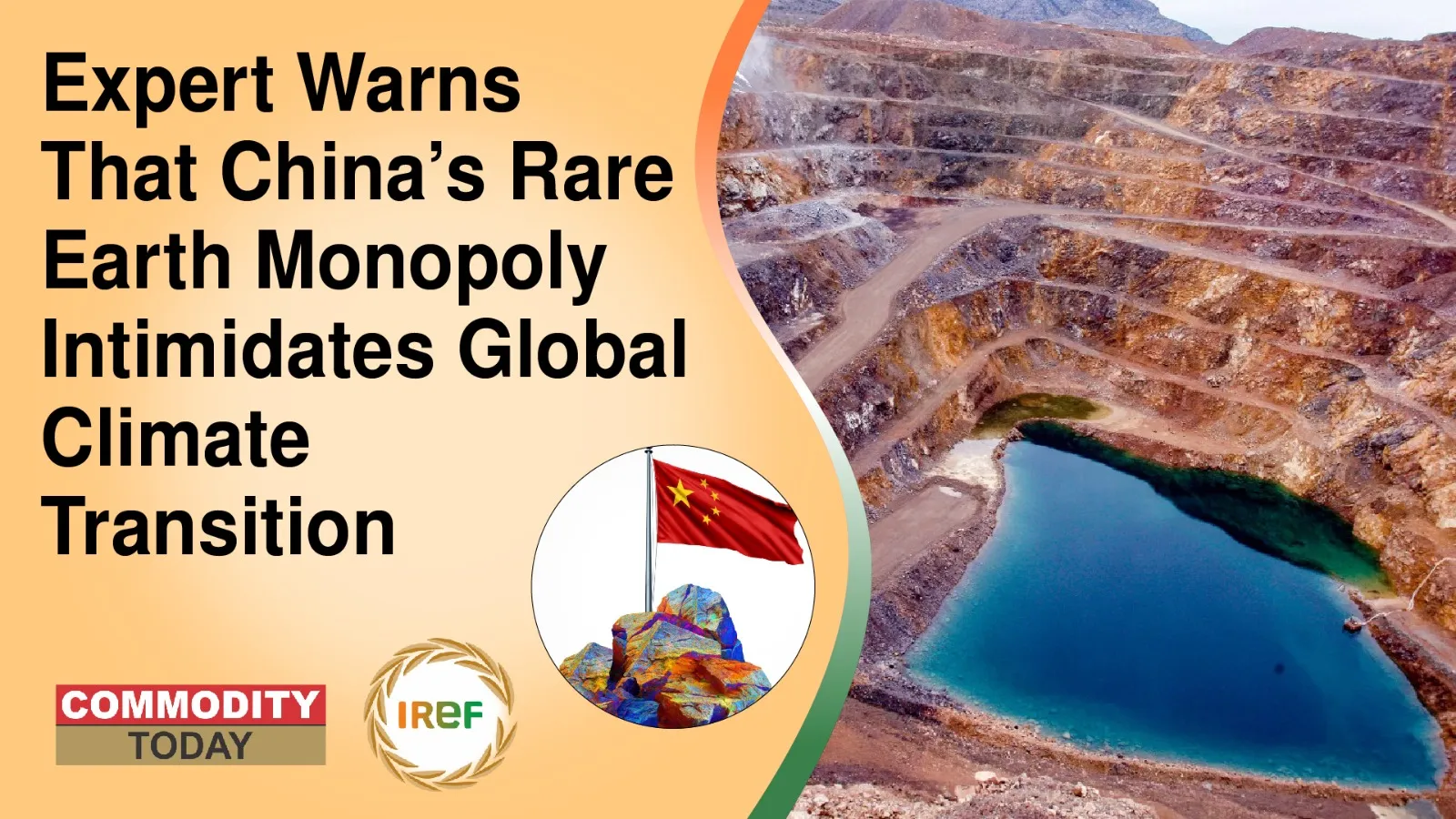
China’s tightening control over rare earth has transformed into one of the most debated issues at COP30 in Belem since the leading strategic affairs expert Jagannath Panda has warned that the world’s clean energy transition cannot rely on supplies controlled overwhelmingly by a single authoritarian state.
Furthermore, Panda stated that rare earths, lithium, copper, and other minerals essential for renewable technologies have become political instruments embedded in ambitions of the Communist Party of China (CPC) . He stated this in a detailed piece published in Turkiye Today following his visit to the summit as an observer. Moreover, Panda wrote that China’s dominance, nearly 60 per cent of global rare earth production and nearly 90 per cent of refining capacity grants Beijing the potential to modify, indeed to weaponise the pace and direction of global decarbonisation. According to him, this position was created by a long-tern CPC strategy designed to secure mining zones, monopolise processing, link infrastructure with geopolitical influence, and use export controls to pressure competitors.
Debate intensified when Beijing expanded its rare earth restrictions
COP30 emphasized massively in Amazon conservation, indigenous rights, and sustainable development, SCSA-IPA stressed that the Tibetan Plateau remains severely underrepresented, despite undergoing rapid glacial melt, permafrost loss, and destabilization of the river system that affect nearly 2 billion people across south and southeast Asia. The debate intensified this month after Beijing expanded its rare earth restrictions. The country included five new rare earth metals to controls announced in April, bringing almost all 17 recognised rare earth elements under tight scrutiny.
Global climate goals are now directly threatened by China’s opaque networks
Besides this, Panda mentioned that global climate goals are now directly threatened by China’s opaque, concentrated, and politically leveraged minerals networks. He asserted that delegates in Belem increasingly agree that the world’s green transition cannot be only tied to supply chains that Beijing can restrict at will. Eventually, he wrote: “global climate goals increasingly depend on minerals extracted from a region suffering profound ecological stress”.
Read More News:
Share this article
Article Info
Read Time
2 min read
Published
15 Nov 2025
Author
Megha Bajaj
Category
News