Cambodia Targets One Million Metric Tons Of Rice Exports This Year Amid Rising Global Demand
Cambodia Targets One Million Metric Tons Of Rice Exports This Year Amid Rising Global Demand
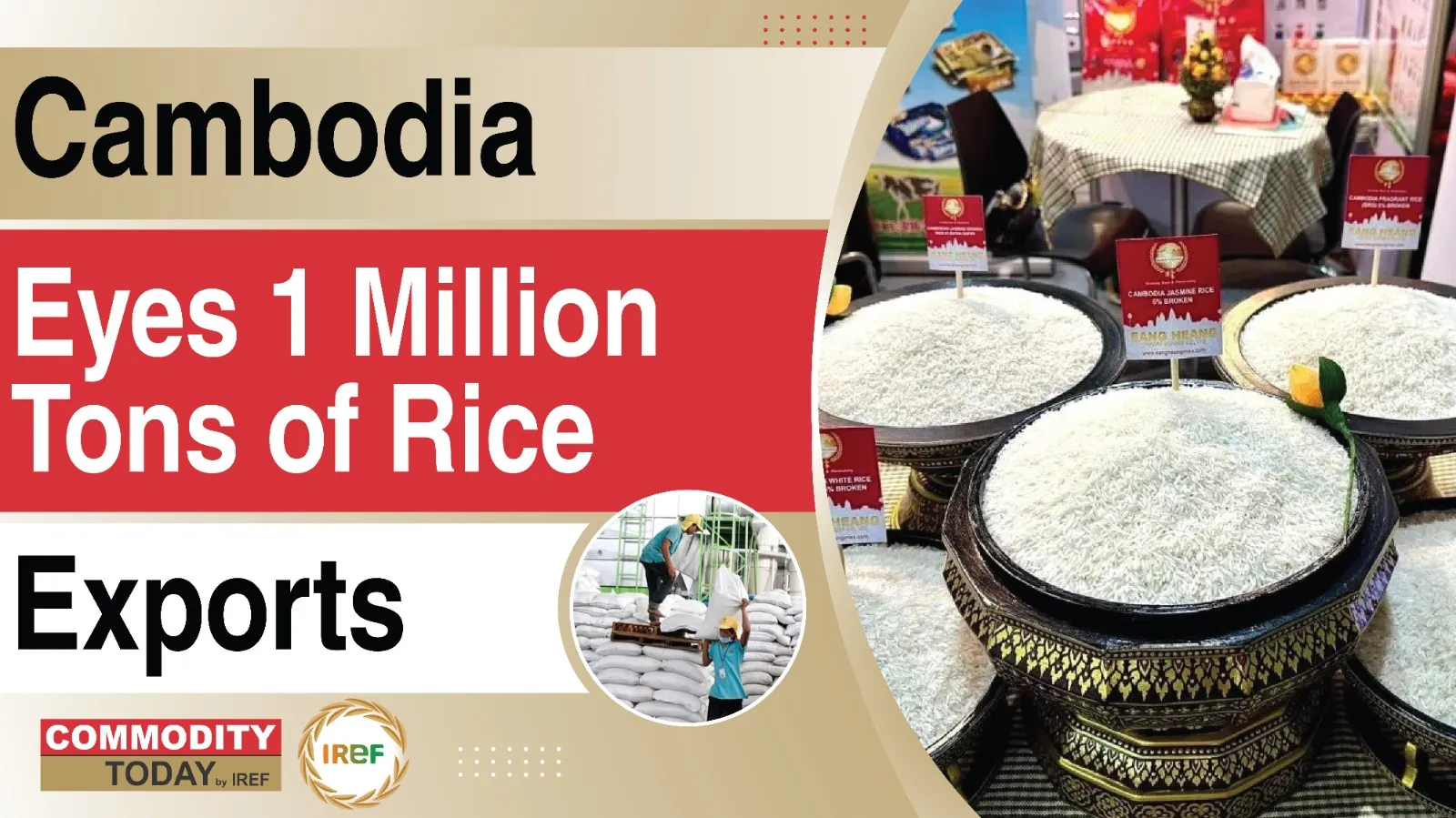
By Megha Bajaj
In the recent couple of years, Cambodia has witnessed a remarkable increase in both rice production and rice exports while actively working on exploring new markets and expanding its rice exports. Simultaneously, the country is confident that it can reach one million metric tons of rice exports in the new year. Interestingly, discussions have begun regarding Cambodia's efforts in this direction. The country believes it can attain this target of one million metric tons of rice exports in the new year, even amidst volatility in global rice prices. Cambodia's rice exports have increased.
Cambodia earned $602 million from its aggregate rice exports in 2025
For instance, in 2025, Cambodia's rice exports reached 940,000 metric tons. Key destinations for Cambodian rice exports were countries such as the European Union and China. In addition, 60 per cent of this exported rice was fragrant rice. According to information provided by the Cambodia Rice Federation, Cambodia earned $602 million from its aggregate rice exports. The country is now eager to take its rice exports to new heights in 2026, following the remarkable rice exports of the last year. In this context, Le Chhun Our, President of the Cambodia Rice Federation, said that they are targeting one million metric tons of rice exports this year. He describes Cambodia's total rice production capacity as excellent and mentions strong demand from global buyers for exports.
Cambodia's long-grain fragrant jasmine rice is in high demand
It is worth noting that Cambodia's long-grain fragrant jasmine rice is in high demand in several countries. Although Cambodia may not be as large a rice exporter as some other Asian countries, its consistent grain production has made it the talk of the town in the context of rice exports. At the same time, Cambodia's neighbouring countries, Thailand and Vietnam, are among the top rice-exporting countries. Experts attribute the significant growth in Cambodia's rice exports in recent years to preferential access to the EU market and support for Cambodian milled rice exports through free trade agreements with China.
The support for Cambodian fragrant rice, in particular, is driving this growth. Furthermore, the Philippines, a major global rice importer, has lifted its import restrictions. Experts monitoring the global rice trade, including those focused on Cambodia, believe that the Philippines may place a large order for Cambodian rice in the coming days. Recently, Cambodia held a crucial meeting with a Philippine business delegation regarding rice exports to the Philippines. This meeting was chaired by Minister Dith Tina, and discussions included closer cooperation between the agricultural ministries of both countries.
Experts also suggest that China and the EU will likely place further orders for Cambodian rice, which will further boost Cambodia's rice exports. Statistics show that the EU and China accounted for 60 percent of Cambodia's total rice exports last year. This reinforces the expectation that China and the EU will re-import Cambodian rice again in 2026. Hence, according to experts, Cambodia is likely to achieve its goal of exporting one million metric tons of rice this year.
Cambodia is considered an important country in terms of rice production
While some challenges may affect Cambodia's target, the country appears well-positioned to achieve its export goals due to these other positive factors. When it comes to efforts, the country can make to achieve its target of exporting 1 million metric tons of rice this year, saying it can focus on its fragrant rice and secure its market share even in global markets with an abundant supply. Notably, Cambodia is considered an important country in terms of rice production. Located in Southeast Asia, the country produces approximately 11.62 million tons of rice annually, and rice production and trade play a significant role in Cambodia's economy.
Share this article
Article Info
Read Time
4 min read
Published
15 Jan 2026
Author
Megha Bajaj
Category
News