Bangladesh Rice Output Fell in FY25 Despite High Boro Harvest
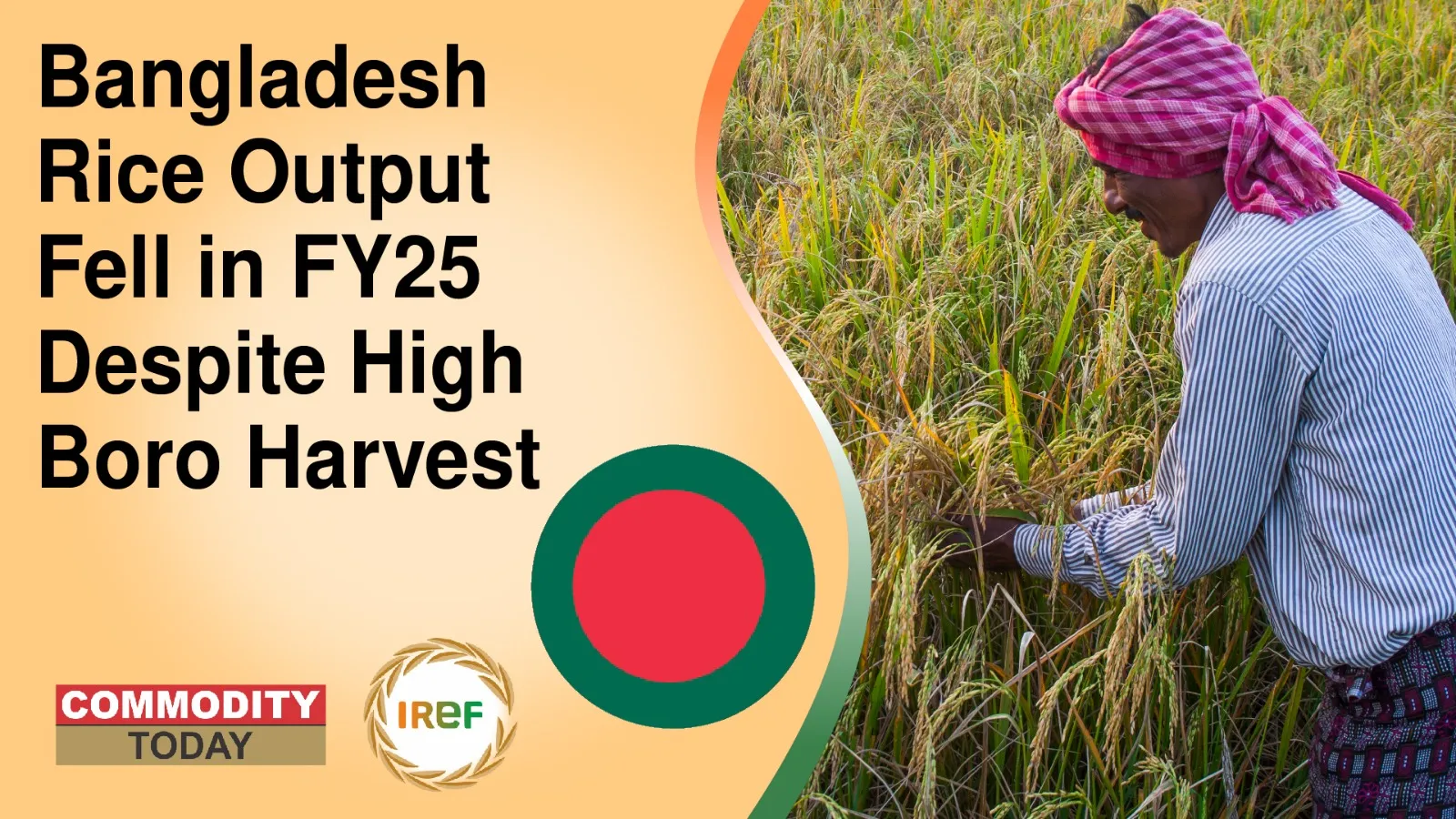
Bangladesh rice output fell slightly in the last fiscal year (FY) 2024-25, despite a historic high boro harvest. Despite the record boro crop production by farmers supported by favourable weather conditions and expanded cultivation, this latest rice harvest data from Bangladesh came as a surprise. Data for rice yield FY25 depicts the total production of 4.06 crore tonnes of rice in FY25, which is marginally below the 4.07 crore tonnes recorded in the previous year, according to estimates released by the Bangladesh Bureau of Statistics (BBS) earlier this week. Notably, Bangladesh is among the major rice producing countries in the world.
Decline in Bangladesh Rice Output Attributed to Several Factors
Several varieties of rice are grown in Bangladesh with Boro (Non-basmati rice) and Aush rice being one of the most sought-after rice varieties in Bangladesh. The decline in rice output is attributed to a reduction in Aush rice acreage, which is harvested during the monsoon, and recurrent floods and unfavourable weather affecting rain-fed Aman rice, harvested mainly in November-December. Unfavourable weather conditions have affected Bangladesh farming sector on a large scale as per the data obtained from Bangladesh crop report.
Boro Harvest 2025 Depicts the Highest Rice Harvest Data on Record
Year-on-year, Aush and Aman production fell by 6 percent and 0.9 percent, respectively, with 27.93 lakh tonnes and 1.64 crore tonnes produced, according to the BBS. Consequently, total production in the July-June period of FY2024-25 declined, though production of Boro rice rose by 1.2 percent to 2.13 crore tonnes, marking the highest dry-season harvest on record. The BBS attributed the rise to an increase in cultivated area, which expanded to 48.89 lakh hectares from 48.77 lakh hectares a year earlier, driven by the adoption of hybrid varieties.
Bangladesh Crop Report Represents Positive Data
Despite decline in Bangladesh rice output Hybrid rice, which yields 14 percent more than High-Yielding Varieties, accounted for 12.96 lakh hectares of the Boro crop, up 2.29 percent from 12.67 lakh hectares last year. While inbred rice still made up roughly two-thirds of total Boro production, hybrid rice output grew at a faster pace.
In this context, Mohammad Khalequzzaman, director general of the Bangladesh Rice Research Institute (BRRI) said that “It was a good season for the crop. The weather remained favourable, and there were no natural disasters such as floods before the harvest.” He further added that “We also did not see temperature fluctuations that affect yields. Farmers’ awareness has also improved, contributing to higher output.”
The BBS released the final Bangladesh rice output data at a time when rice prices, the staple food for around 17 crore people, have eased slightly over the past month due to increased supply from imports and the Aman harvest, which accounts for roughly 40 percent of annual output. For FY26, the Department of Agricultural Extension (DAE) has set production targets of 32 lakh tonnes for Aush rice, 1.81 crore tonnes for Aman, and 2.27 crore tonnes for Boro. Preliminary data indicate that Aush cultivation has expanded this year but still falls short of the DAE’s targets.
Read More News:
- Bangladesh Rice Output Fell in FY25 Despite High Boro Harvest
- India emerges as Indonesia’s 3rd largest export destination in Q2 2025 amid trade shifts: Report
- Agricultural Drones And Training To Empower Rural Youth In India
- Cambodia’s Agricultural Exports Surpass 11 Million Tonnes in First 10 Months of 2025
- India’s Palm Oil Imports Fall Amid Rising Soybean Oil Imports
Share this article
Article Info
Read Time
3 min read
Published
14 Nov 2025
Author
Megha Bajaj
Category
News