31 High-Impact IRRI-NARES-Developed Rice Varieties Now Available Across India
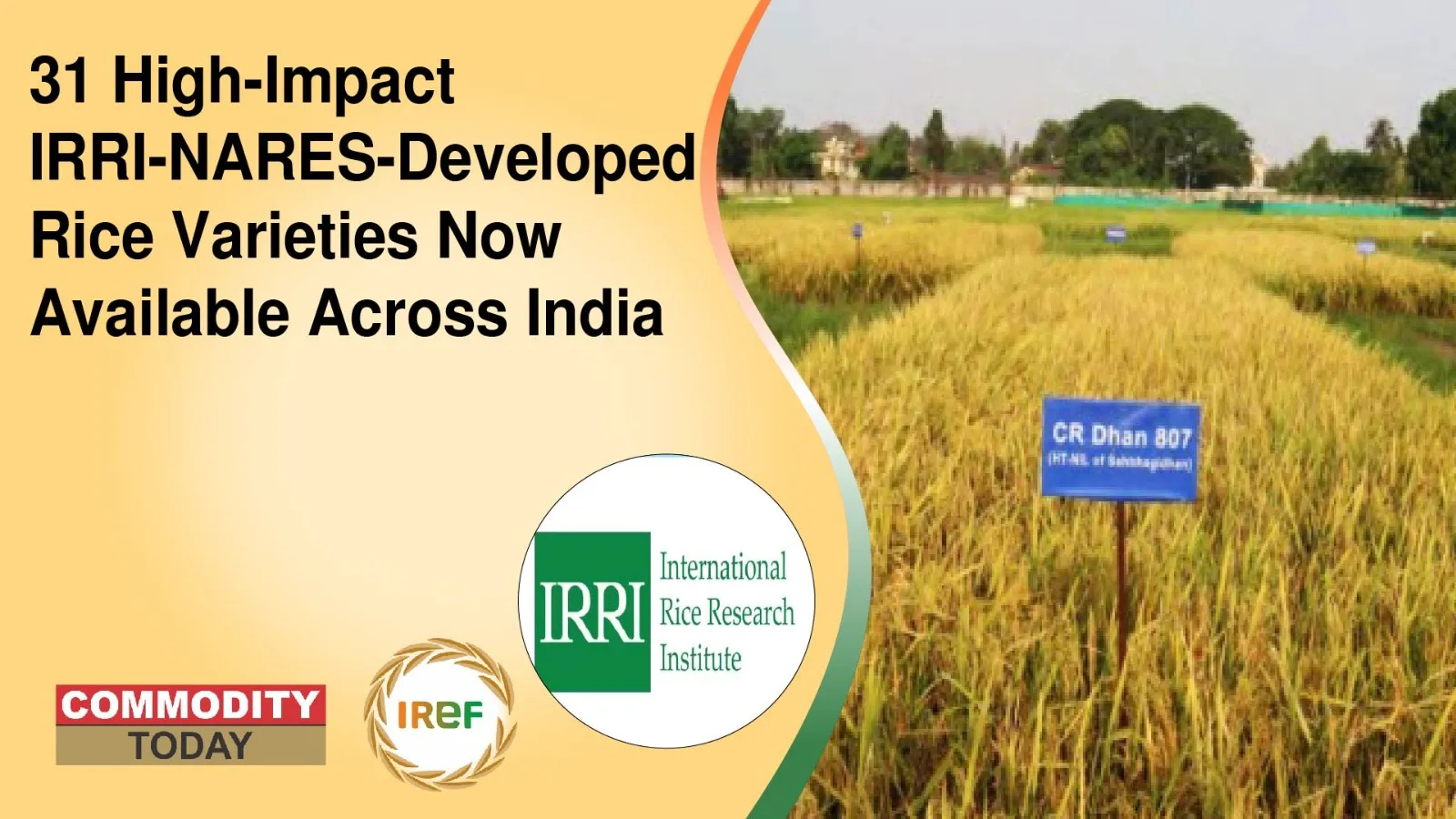
Indian farmers are set to benefit from a new generation rice varieties developed by the International Rice Research Institute (IRRI) and India’s National Agricultural Research and Extension System (NARES). These high impact climate-resilient rice varieties are believed to have the qualities to meet the country’s changing climate and production needs. Notably, IRRI and NARES developed 31-high -impact climate-resilient rice varieties which were released and officially notified in the Gazette of India in 2024. These rice varieties are now available for Indian farmers for large scale cultivation and adoption across the nation.
Several New Rice Varieties are Stress- Tolerant
Among the newly released varieties, DRR Dhan 75, bred from a combination of Samba Mahsuri, Habataki and ST 12, and developed as an improved version of BPT 5204 by the ICAR-Indian Institute of Rice Research (IIRR), is gaining strong momentum among farmers across India for its superior performance, non-lodging nature, and market-preferred grain quality.
These varieties are stress-tolerant, having 10-30% more yield capacity than the traditional varieties. These high-yield rice varieties have rice production capacity even under drought or flood conditions. CR Dhan 808 and Malaviya Manila Sinchit Dhan-1 perform well in areas with limited water. The flood-tolerant CR Dhan 811 yields an average of 3.6 tons per hectare, while CR Dhan 804, which can withstand both drought and flooding, maintains yields of about 2 tons per hectare under stress.
New Varieties Suited for DSR Systems
Other new varieties including CR Dhan 108, Sabour Pratap Dhan, and Swarna Purvi Dhan-5, have been specifically suited for direct-seeded rice (DSR) systems. These systems can reduce water use by up to 30%, cut labor needs by a third, and lower greenhouse gas emissions. Among these, CR Dhan 807 stands out as a non-genetically modified, herbicide-tolerant, and flood-tolerant rice variety.
Beyond resilience, the release includes biofortified varieties such as Spoorthi (GNV 1906), DRR Dhan 79, and Sabour Vijay Dhan, which contains 20–22ppm zinc, nearly twice the amount found in conventional rice. These new rice varieties offer a wide range of grain types and qualities, catering to consumer preferences across major rice consuming states such as Punjab, Odisha, Tamil Nadu, and Gujarat.
Read More News:
Share this article
Article Info
Read Time
2 min read
Published
27 Nov 2025
Author
Megha Bajaj
Category
News